Why a black hole’s center is a problem for physics
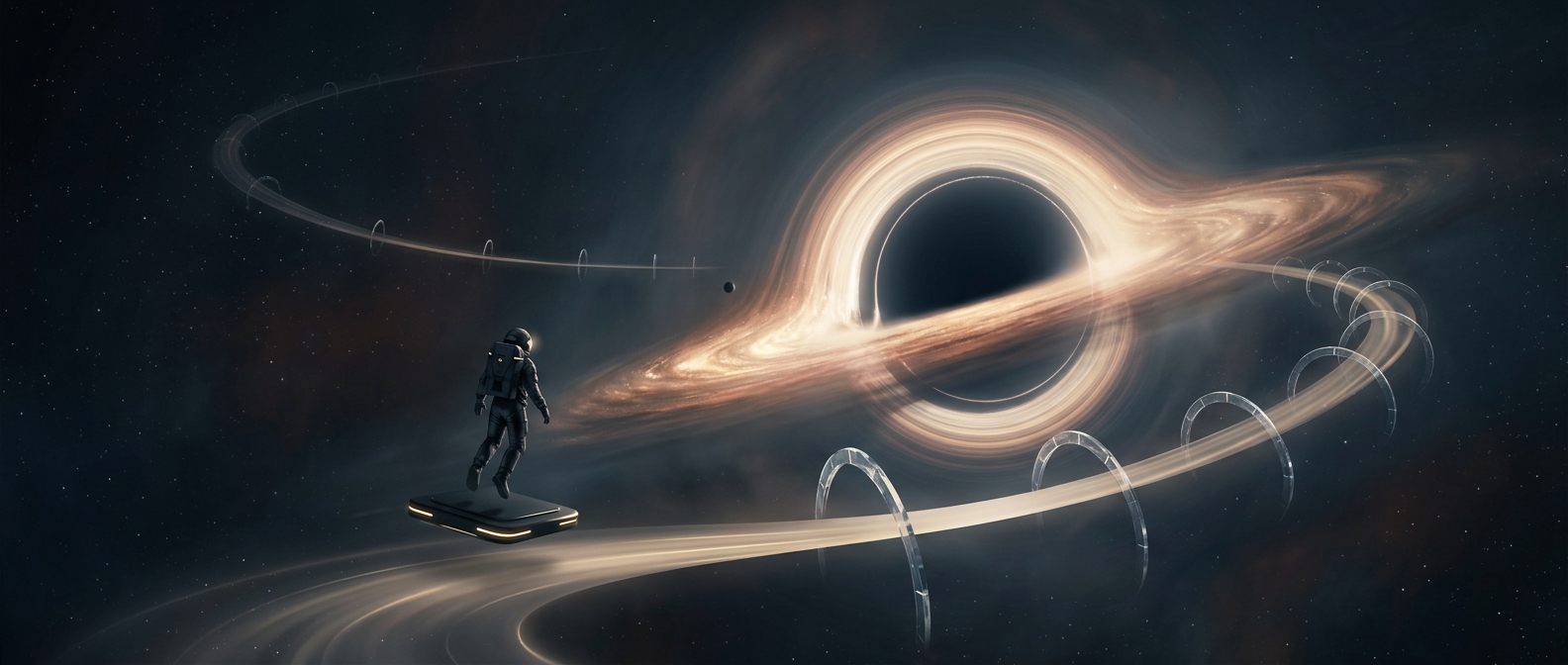
In Einstein’s theory of gravity, a black hole’s interior eventually leads toward a singularity: a place where the equations predict that matter is compressed to infinite density and spacetime’s curvature becomes infinite. That prediction is usually read not as a literal description of an infinitely small object, but as a warning that the theory has reached its limits. General relativity does not include the quantum behavior expected to matter at such extreme scales.
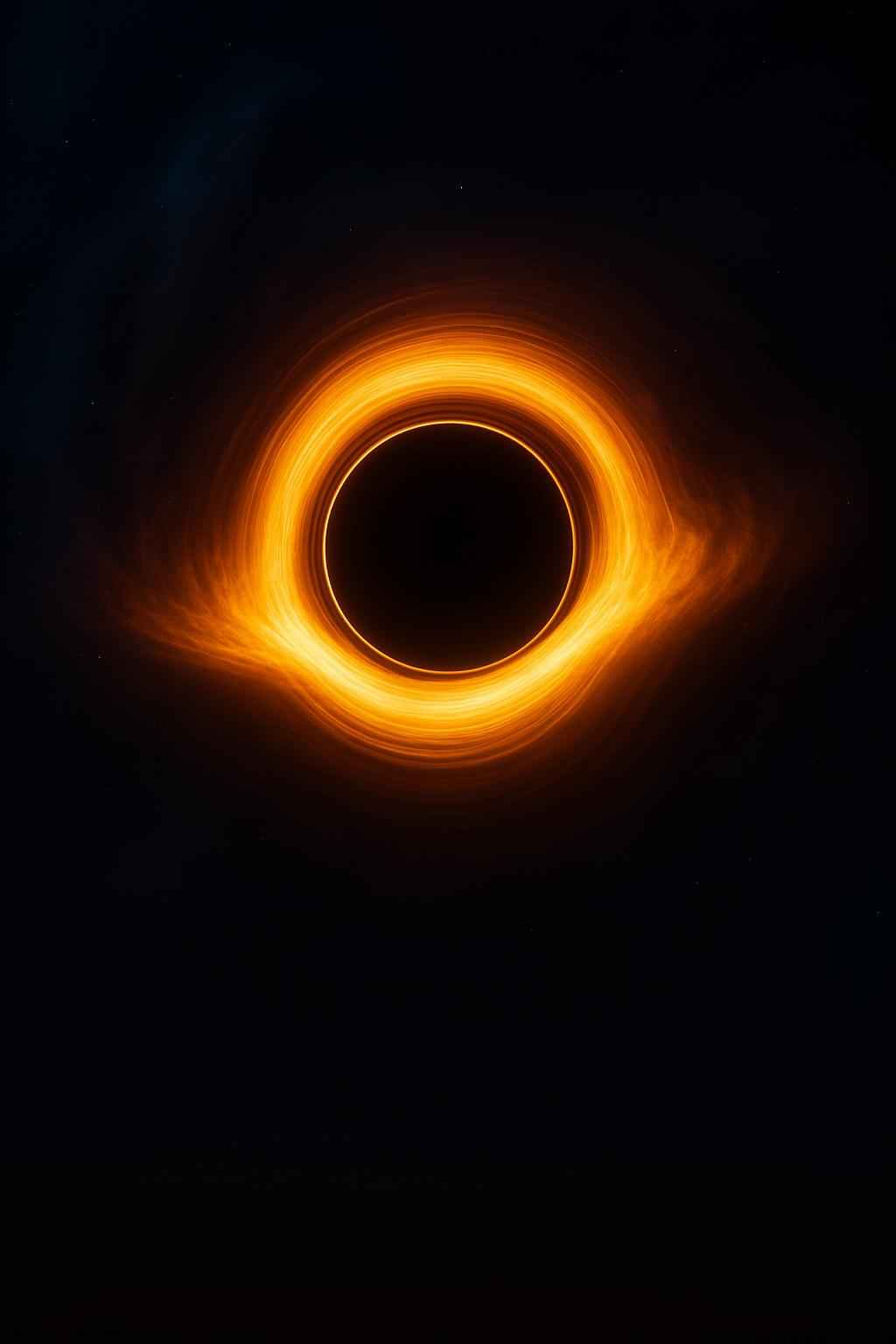
The event horizon—the boundary beyond which light cannot escape—is different from the singularity. Crossing the horizon does not, by itself, mean entering a tunnel or another universe. A black hole’s great mass makes its influence enormous, but it does not turn the speculative interior into an observed passageway.
Where wormholes enter the mathematics
Some solutions to Einstein’s equations have geometries resembling wormholes, hypothetical connections between distant regions of spacetime. Their appearance in equations does not establish that a traversable wormhole forms inside a real black hole. In many cases, the proposed connection would close too quickly for anything to pass through, and physicists do not know how quantum gravity would change the picture.
That uncertainty is the real puzzle: general relativity predicts a singularity, while quantum physics is expected to prevent a complete account of nature from ending in infinities. A future theory may replace the singularity with something else, but no established result says it opens onto alternate realities. The striking implication is less a confirmed cosmic tunnel than a boundary in our knowledge: the black-hole interior is where two successful theories stop fitting together.