How a game builds a view inside a mirror
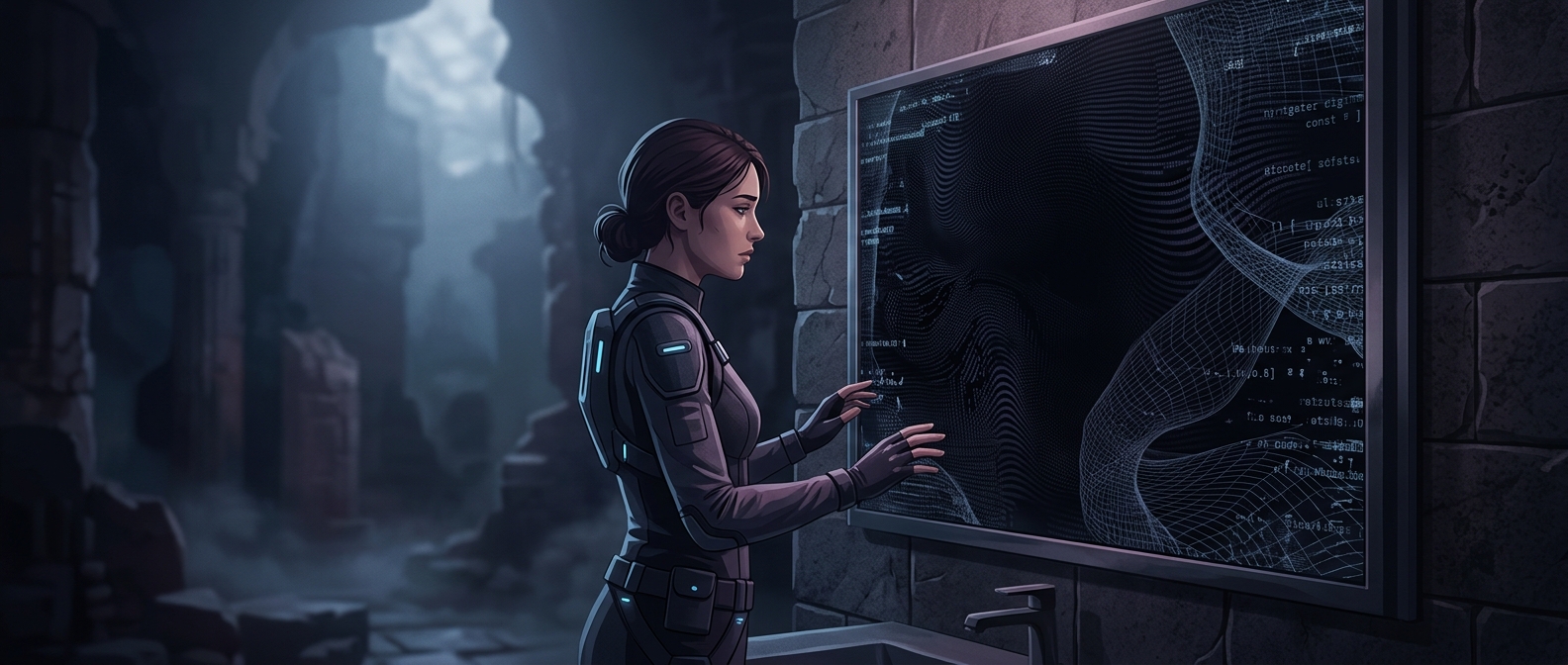
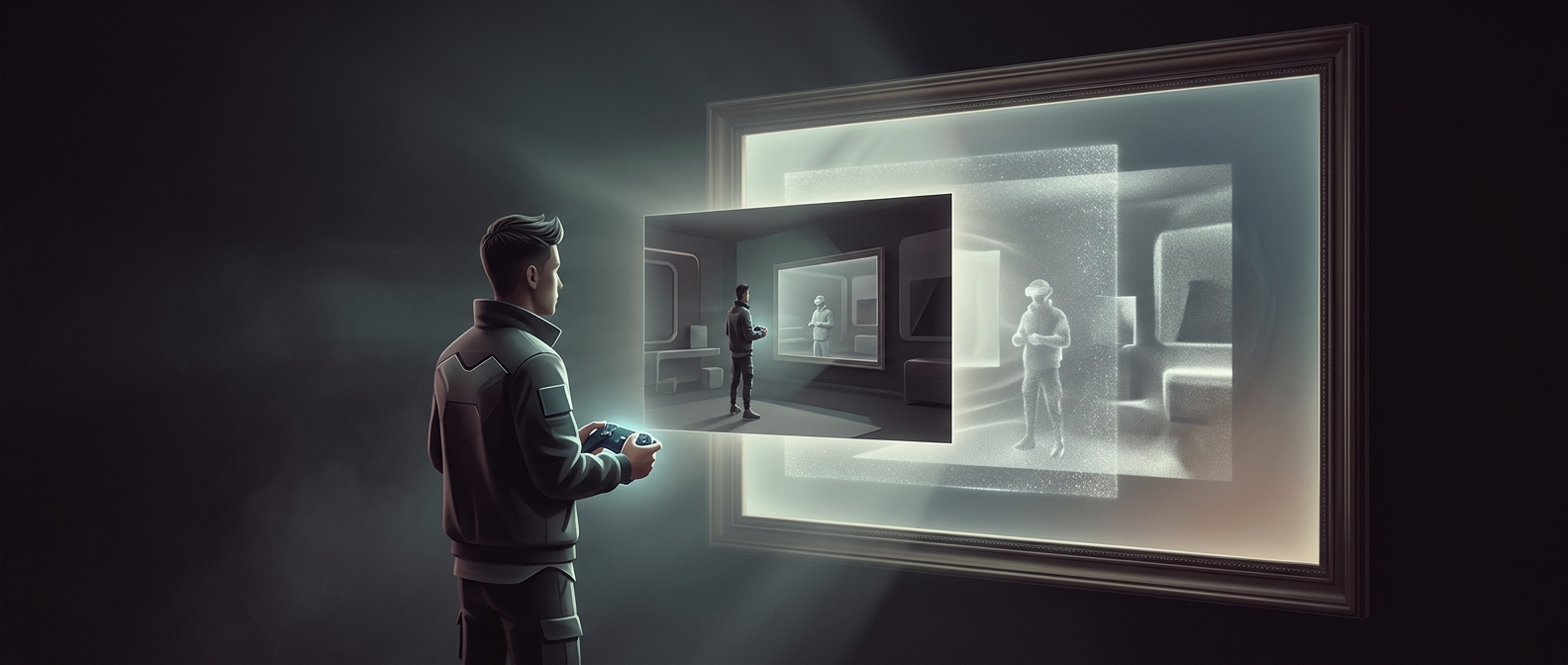
A flat mirror can be rendered by treating it like a second camera. The game takes the player’s camera position and reflects it across the mirror’s surface, then draws the scene from that reversed viewpoint. The resulting image is placed on the mirror, so objects appear on the opposite side of the glass where their reflections should be.
This is not usually a second copy of the room being simulated. It is another view of the same scene: characters and objects do not need to move twice, but the engine must draw the ones visible to the mirror’s camera again. A clipping plane—a boundary that tells the renderer which side of a surface to show—can cut away geometry that should not appear behind the mirror.
Why the mirror can be expensive
Rendering that extra view takes graphics work. If the reflected camera sees a wide, detailed room, the game may need to process many of the same models, lights, and effects a second time. The mirror’s image also has to be drawn onto the surface. The cost depends on what the reflection includes and how much screen space it occupies; it is not necessarily a full duplicate of every step in the frame.
Mirrors can also create a recursion problem. If the mirror’s camera sees the mirror itself, the reflected image would need to contain another reflection, which would contain another, and so on. Games commonly avoid that infinite chain by hiding the mirror from its own reflected view or limiting how many reflection layers are rendered.
The visual tradeoff
Because of that cost, a game may update a mirror less often, render it at lower resolution, or omit objects and effects from the reflected view. Those shortcuts can make the reflection less exact, but they preserve the detail players notice most: a recognizable room and a character that moves in step with the one in front of the glass.