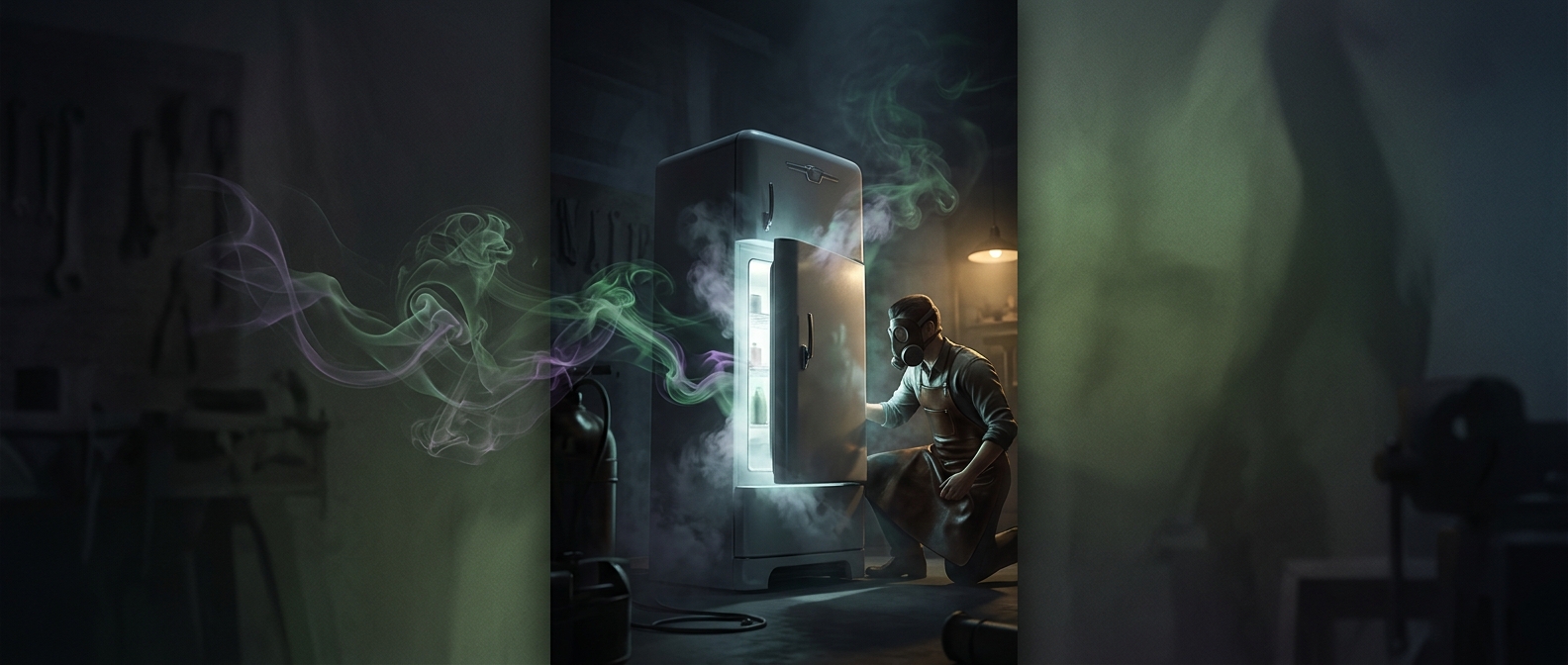
Ether’s invisible hazard in the operating room
Ether changed surgery by making it possible to render a patient unconscious for an operation. But the same substance that helped keep a patient still could turn the room itself into a fire risk: ether evaporates readily, and its vapor can ignite when mixed with air and exposed to a flame or spark.
That danger was easy to miss because the fuel was not just the liquid in a bottle. Once poured or spilled, ether could evaporate and spread as an unseen cloud near the floor. A spark in that vapor could trigger a flash fire, potentially burning the patient, staff, or nearby materials.
The tradeoff surgeons had to manage
Operating rooms of ether’s era could contain open flames and other sources of ignition. As a result, using ether meant accounting for the whole room, not merely administering an anesthetic: where the liquid was handled, how vapor might collect, and whether anything nearby could ignite it. The anesthetic made an operation more feasible, but introduced a hazard unrelated to the surgery itself.
This was a practical constraint, not evidence that ether was useless. Its ability to produce unconsciousness made it valuable; its flammability demanded caution. As anesthesia developed, clinicians sought agents that could avoid some of ether’s drawbacks, while each alternative brought its own risks. The operating room’s growing reliance on controlled equipment also made ignition hazards an enduring concern.
The unsettling detail is that a fire did not require ether to be poured onto a flame: the vapor spreading from the anesthetic could become the fuel.