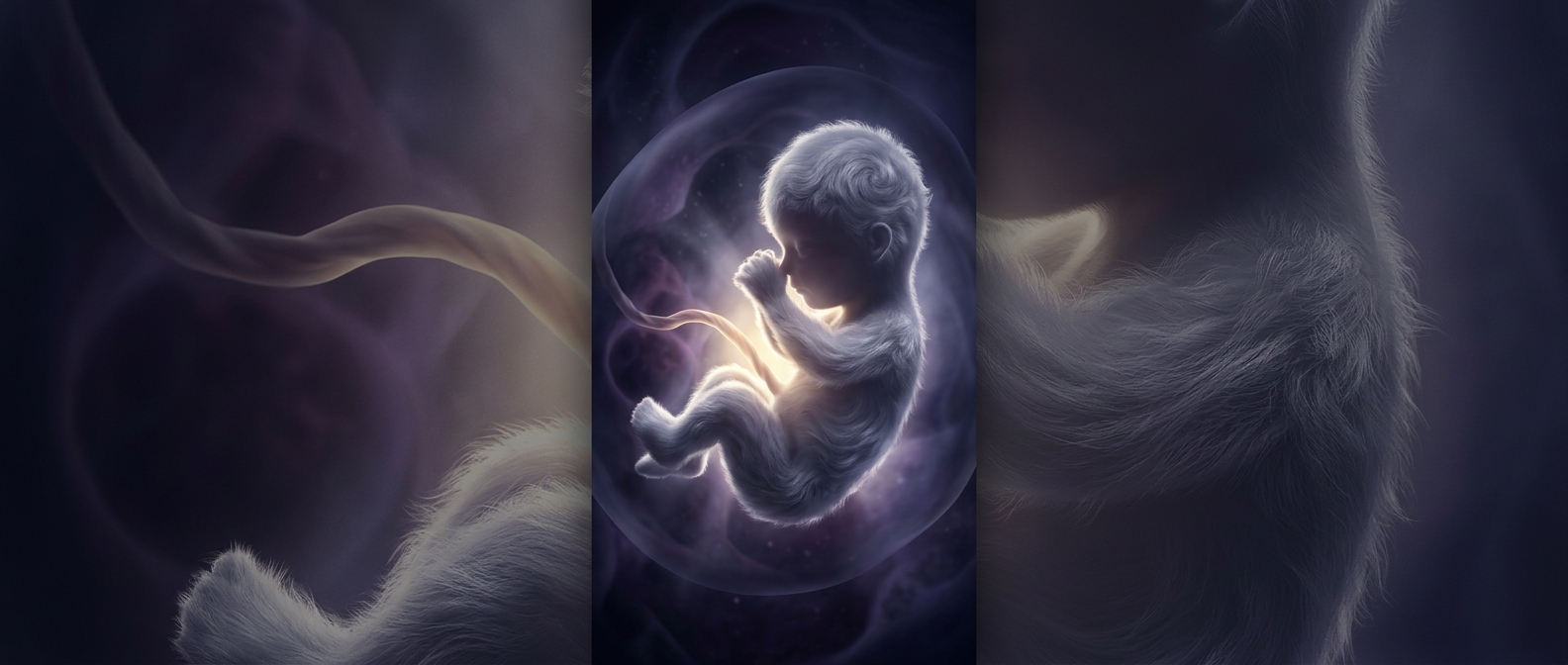
A temporary coat with a protective role
Lanugo is the soft, fine hair that covers much of a fetus’s skin during pregnancy. It is not merely an early version of the thicker hair a child may later grow. The hair helps the fetus’s skin retain vernix caseosa, the creamy, waxy coating that forms on the skin in the womb.
That coating matters because fetal skin spends months surrounded by amniotic fluid. Vernix helps shield the skin from prolonged moisture, and lanugo gives it a surface to cling to. Together, they form part of the skin’s temporary protection before birth.
What happens to it
As pregnancy progresses, the hair is usually shed. Some of it mixes with the amniotic fluid and is swallowed by the fetus; it becomes part of the material that later passes as the newborn’s first stool. Lanugo that remains at birth is especially common in babies born early, whose skin may still be in an earlier stage of development.
The leftover hair typically disappears on its own in the first weeks of life. A newborn’s soft fuzz is therefore a visible trace of a protective system built for the watery environment before birth—not a sign that the baby will keep that coat as they grow.