A sink became a measuring instrument
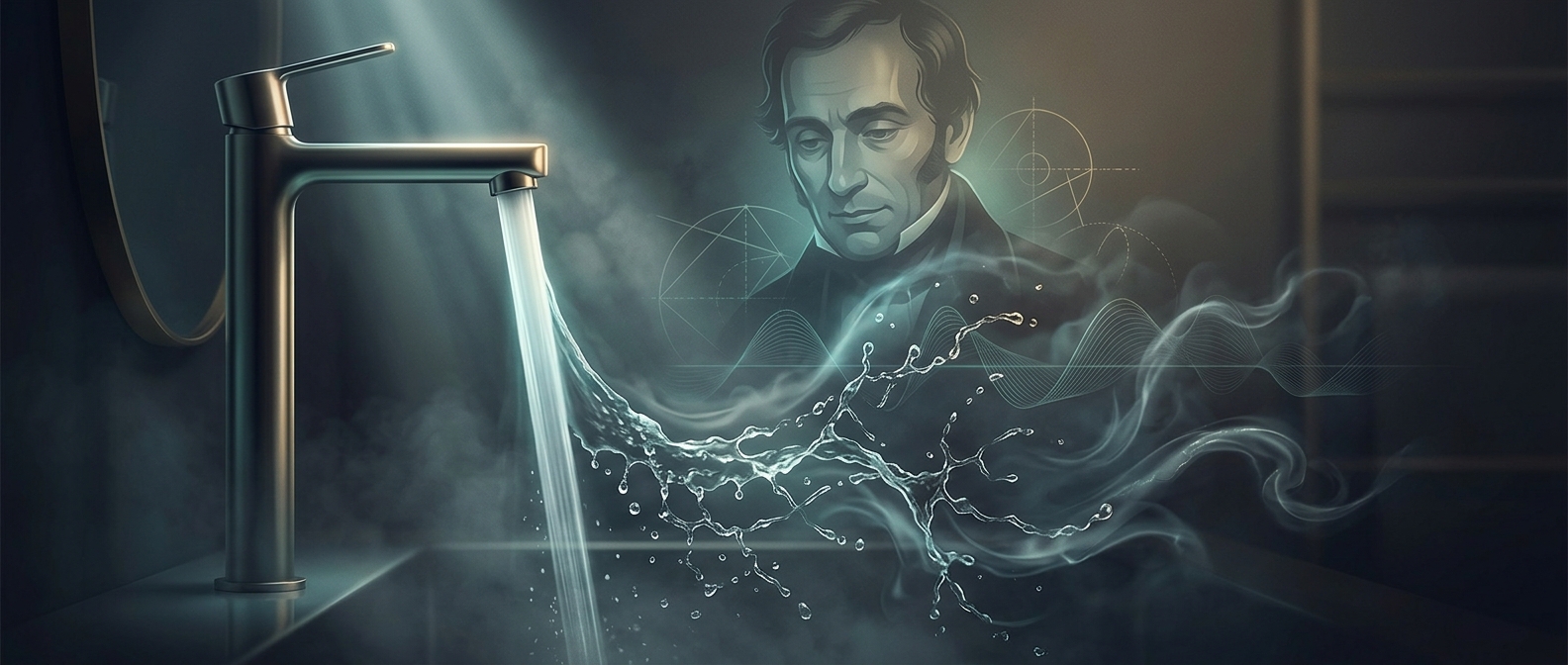
Agnes Pockels noticed that a little oil could change how water behaved at its surface. That was more than a kitchen curiosity: the surface’s resistance to being stretched or enlarged—surface tension—could reveal how substances were arranged at the boundary between water and air.
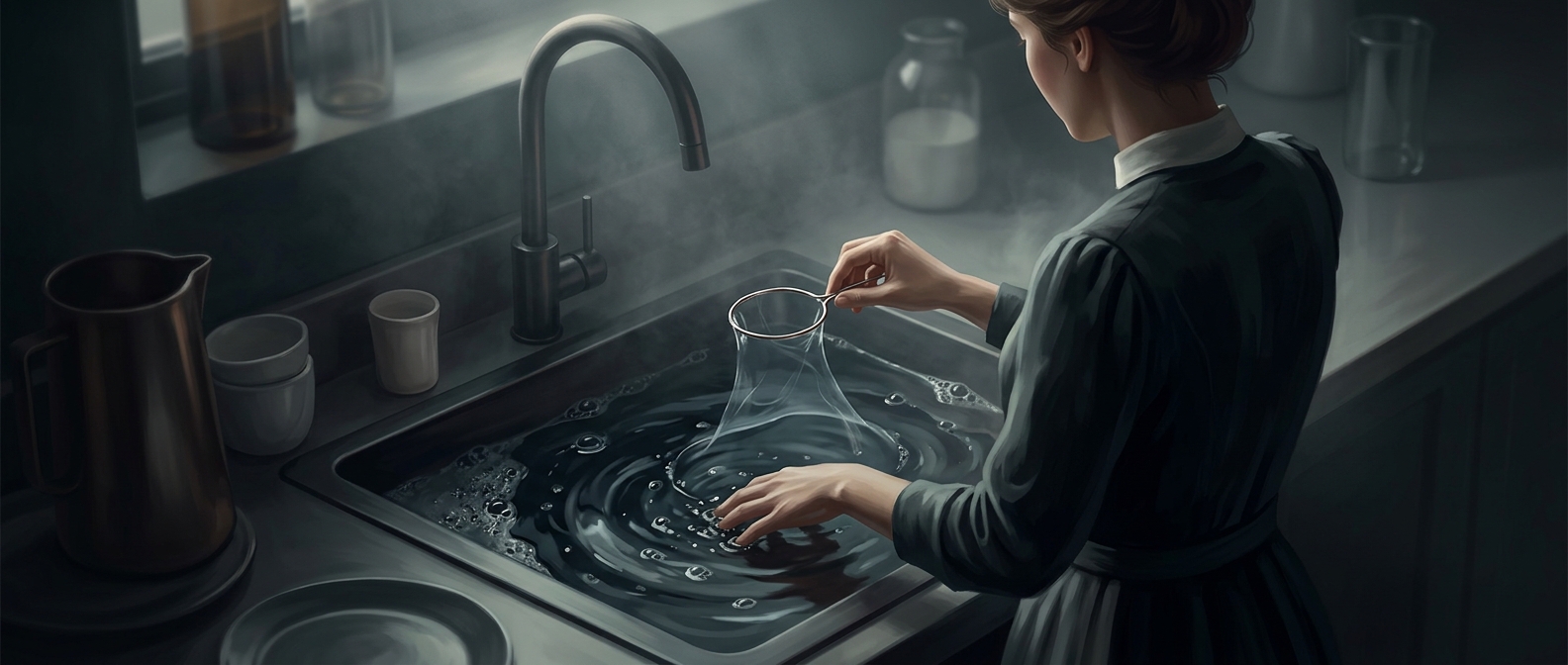
Pockels built a simple trough in her sink and placed a movable barrier across the water. Oil or soap spread into a thin film on the surface. By shifting the barrier, she could change the area available to that film and observe how the surface responded. The setup made an invisible property visible through movement and resistance.
Why a thin film changes the surface
Water molecules attract one another. At the surface, molecules have fewer neighbors above them, so the surface behaves somewhat like a stretched skin. Oil and soap molecules gather at that boundary and alter how strongly the water’s surface holds together. Soap, for example, makes it easier for water to spread and interact with greasy surfaces—a useful effect at the dishpan, but also a measurable change in surface tension.
The barrier mattered because it let Pockels control the film rather than merely observe a drop of oil drifting unpredictably. Compressing or spreading the film changed how crowded its molecules were, and the water’s response offered clues about the relationship between a substance’s amount at the surface and the force there.
From household observation to surface science
Pockels lacked access to a formal laboratory, so she adapted familiar materials and careful observation into an instrument. Her measurements helped establish ways to study surface films: extremely thin layers of molecules whose behavior matters in areas such as emulsions, coatings, and detergents.
The memorable part is not simply that dishwater inspired an experiment. It is that a movable strip in a sink turned a domestic nuisance—oil spreading across water—into a controlled test of forces too small to see.