How a Soft Background Makes a Reality-TV Set Look Cleaner
A camera does not record every distance with equal sharpness. When the lens is focused on a person nearby, objects farther behind them can fall outside the camera’s depth of field—the range that appears acceptably sharp. The lens renders those out-of-focus details as soft shapes rather than crisp edges. A jumble of cables, equipment, or half-cleared work surfaces can therefore recede instead of competing with the person on screen.
The Look Comes From Camera Choices
A cinematographer can make the in-focus range narrower by opening the lens aperture, moving the camera closer to the subject, or using a lens with a longer focal length. Each choice changes the image: a wide aperture also lets in more light, while a closer camera or longer lens changes how large the subject and background appear relative to each other.
That softness is not simply a blur effect added afterward. It is created as the image is captured, by how the camera and lens are set up. The result can make a crowded production space feel more controlled and draw the viewer’s attention to a contestant’s expression, a chef’s hands, or the food being prepared.
A Polished Look With a Practical Tradeoff
Shallow focus demands accurate focusing. If a contestant leans forward or turns quickly, the camera operator—or a focus assistant—may need to keep adjusting so the important action stays sharp. That can be tricky in unscripted scenes, where movement and timing are unpredictable. Production teams may use a deeper focus when they need several people or a wider area to remain clear.
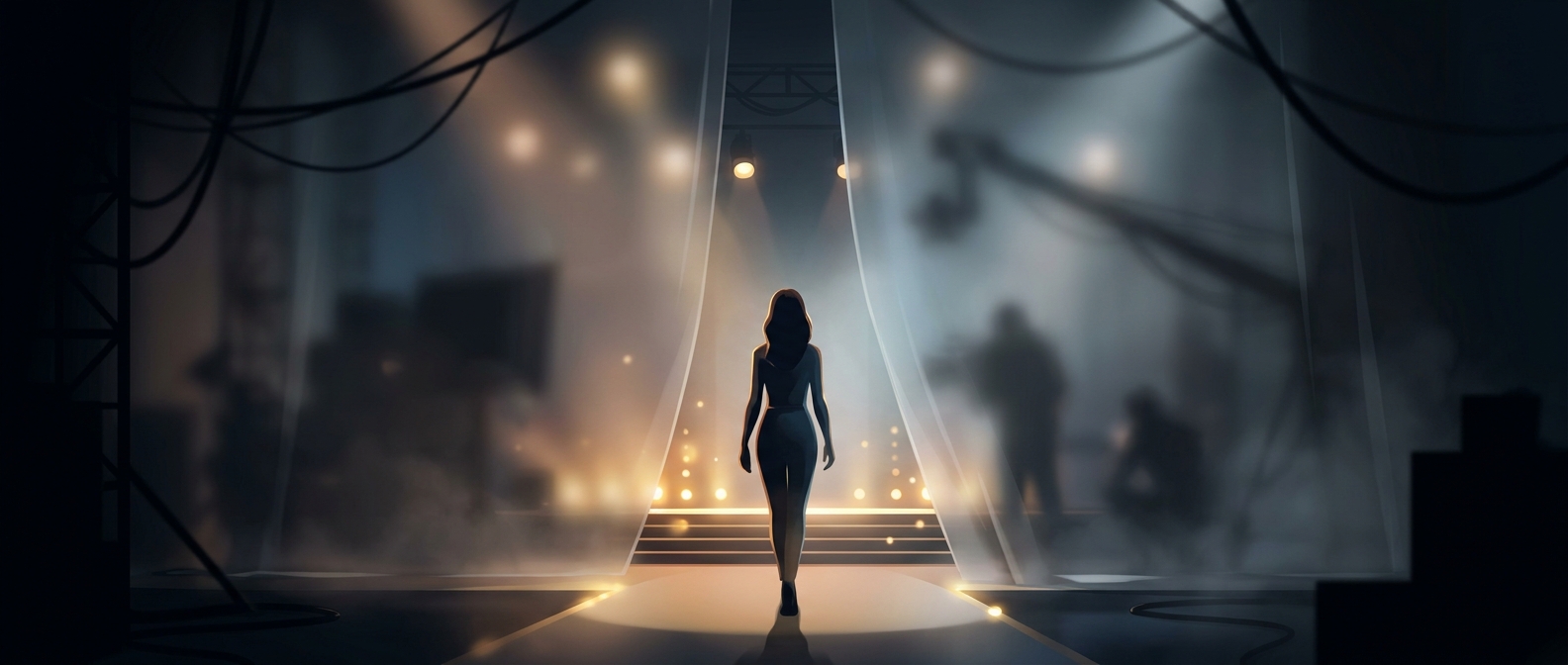
The softened background is thus both an aesthetic choice and a practical one: it can make a busy set less visually distracting without rebuilding or clearing every part of it. What looks like a tidy scene may be a carefully chosen slice of sharpness, with the rest of the studio still just beyond focus.