Twenty outcomes, built from triangles
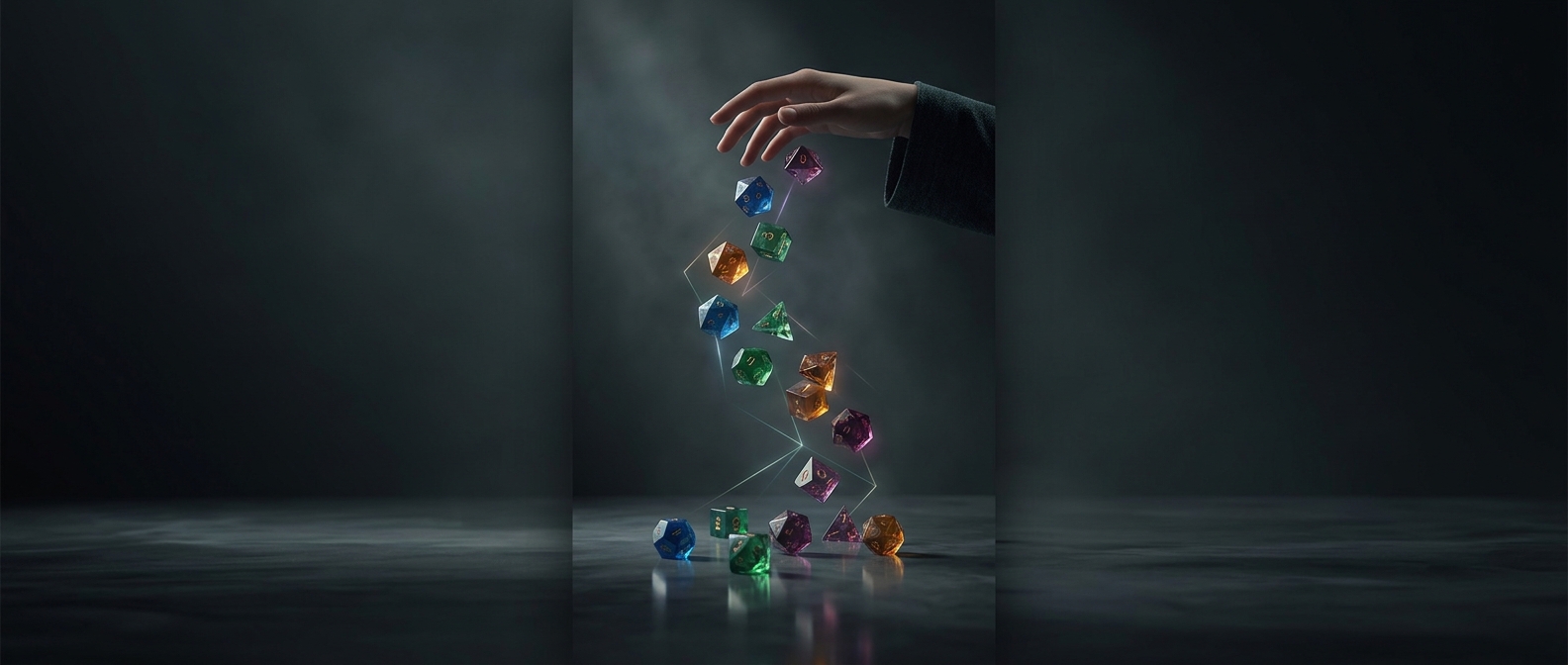
A twenty-sided die is an icosahedron: a solid with 20 triangular faces. Each face can carry a different mark, so a toss can select among many possibilities in one compact object. The geometry is recognizable today because modern role-playing games use the same form for their D20s.
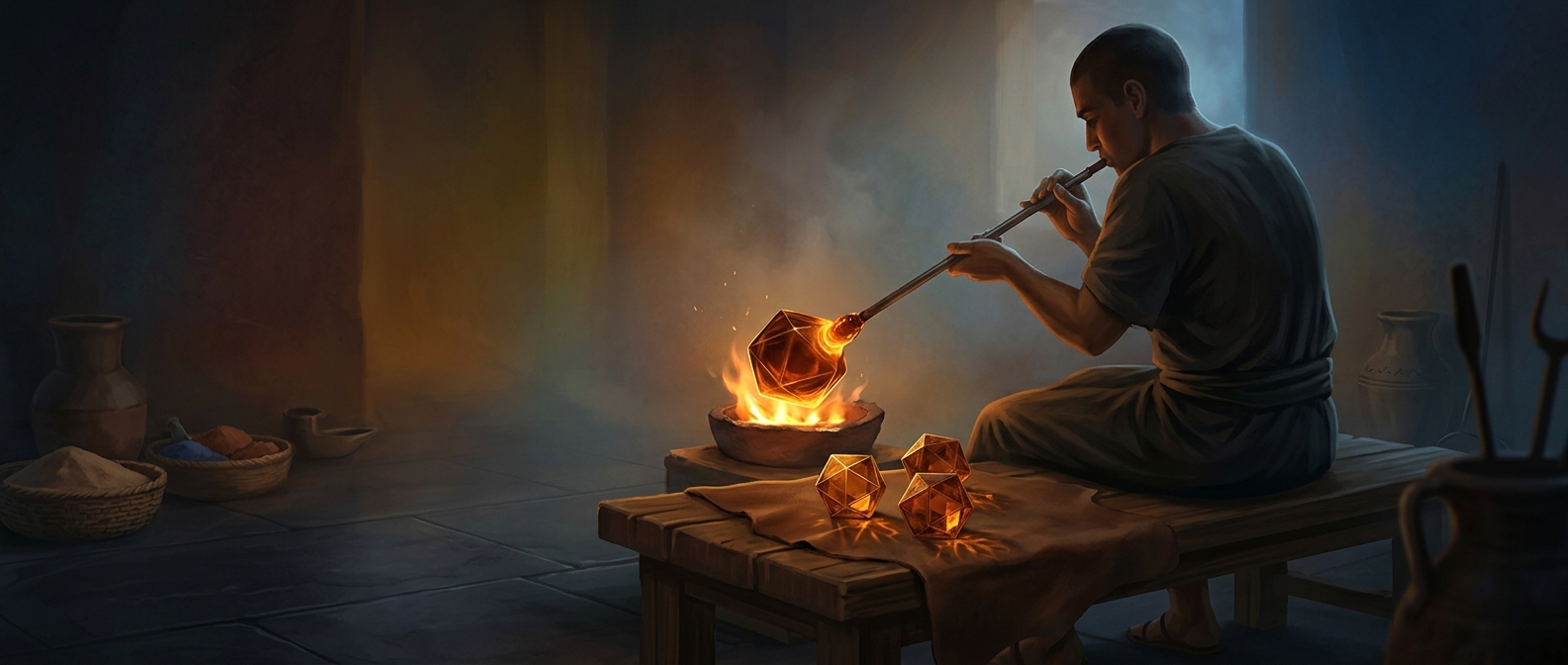
Making one meant shaping a small piece of material into a many-faceted solid, then marking its faces. The object’s appearance shows that ancient makers could create this distinctive shape; it does not, by itself, tell us how evenly the die landed on each face. That depends on details such as the object’s proportions and balance, not simply the number of sides.
Letters leave the purpose open
The surviving ancient examples bear letters rather than the numbers familiar from modern dice. A lettered face could have served as a way to select among written options, but the markings alone do not establish what those options were or how the object was used. Its exact purpose remains uncertain.
That uncertainty is part of the object’s appeal: it preserves the design without preserving the instructions. The ancient die was not necessarily a role-playing game accessory, but its twenty-sided shape makes a long-lived idea tangible—one small toss can turn chance into one of many possible choices.