The eye has a limit for rapid change
Vision does not record light as a continuous video. The retina and brain need time to register a change, so a rapidly blinking light eventually appears steady. The speed at which that happens is called the flicker-fusion threshold. It is not one fixed number: brightness, contrast, and viewing conditions can all affect whether flicker remains noticeable.
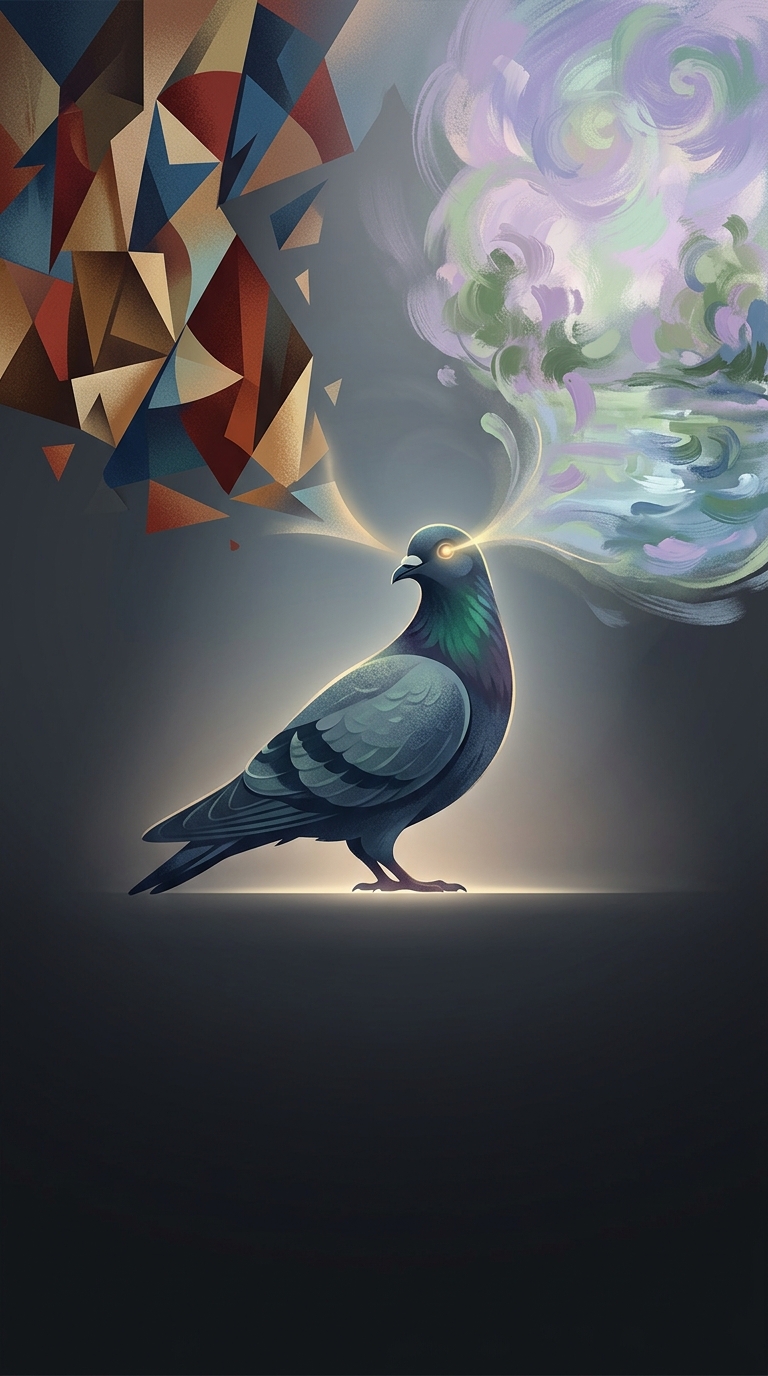
Pigeons can have a higher threshold than people in suitable conditions. Their visual systems can register some rapid changes that a human viewer’s system combines into a steady impression. That difference helps explain why the same display need not look identical to every animal.
A film is a stream of separate images
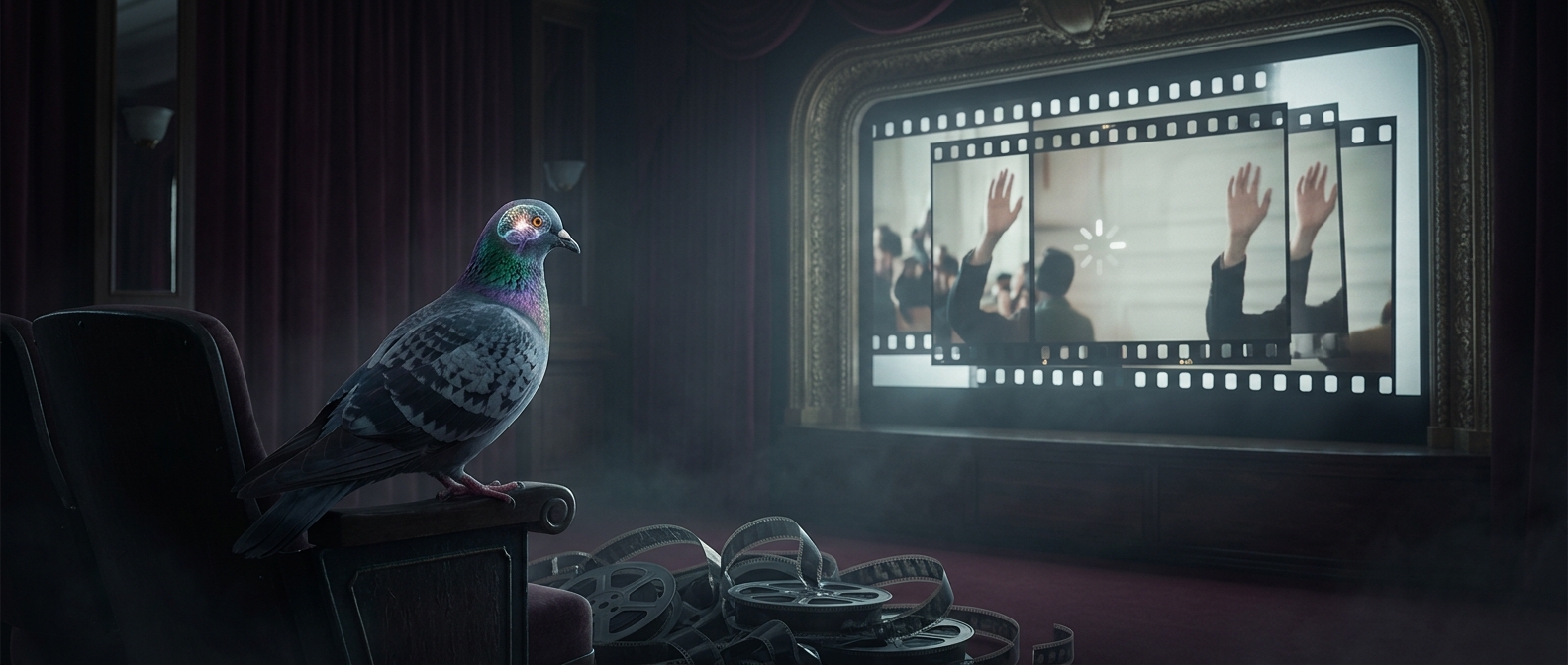
A movie creates apparent motion by showing still frames in quick succession. Human vision links those snapshots into a continuous scene, but the sequence is still made of discrete images. If a viewer can distinguish the transitions, motion may look less seamless; changes in brightness can also be perceived as flicker.
Whether a pigeon would notice a particular movie’s frame changes depends on the display and viewing conditions, as well as on the bird. A higher flicker-fusion threshold does not mean that every film must look like a slideshow to a pigeon. It means the smoothness humans take for granted may not be shared by all viewers.
Smoothness is partly in the observer
The practical lesson is that “flicker-free” is not an absolute property of a screen. It describes how the display appears to a particular visual system under particular conditions. A movie can seem seamless to a person while still exposing the rapid succession of images to an animal capable of resolving faster changes.