The soundtrack ran beside the picture
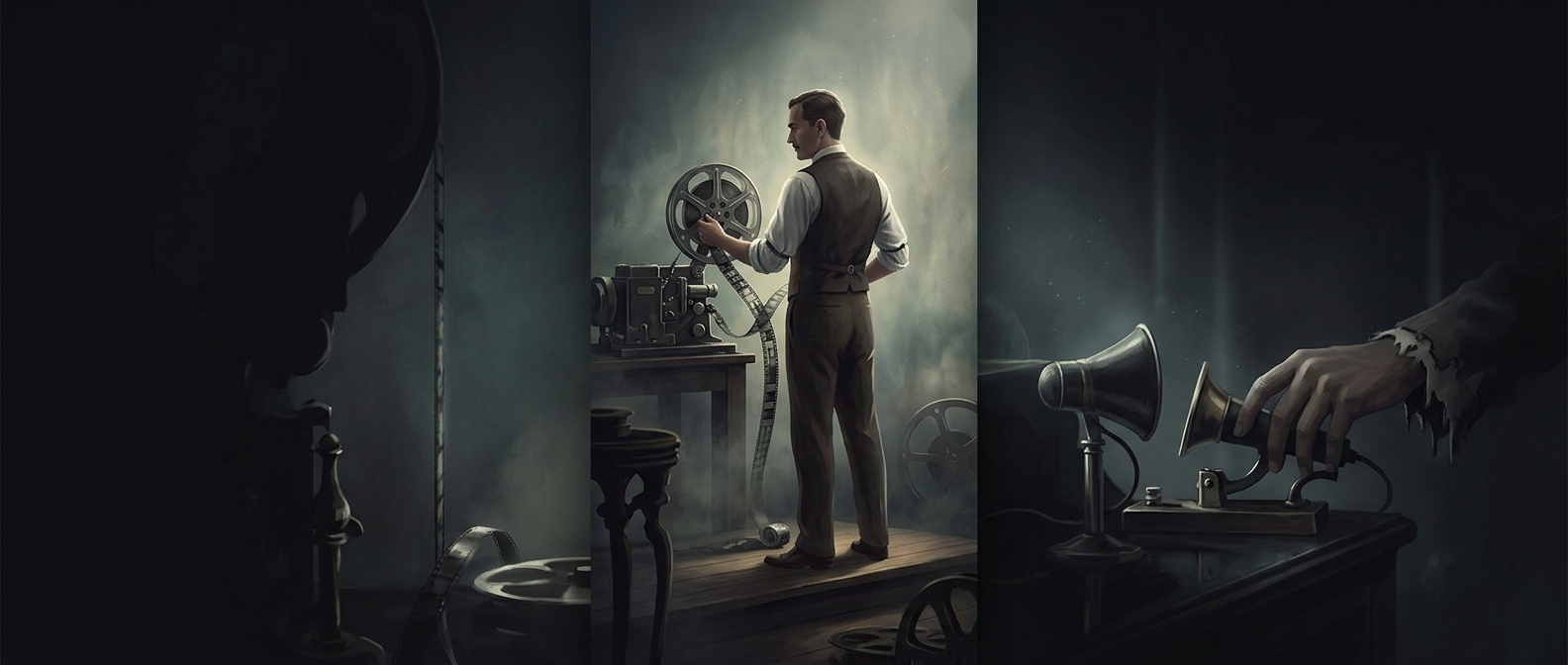
Lee de Forest’s Phonofilm put sound and images on the same strip of film. Along one edge, a microphone’s sound was recorded as a changing pattern of light and dark. In a theater, a lamp and a light-sensitive cell read that pattern; the cell turned it back into an electrical signal that could be amplified through a speaker.
Because the soundtrack traveled with the image, the two stayed synchronized as the film moved through the projector. That was a crucial practical advantage over systems that recorded sound on a separate disc: a disc could slip out of sync or require careful handling alongside each reel.
A working invention, not an industry standard
De Forest demonstrated Phonofilm in the early 1920s and used it for short films, including performances and spoken material. But proving that synchronized sound could work was different from persuading studios and theaters to rebuild around it. Silent filmmaking already had established production routines and projection equipment; sound required microphones, recording systems, and playback gear that could work reliably together.
The major studios did not take up his system as the basis for the industry’s transition. When Hollywood moved toward sound later in the decade, it did so through other commercial arrangements and technologies. The shift was not simply a matter of choosing the cleverest invention: studios had to believe that audiences would pay for sound and that theaters could install and operate it at scale.
The missed opportunity was also a warning
Phonofilm showed that sound could be attached to the film itself years before synchronized movies became Hollywood’s standard. Its fate illustrates how a technical lead can fail to become a commercial one: an invention must fit the finances, equipment, and habits of an entire industry—not just work on screen. When sound finally transformed movies, the basic problem de Forest had tackled was already solved; the harder challenge had been getting the business to adopt a solution.