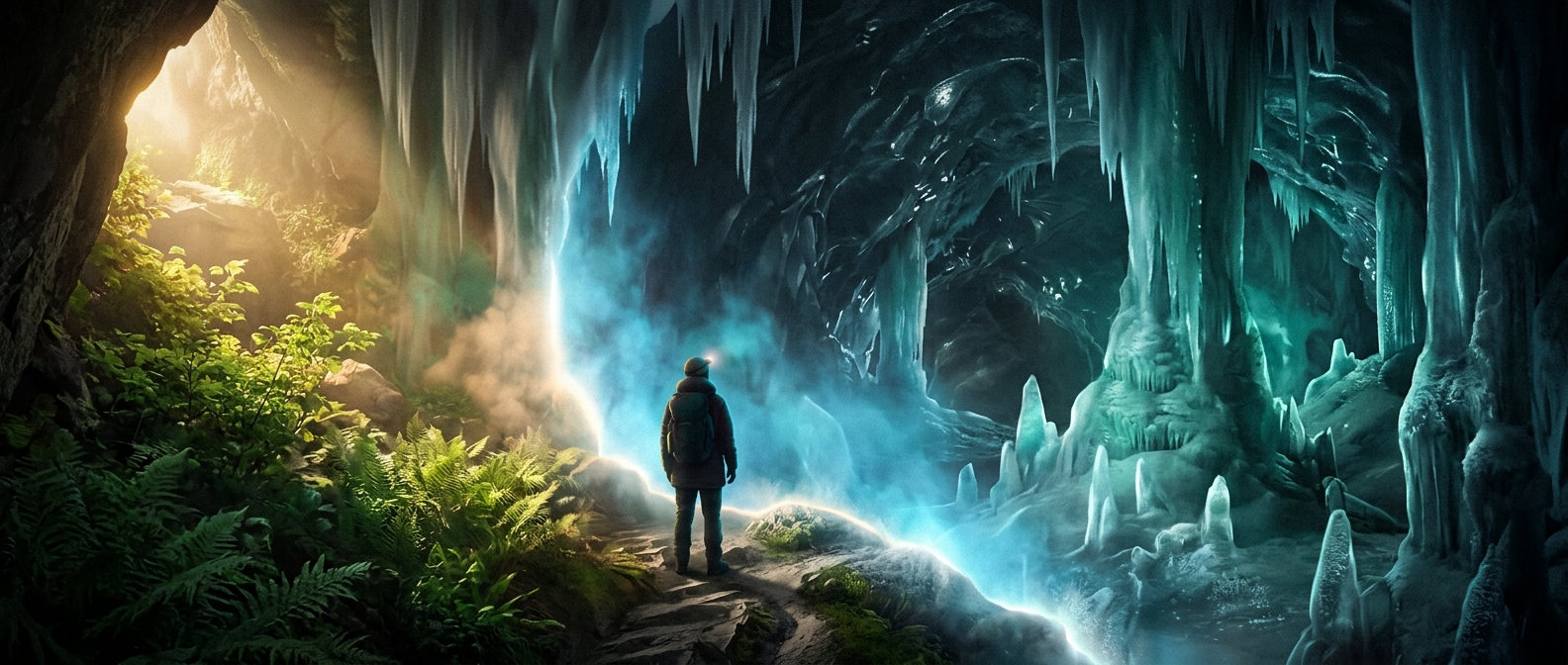
How Summer Air Helps Build the Ice
Eisriesenwelt’s ice forms where moving air and water meet rock that has stayed cold. In winter, cold outside air can flow into the cave and chill its passages. The surrounding rock then acts as a store of cold, keeping parts of the cave below freezing even after the weather outside warms.
In summer, water from rain and melting snow seeps into the cave through cracks. When it reaches those still-cold passages, it freezes onto the floor, walls, or existing ice. Each season can add another thin layer; over many seasons, the layers grow into tall columns and other ice formations.
A Cave That Holds On to Winter
The cave’s narrow passages help preserve this cold rather than letting every change in outside temperature reach its interior at once. Ice also changes temperature slowly, so large formations can remain cold while warmer air moves through the tunnels. The result is not a single deep freeze, but a repeating cycle: winter cools the cave, and summer water adds to the ice.
That cycle makes the formations a record of the cave’s seasonal exchange with the surface. The striking summer ice is, in effect, winter’s stored cold made visible.