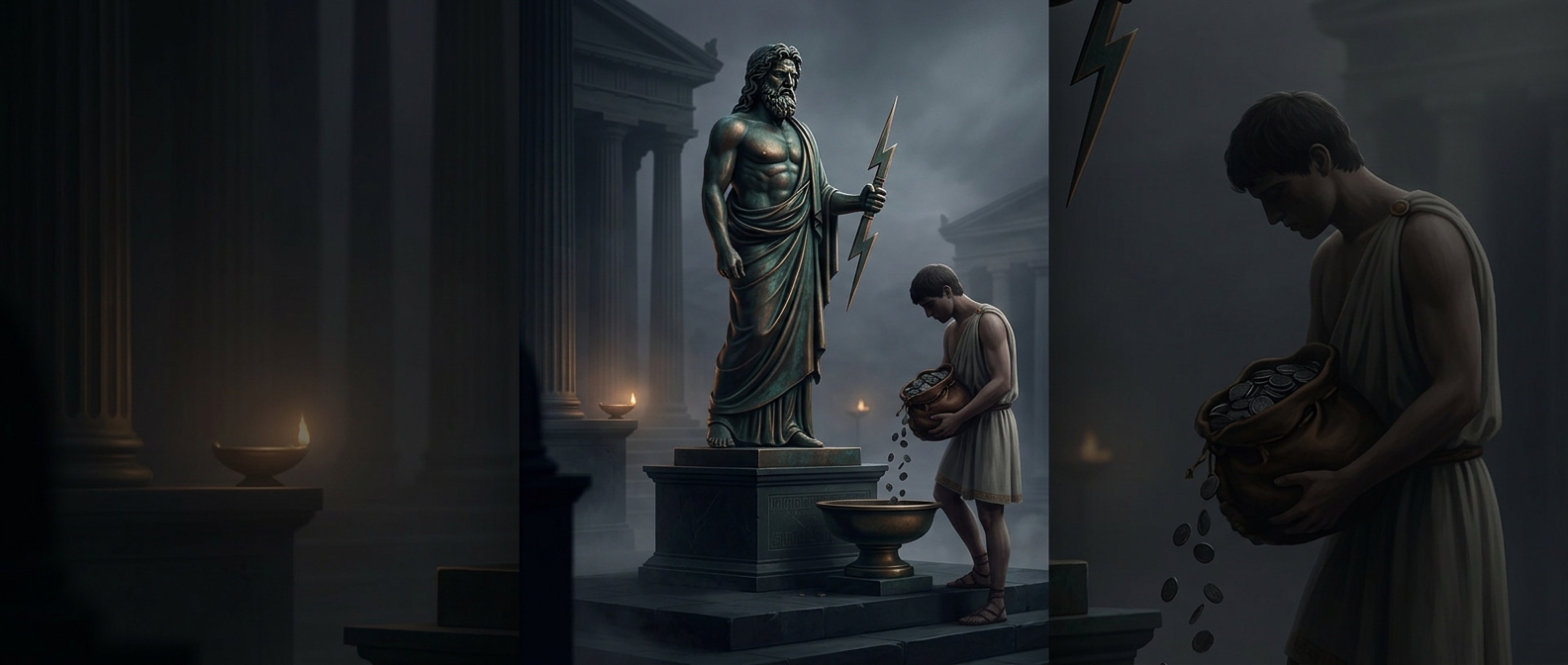
A penalty placed in the athletes’ path
At Olympia, a fine for cheating did more than take money from an athlete. It funded a bronze image of Zeus placed along the route leading into the stadium. The statues, known as Zanes, made the sanction part of the landscape: competitors approaching the games passed a visible reminder that the sanctuary had punished rule-breaking before.
The placement mattered. A fine paid privately might settle a case and then disappear from view. A statue on the way to competition kept the consequence in front of athletes and visitors alike, turning punishment into a warning for anyone entering the stadium.
The offender’s name became part of the warning
The inscriptions identified the athlete, his father, and his city. That detail carried the disgrace beyond the individual: it attached the offense to a family name and a community as well. The payment therefore imposed two costs at once—financial loss and public exposure.
The Zanes also made enforcement visible. Rather than relying only on rules that athletes might never see applied, Olympia displayed the result of a caught offense in a prominent place. The route into the stadium became a kind of public record, where each named statue showed that competing for honor could bring lasting dishonor when an athlete cheated.