How pig squeals became the demon’s voice
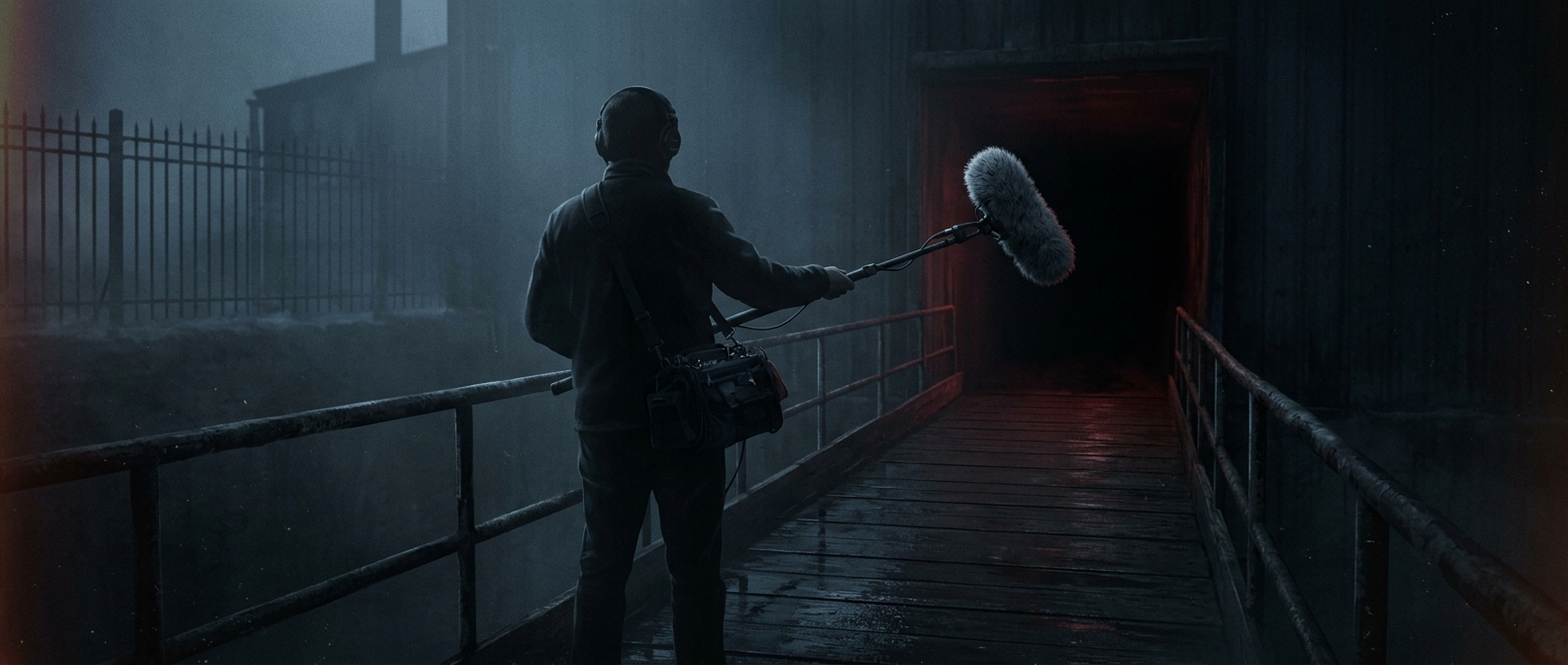
For The Exorcist, the challenge was to make a possession sound less like an ordinary human scream and more like something violently unfamiliar. The sound team turned to pigs: their squeals, recorded at a slaughterhouse, had a sharp, strained quality that could make the demon’s cries feel startlingly physical.
A recording like this is raw material, not a finished movie effect. Editors can select and shape particular moments, then place them against an actor’s performance and the scene’s other sounds. That lets a nonhuman source register as a voice while still sounding unlike anything a person could comfortably imitate.
Why the sound unsettles
A pig’s squeal carries recognizable signs of distress: it rises abruptly, strains, and breaks into rough, piercing tones. Those features give the noise an immediate emotional force, even before a viewer has time to interpret what is happening. In a possession scene, that animal sound also makes the demon seem to come from outside the human body, while emerging through it.
The effect depends on contrast. A familiar face and voice belong to a person; an unfamiliar, animal-like cry interrupts that expectation. The result makes the scene feel less like a conventional performance and more like a body producing a sound it should not be able to make. That is why the recording’s origin matters: the terror was built from a real animal sound, transformed into part of the film’s imagined supernatural world.