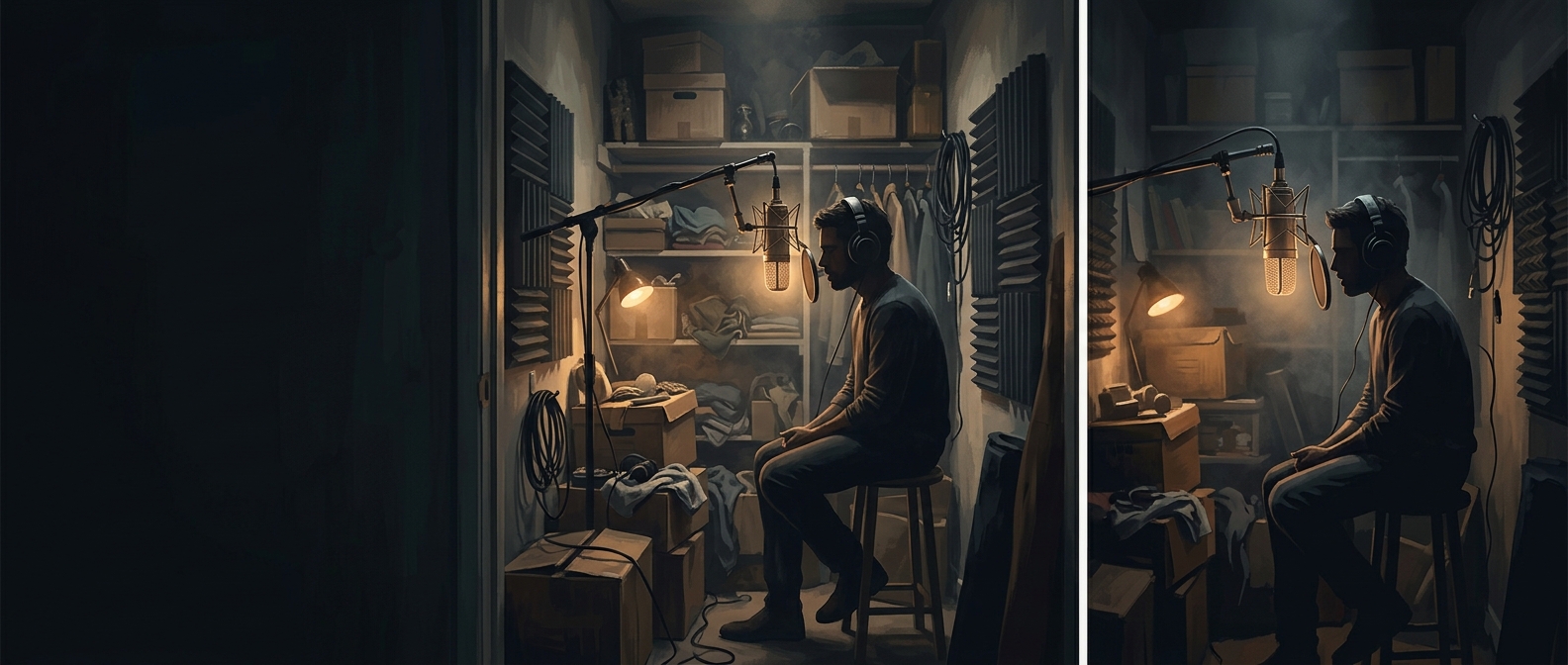
Why a Small Closet Can Sound Better on Mic
A voice recorded in an empty room often picks up more than the speaker. Sound bounces off hard walls, ceiling, and floor, arriving at the microphone a fraction of a second after the original. Those reflections blur consonants and make speech sound roomy or hollow—a problem called echo or reverberation.
A closet full of clothes interrupts that bounce. Fabric and the air trapped among garments absorb some sound energy instead of sending it straight back across the room. The result is a drier, more direct voice, which is easier to understand and easier to shape later in editing.
A Makeshift Studio, With Limits
Closets are useful because they are small and often already contain soft materials. That makes them a practical workaround when a host has no treated recording room. But small does not automatically mean good: a bare closet can still sound boxy, and a microphone placed too close to clothing may pick up muffled sound or rustling. The speaker also has to fit comfortably enough to stay still and deliver a consistent performance.
The goal is not to make the voice sound as though it was recorded inside a closet. It is to reduce distracting room reflections before they reach the microphone. Once those echoes are captured, software can reduce some of their impact, but it cannot cleanly separate every reflection from the voice. A few jackets between the mic and hard surfaces can therefore do useful work before recording even begins.