A snack that helped sell another round
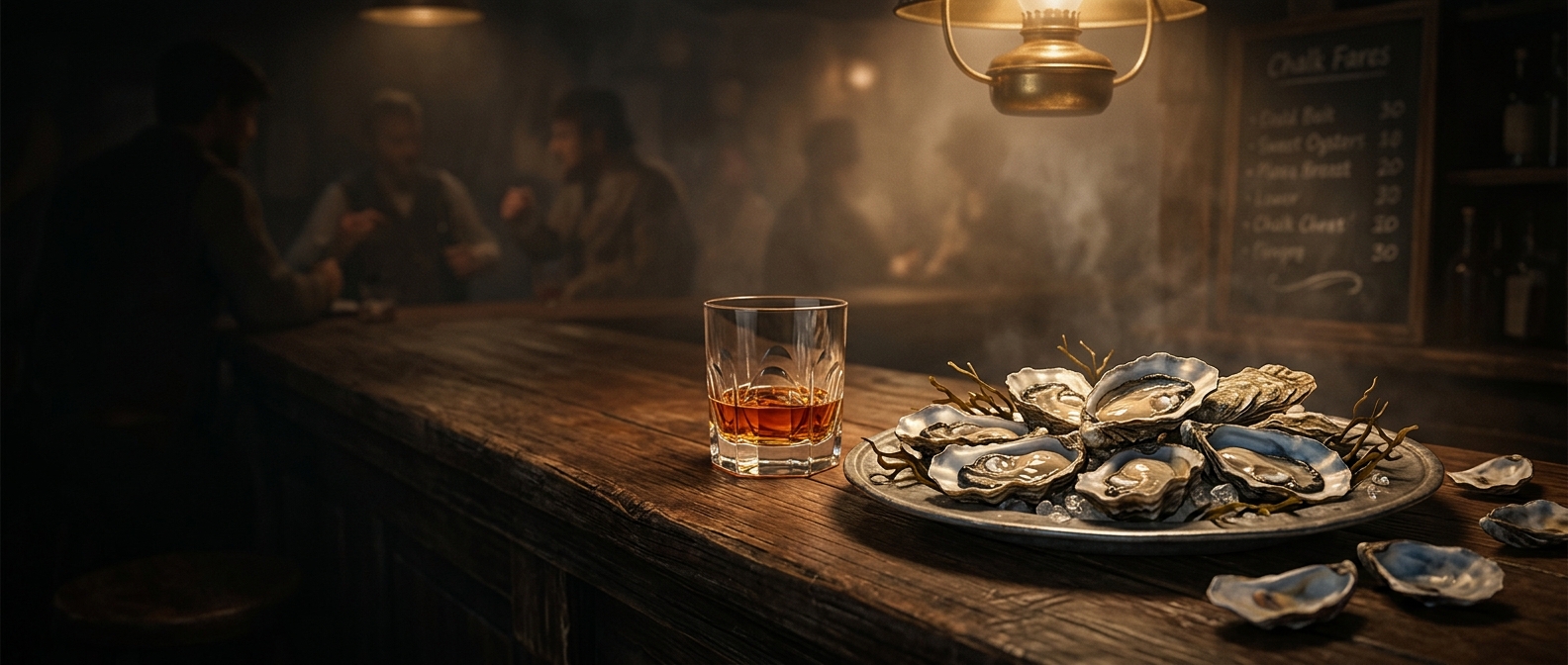
In many 19th-century taverns, oysters were an inexpensive way to make a beer seem like a better deal. The bar could offer a small plate at little cost when oysters were readily available, while the customer got more than a drink for the price. The giveaway was not merely hospitality: it gave people a reason to order—and stay for—beer.
Salt created a simple sales loop
Oysters were naturally briny, and tavern food could be salted as well. A thirsty customer was more likely to want a drink, so a plate of oysters could help turn one beer into another. The tavern’s calculation was straightforward: spend a little on food to encourage purchases with a larger return.
That made the oyster different from a free extra with no commercial purpose. It was a small, tangible incentive that worked at the table, where the next order was easy to make. The customer got a snack; the tavern gained a chance to sell more beer.
Abundance made the bargain possible
The custom depended on oysters being cheap and plentiful enough to serve casually. When an item is inexpensive, giving it away can be more attractive than charging for it if it brings customers in or keeps them buying. The oyster was both food and promotion: its low cost made the offer practical, and its saltiness helped make beer more appealing.
So the pairing was not just a matter of taste. It was a piece of tavern economics, with a briny plate doing quiet work behind the bar.