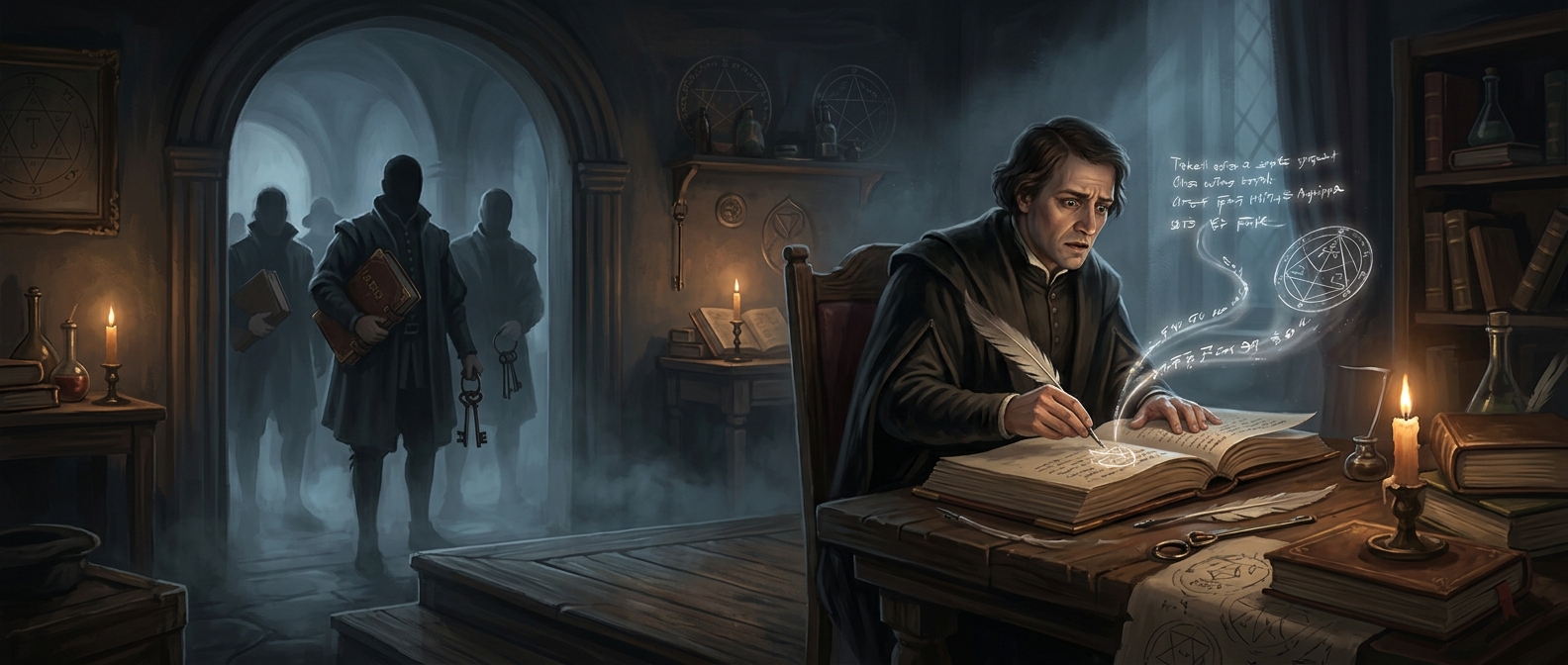
Agrippa’s Magic Was a System of Correspondences
Heinrich Cornelius Agrippa’s Three Books of Occult Philosophy tried to map how the universe’s different layers supposedly influenced one another. In Renaissance thought, nature, the planets, and the divine were not separate domains: plants and stones had hidden properties, the stars shaped earthly events, and spiritual beings occupied a place in the same ordered cosmos.
Agrippa arranged the subject in three stages: natural properties, celestial influences, and ceremonial or religious practices. The book described rituals and forms of knowledge intended to engage angels, demons, and planetary powers. Those were claims within the period’s magical and religious worldview—not demonstrated methods for controlling supernatural forces. “Occult” here meant hidden knowledge, not simply sinister or forbidden practice.
Learning Could Bring Prestige; It Could Not Guarantee Security
A work of this scope could make its author valuable to educated readers and powerful patrons. But intellectual reputation did not provide a steady income. Agrippa’s dependence on noble support left him exposed when money ran short, and the debt trouble described in accounts of his life brought imprisonment as well as appeals for financial help.
That tension helps explain why the book’s grand design and its author’s practical circumstances sit so uneasily together. Agrippa sought to describe a universe that could be understood through disciplined knowledge and ritual, while his own livelihood depended on the unreliable favor of people with money and influence. The result is a striking Renaissance paradox: a handbook claiming to organize hidden powers, written by a scholar who could not reliably command the material means to stay out of debt.