A line turns the exit into the deployment signal
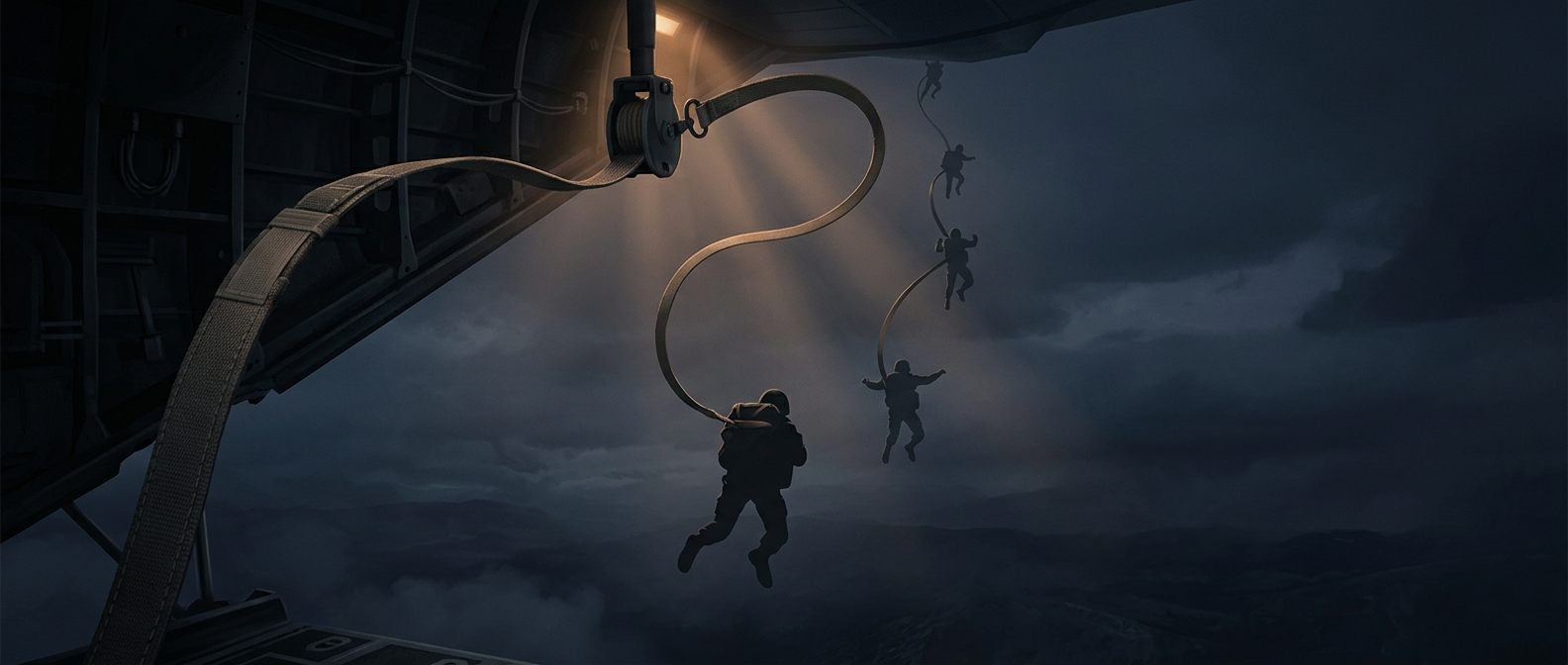
A static-line system makes the aircraft’s movement start the parachute-opening sequence. Before a jump, each parachute is connected to a line secured inside the aircraft. When a paratrooper leaves, the departing body carries the parachute pack away from that anchor, drawing the line taut. The line then releases the deployment bag that holds the folded canopy.
The canopy does not go from packed to fully inflated in one instant. It is pulled clear, its lines extend, and air fills the fabric as it trails behind the jumper. The static line’s job is to begin that sequence reliably—not to steer the parachute or control the descent.
The airplane supplies the timing
In a freefall jump, a person must deploy the parachute by operating a handle at the right moment. A static line shifts that task to the connection between the jumper and aircraft: leaving the plane triggers deployment without requiring the jumper to locate and pull a handle amid the rush of the exit.
That automation comes with a tradeoff. Because deployment follows the exit, jumpers cannot choose to delay opening for a period of freefall. The method also depends on orderly exits and properly managed connections: a line must remain attached long enough to initiate deployment, then separate from the aircraft as intended. The system replaces one fast human action with a carefully arranged mechanical sequence.
A simple mechanism still needs discipline
The line is straightforward, but the jump is not simply “step out and let go.” Equipment must be prepared correctly, and jumpers must leave in a controlled way so lines and people do not interfere with one another. The key design advantage is that the aircraft provides a consistent cue at a moment when individual actions could be difficult to coordinate. Every exit begins the same essential process: the jumper moves away, the line tightens, and the parachute starts to deploy.