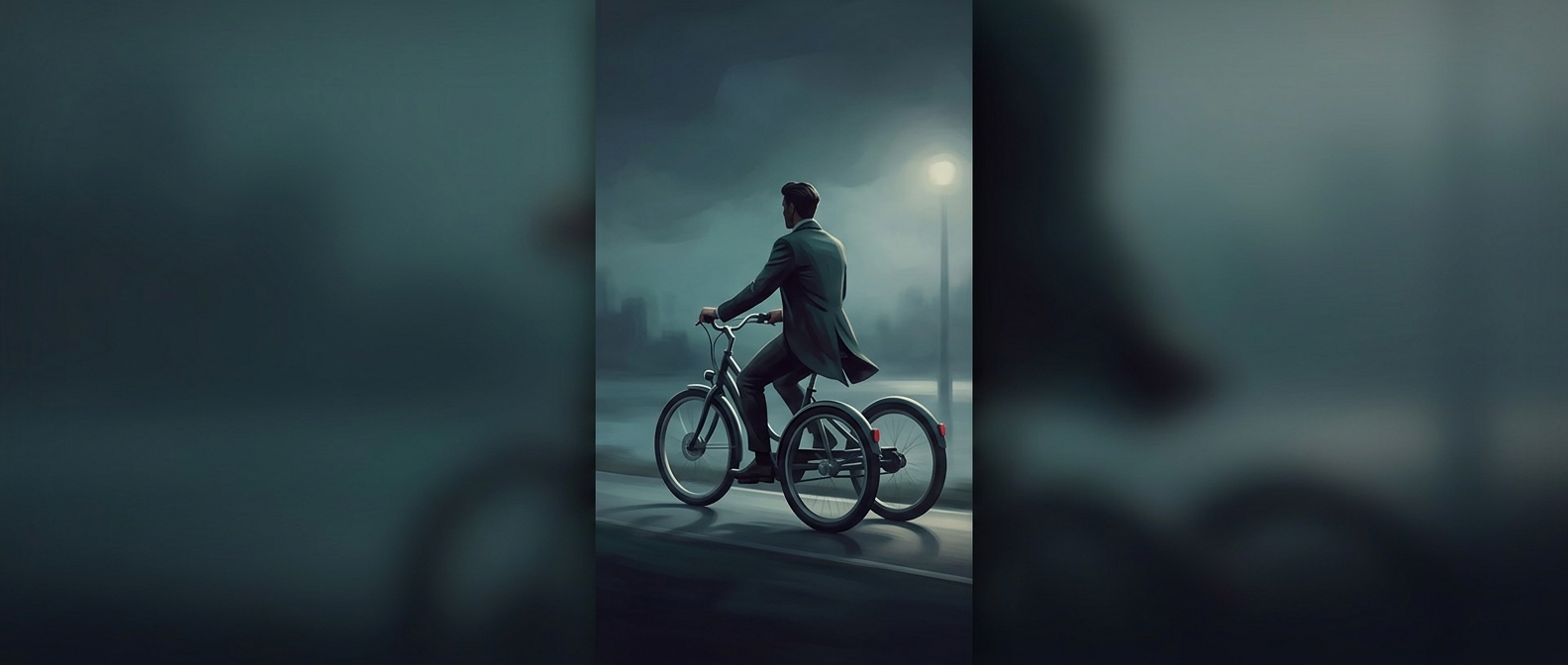
The geometry that keeps a tricycle upright
A bicycle balances partly by leaning: its two narrow tire contact points form a line, and the rider steers and shifts weight to keep the bike moving beneath them. An adult tricycle has a different support shape. Its three tire contact points make a triangle, so the frame can remain upright while stopped as long as the combined weight of rider and tricycle stays within that triangle.
That means a rider can pause, mount, or dismount without putting a foot down to catch a fall. The tricycle’s frame and seat support the rider instead of requiring constant small corrections to balance.
Stability changes how it turns
The same geometry that helps at a stop also affects cornering. A bicycle can lean into a turn, helping keep the rider and bike aligned as they change direction. A conventional tricycle generally cannot lean that way, so a turn shifts weight toward the outside wheels. If the turn is sharp or fast, that shift can lift an inside wheel or, in an extreme case, tip the tricycle.
Riders therefore need to steer more deliberately and slow down for tight turns. The tradeoff is especially noticeable in many adult tricycles, which place two wheels at the rear: their wide rear axle gives them a stable base when parked, but it does not make every maneuver effortless.
A different kind of confidence
The tricycle’s advantage is not that it defeats every balance problem, but that it removes balancing from the task of staying upright at rest. That can make stopping with a load, starting again, or getting on and off feel more secure. In exchange, the rider gets a vehicle that turns differently from a bicycle—and must respect the limits of its three-wheel stance.