Why the cold could not stop the fire
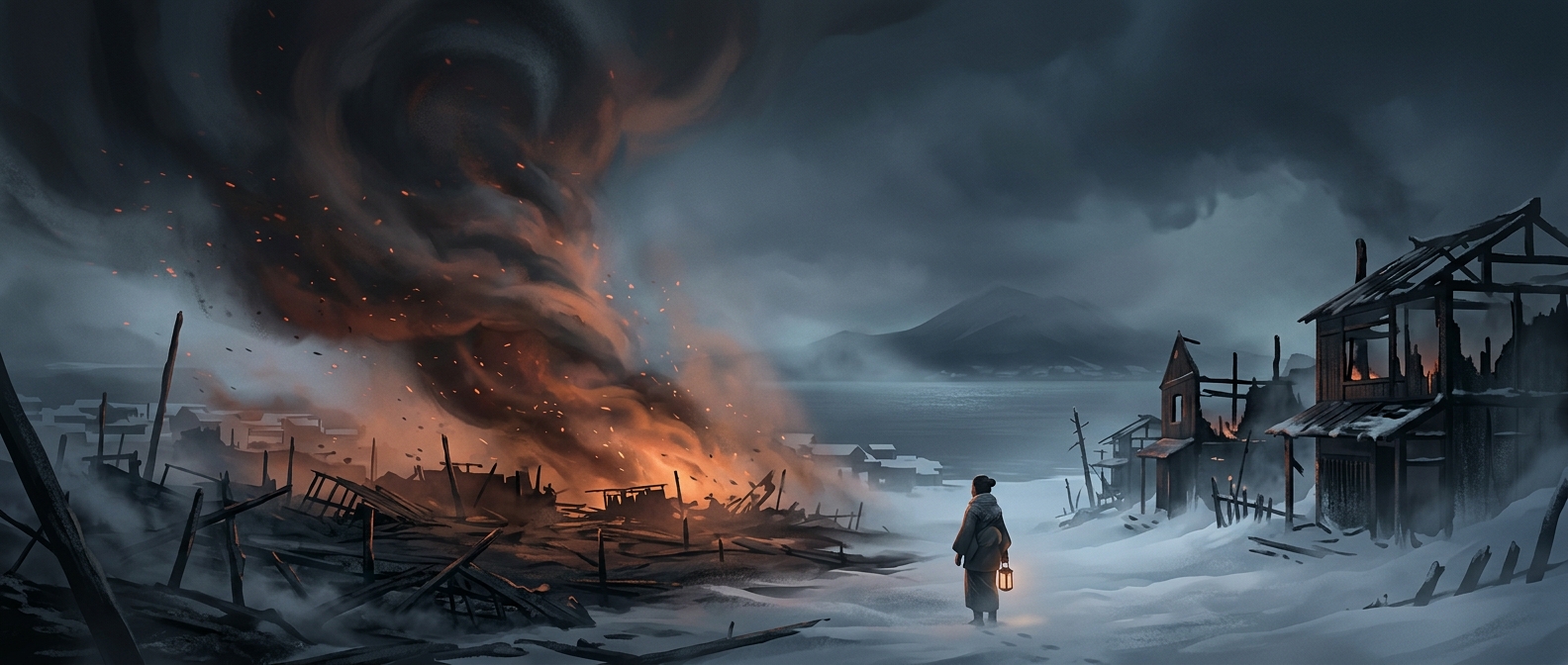
Freezing air can make a fire harder to start, but it does not put out flames once combustible material is burning. In Hakodate, the crucial force was the wind: it supplied oxygen to the blaze and pushed sparks and burning fragments ahead of it. Those embers could ignite new spots before firefighters had contained the original fire, turning one outbreak into several advancing fronts.
Wind changed the scale of the disaster
In a built-up area, flames do not need to move as a single wall. A gust can carry embers over streets or gaps between buildings, allowing fire to leap past obstacles and find fresh fuel. If one structure catches, its burning materials can send more embers onward. The result is a chain reaction in which each new ignition helps extend the fire’s reach.
That is how winter weather became part of the disaster rather than a safeguard against it. The cold made the setting feel inhospitable to fire, but the wind gave a small blaze a way to spread across the city. A fire’s danger, in other words, depends not just on how it begins, but on what the air carries next.