Why a Bare Chest Sells the Fantasy
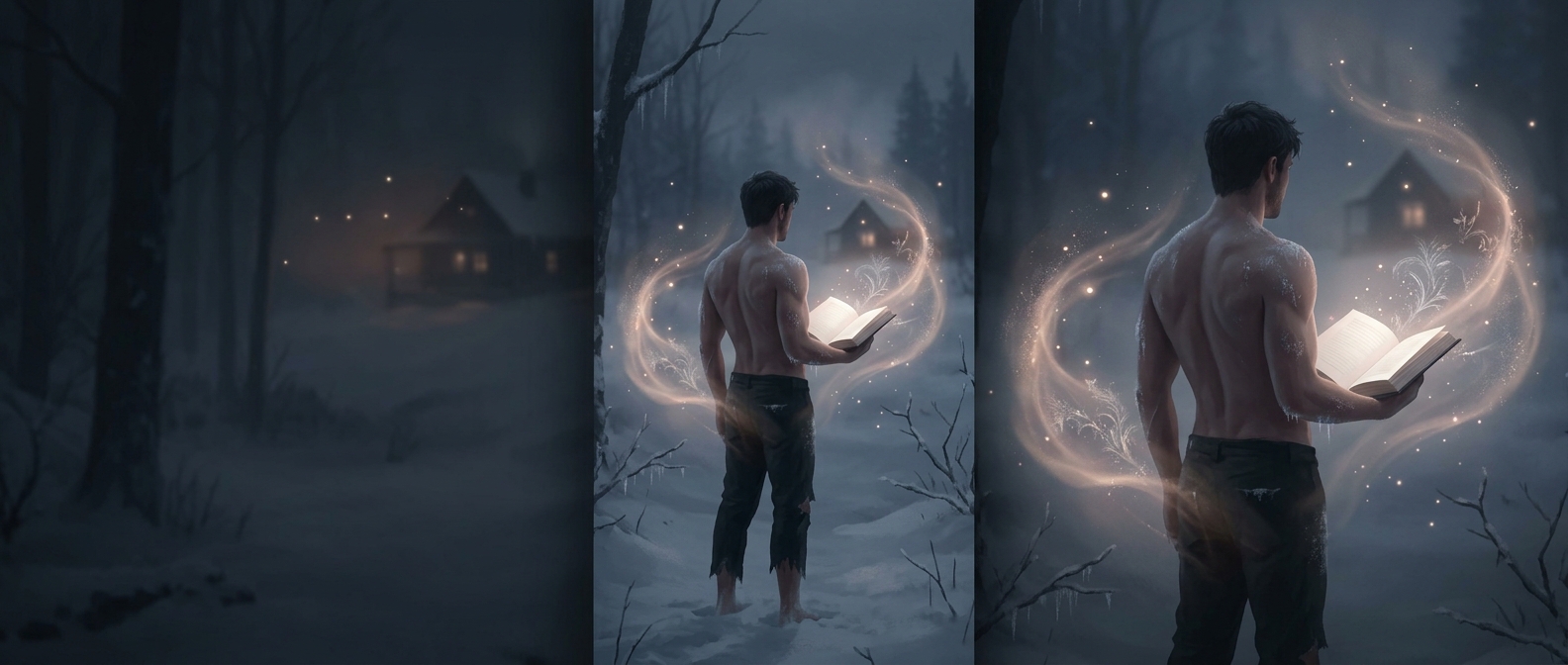
A romance cover has only a moment to signal what kind of story waits inside. A muscular, bare-chested hero communicates physical confidence and erotic charge at a glance—qualities that might take many pages to develop in the story. Put him in a storm with a sword, and the image adds danger, adventure, and a larger-than-life setting. The contrast is part of the appeal: the scene promises peril, while the hero looks almost impervious to it.
That image is not meant to function as a practical guide to surviving winter. It works more like visual shorthand, compressing character and mood into a single pose. A coat might make the scene more believable, but it could also hide the body that tells readers they are looking at a sensual romance.
A Cover Has to Read at a Glance
Cover art also has a design problem: it must remain recognizable when reduced to a small thumbnail. A face, bare torso, weapon, and sweeping snow can create strong, distinct shapes. Layers of dark winter clothing may blend into a similarly dark background, while exposed skin draws the eye and keeps the central figure legible.
The result is a deliberate tradeoff between realism and genre signaling. The blizzard supplies the drama; the uncovered hero supplies the promise of attraction. Together, they tell a quick story before the reader opens the book: this is a romance with danger and spectacle, where emotional and physical intensity matter more than weatherproof wardrobe choices.