What a Long Cave Retreat Was For
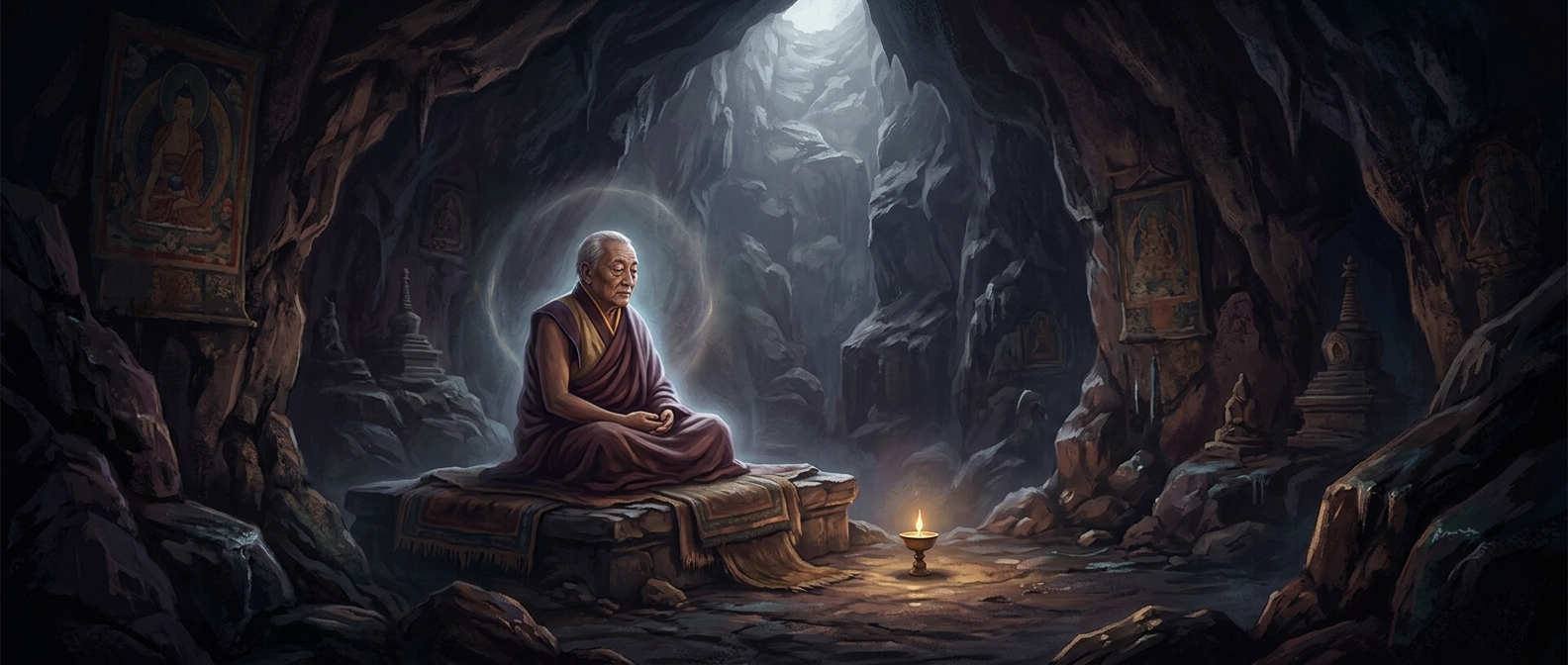
For Dilgo Khyentse, the cave was not simply a place to withdraw from society. In Tibetan Buddhism, a retreat is a deliberately structured period of practice: a person steps away from ordinary responsibilities to devote sustained attention to meditation, prayer, study, and the teachings received from teachers. A remote cave offered something practical as well as symbolic—few distractions and a setting in which daily life could be organized around that work.
The word “isolated” can make the retreat sound like twenty-two years of doing nothing but sitting alone. Buddhist retreat, however, is disciplined activity. Meditation is only one part of it; practice can also involve reciting texts, contemplating their meaning, and repeating rituals. The point is to make those practices the center of life for an extended time rather than fit them around work and public obligations.
From Seclusion to Teaching
Such a period could shape a teacher’s later authority. In Tibetan Buddhist traditions, knowledge is not treated only as information to pass along; it is also something to be practiced and embodied. Years of retreat gave Khyentse an intensive foundation for the teaching and guidance for which he later became influential.
That did not make the cave a permanent escape from the world. Retreat and teaching served different stages of the same religious life: seclusion concentrated the practice, while teaching carried it outward to other people. The striking detail is the scale of that preparation—more than two decades devoted to a discipline whose results would eventually be shared beyond the wilderness.