Why tag travels so easily
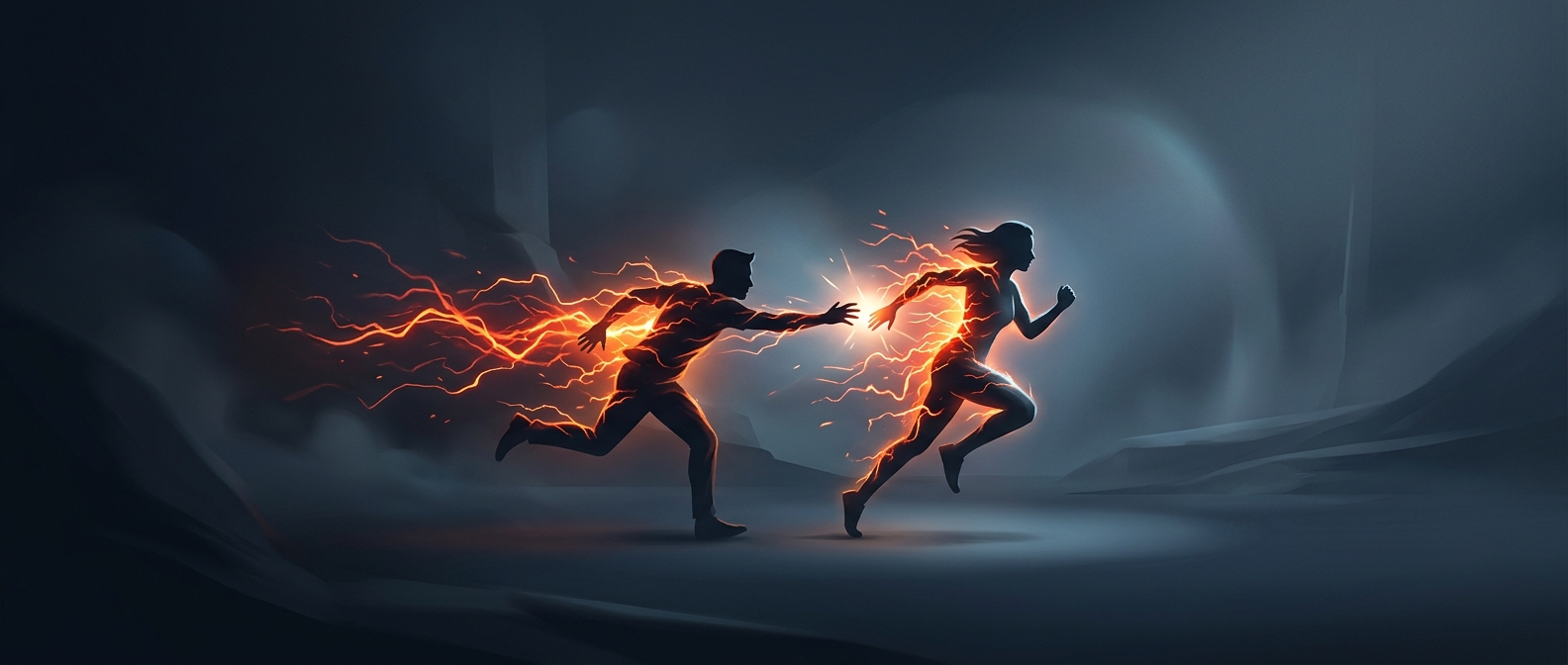
Tag has almost no setup: players need only space to move, and the basic loop is easy to grasp. One person is “it,” tries to touch another, and the newly tagged player takes over the chase. Because the action itself explains the goal, a group can begin playing without written rules, special equipment, or a shared language.
A small rule set leaves room to adapt
That simplicity is not the same as having one fixed version. Players can decide where the boundaries are, whether a tagged person may tag back immediately, or how someone gets a turn away from being “it.” Some groups add safe spots or ways to free a caught player; others keep the game to a plain chase.
These choices solve practical problems. A boundary keeps the game from spreading too far, while a safe spot can give a slower runner a brief pause. The core rule remains recognizable even as players adjust the details to suit their space, group, and pace.
The chase creates its own momentum
The role switch is what keeps a round moving. A successful tag changes who is pursuing whom, so nobody needs to stop play and explain a new phase. Players can also change tactics on the fly: the chaser looks for an opening, while everyone else watches for the moment the target turns toward them.
That makes tag easy to pass along. A child can show the rules with one touch and a burst of running, and the next group can reshape the boundaries without losing the basic game.