How a Silent Street Act Turns a Crowd Into an Audience
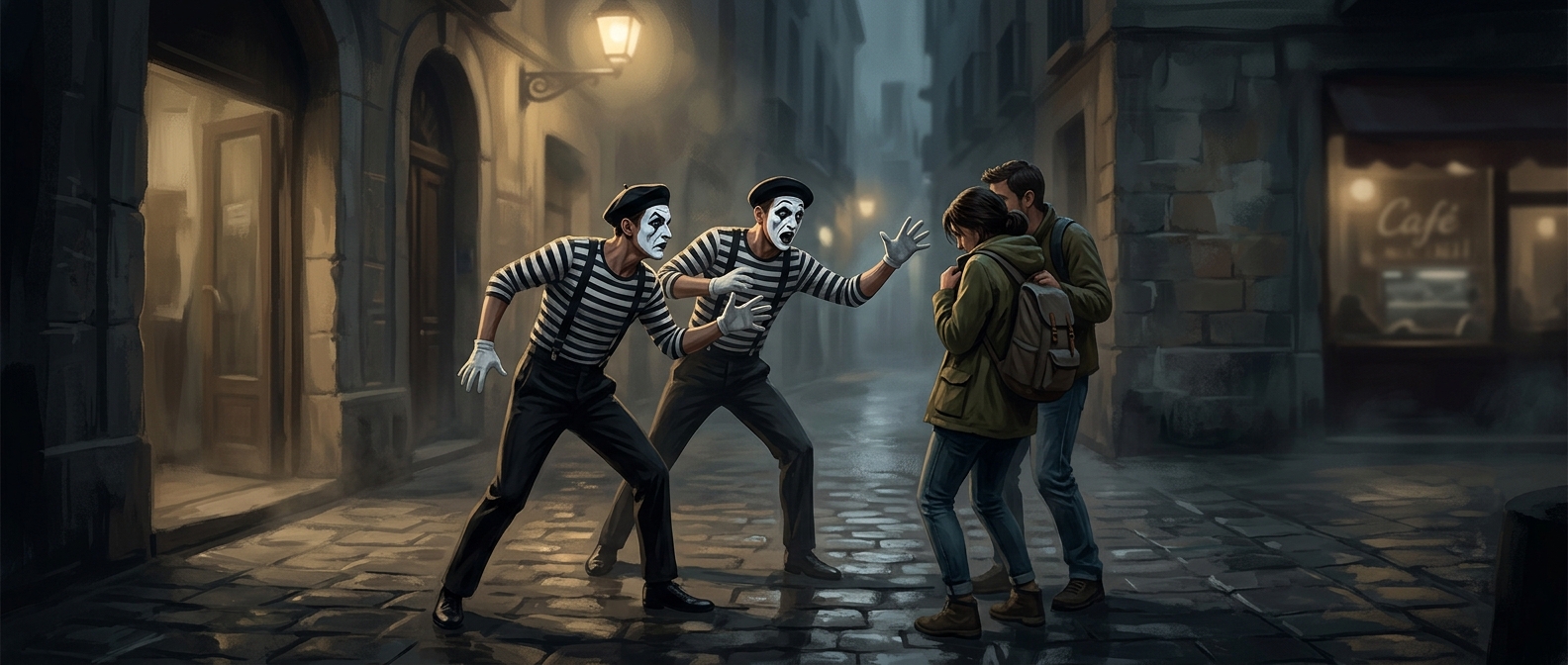
A mime has no spoken script to announce what is happening. Instead, the performer uses exaggerated gestures, facial expressions, and pauses to make a passerby part of the scene. A fixed gaze can function like an invitation—or a challenge: once someone realizes they have been noticed, walking on may feel more conspicuous than stopping.
That small social hesitation gives the performer time to build a joke. In an “invisible box” routine, the mime presses hands against an imagined wall, then steps or leans as if trapped inside it. The audience supplies the missing object in its imagination. If a tourist pauses, smiles, or plays along, the performer has turned an ordinary patch of pavement into a shared bit of theater.
Why the Moment Can Feel Pressured
Street acts unfold at close range, without the clear boundaries of a ticketed show. A performer may approach, hold eye contact, or wait for a response while people nearby watch. The comedy depends partly on that awkward pause: the passerby becomes a character, even if they never agreed to volunteer.
For tourists, the pressure can be sharper because the setting is unfamiliar and the crowd is moving around them. A tip may feel like the expected ending to the encounter, although the amount—and whether to give one—remains the passerby’s choice. The performer’s directness is part of the act’s strategy, not a requirement that every person stop.
The Pavement Is Both Stage and Cash Register
Unlike a theater performer, a street mime often has no set audience or guaranteed fee. The routine must catch attention quickly, work without sound, and leave room for people to contribute afterward. That makes eye contact and participation practical tools as well as theatrical ones: they help turn a fleeting glance into a memorable scene, and sometimes into a tip.