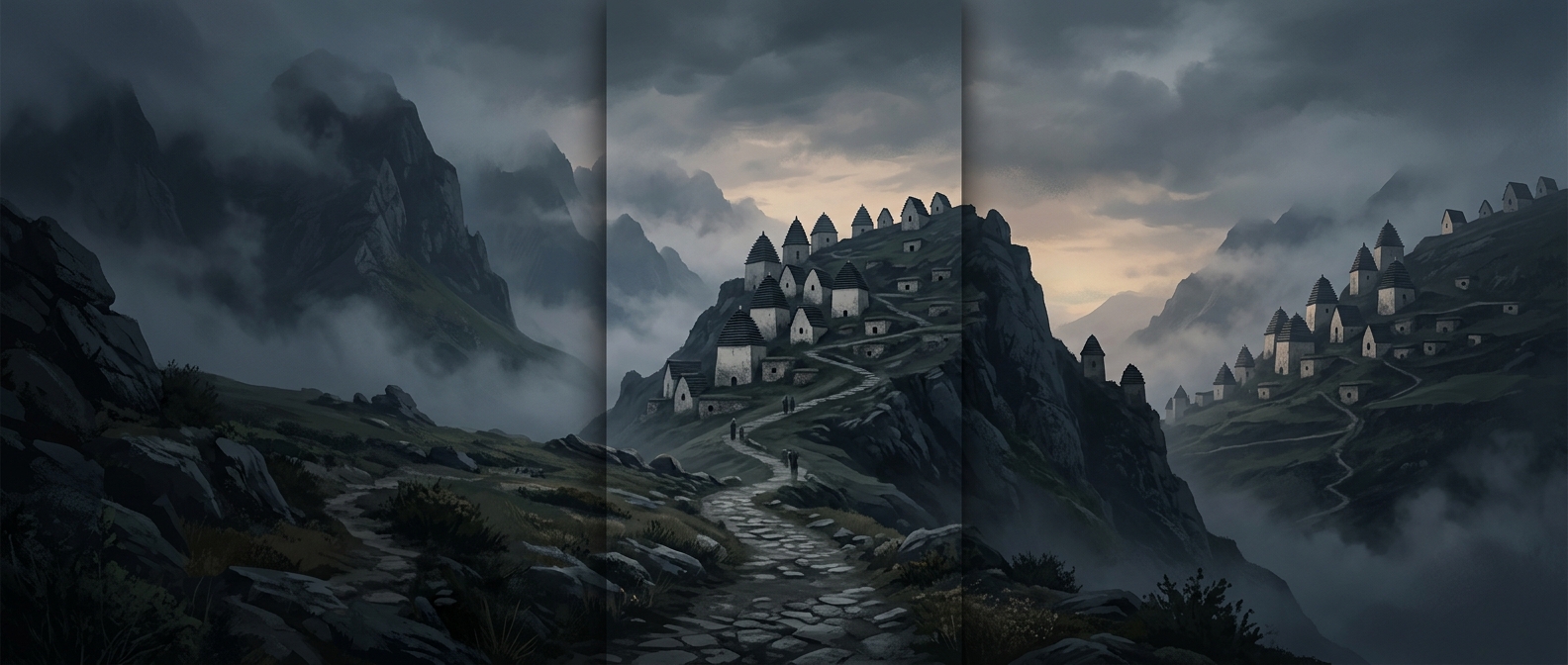
A cemetery, not an abandoned town
Dargavs lies in North Ossetia, in the Caucasus, where a hillside necropolis—an organized burial ground—holds rows of small stone crypts. Their clustered buildings give the site its nickname, the “City of the Dead,” but the name can mislead: these structures are tombs, not houses left behind by a vanished population.
Many crypts are built above ground, with sloping, tiered stone roofs. The design turns the burial chambers into durable masonry structures that stand out against the mountain landscape. Some hold wooden coffins shaped like narrow boats; skeletal remains can be seen inside some chambers.
A landscape of family tombs
The crypts are not all identical. Their different sizes and forms reflect a burial ground built up over time, with tombs associated with families and communities from the surrounding region. Rather than a single monument designed all at once, the site is a collection of separate structures gathered on one slope.
That arrangement is part of what makes Dargavs striking: the mountain setting frames the tombs as a settlement-like cluster, while their open chambers reveal their actual purpose. The boat-shaped coffins are a particularly vivid detail, though their presence alone does not establish one explanation for why they were made that way. What visitors see is both a historic burial place and a record of how local people shaped stone, wood, and architecture around the dead.