The rods turned a football pitch into a room-sized machine
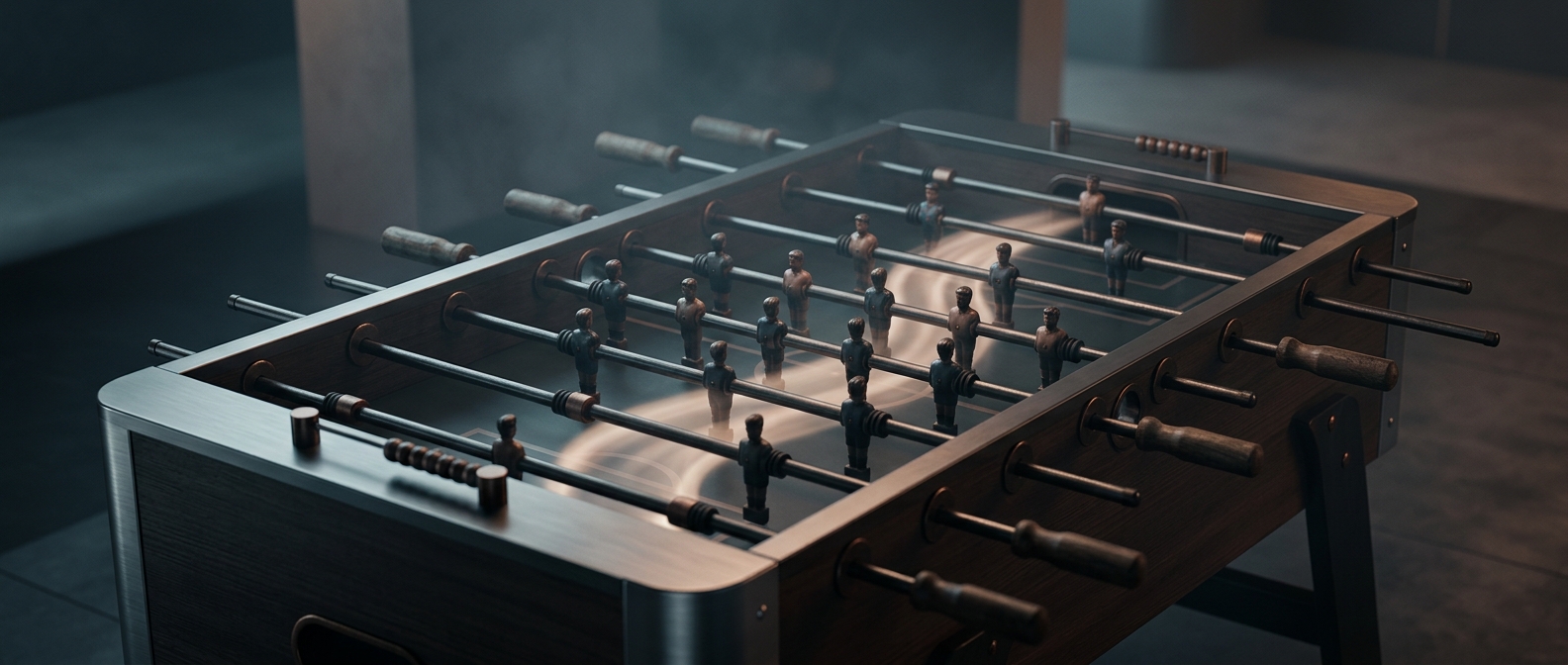
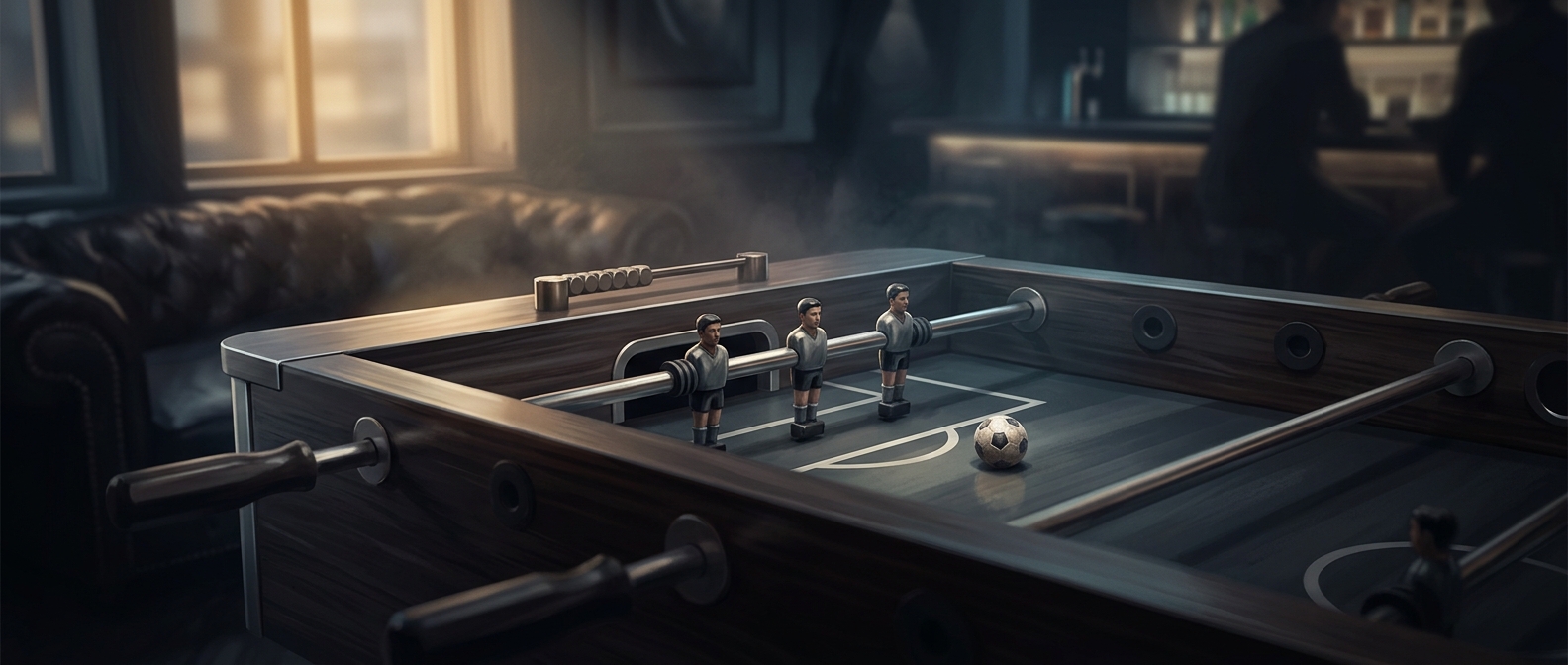
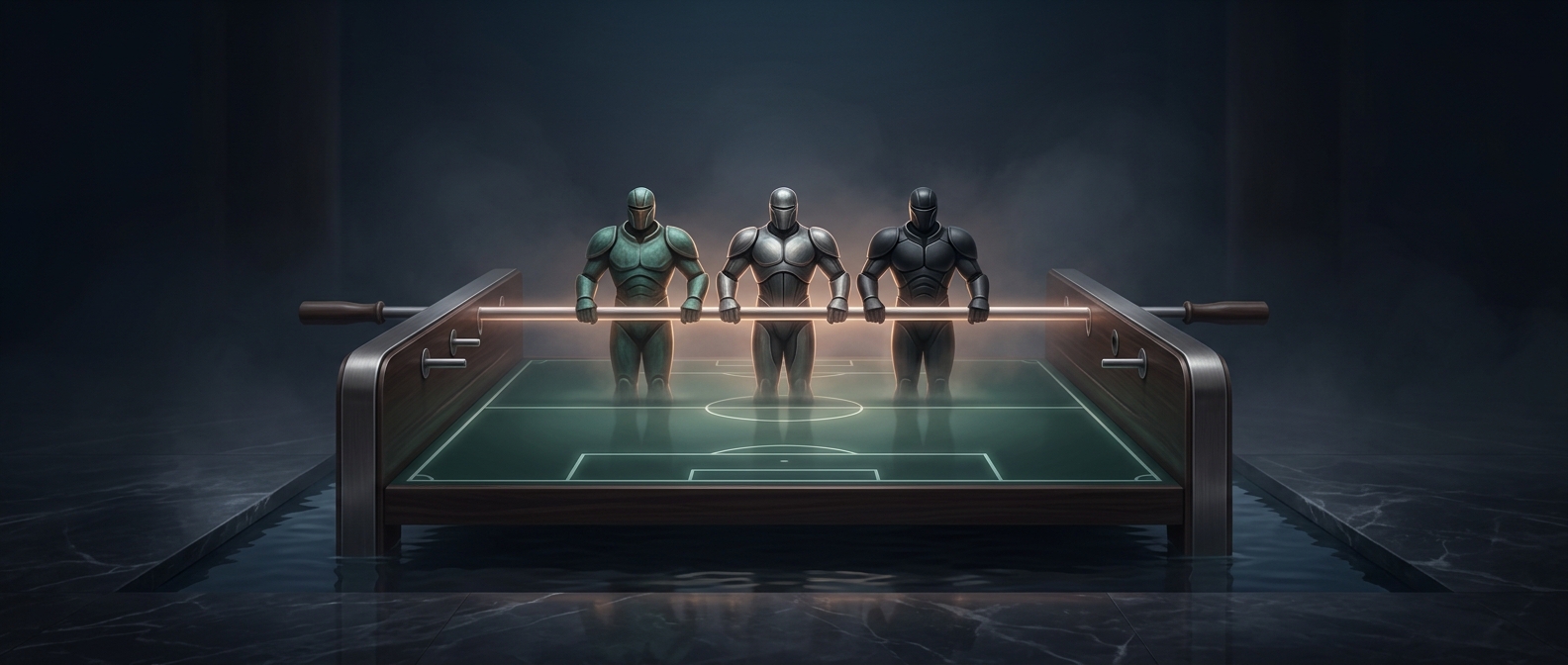
The key was not simply shrinking the players. Each row of wooden figures was fixed to a metal rod that passed through the table’s sides. Grasping the handles let a player slide a row across the field and rotate its figures to strike the ball. The table’s walls kept the ball in play, while the rods brought several players within reach of someone standing in one spot.
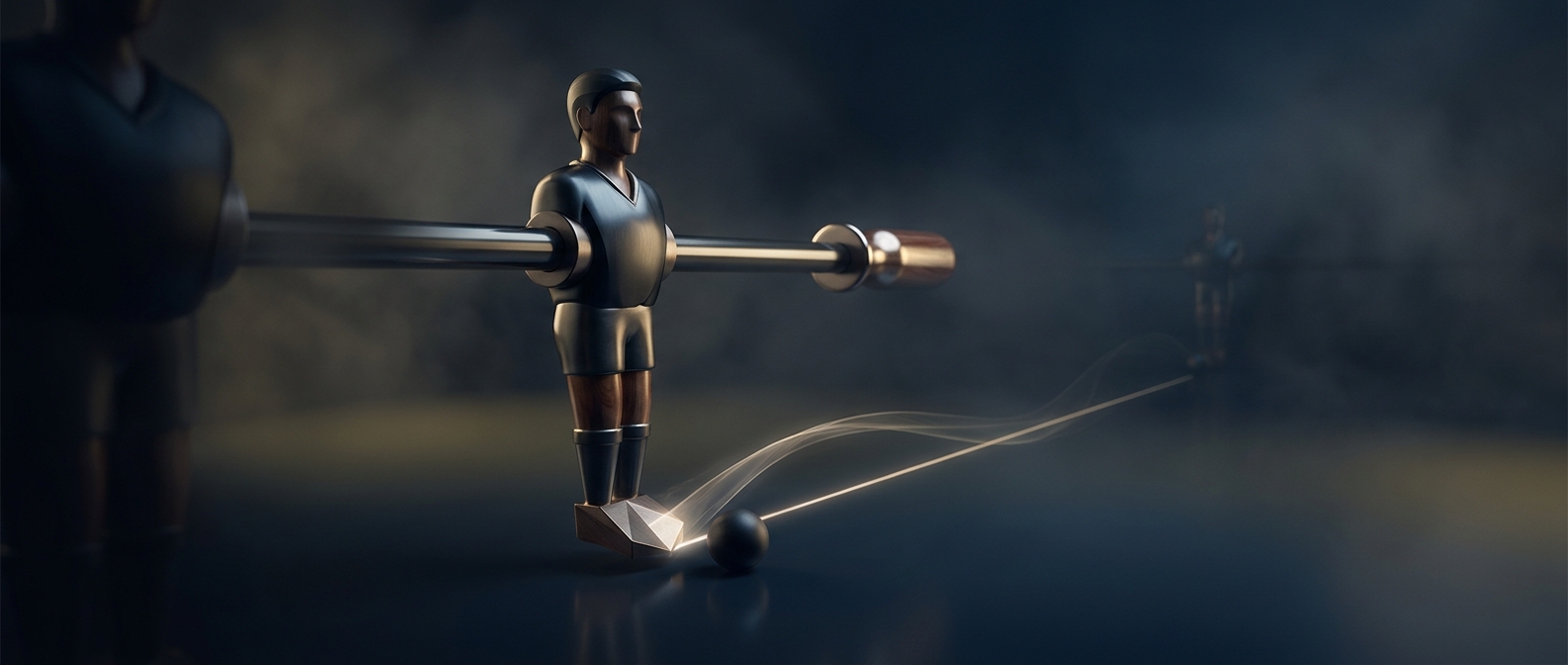
That arrangement translated football’s broad, running field into a compact game of angles and timing. A shot could ricochet off a wall or slip between figures; a quick turn of the handle could send the ball forward, but an uncontrolled spin might miss it entirely. Players had to judge both where the ball was and how each row would meet it.
The small scale made the game social
The table compressed a stadium-sized contest into a space where opponents could face each other across a few feet. With several rows of figures available to each side, players could defend, pass, and shoot without moving around a full field. The rods also made the action immediate: one person’s handle movement could change the ball’s path in an instant, inviting a fast response from the other side.
The result preserved the recognizable contest—two teams trying to score—while replacing running and kicking with coordinated hand movements. Its cleverness lay in making the game smaller without making the decisions simple.