A new kind of interruption
On July 1, 1941, New York station WNBT aired what is widely recognized as television’s first paid commercial. The broadcast came during a Brooklyn Dodgers baseball game, placing a small, deliberate sales message inside a program people had tuned in to watch.
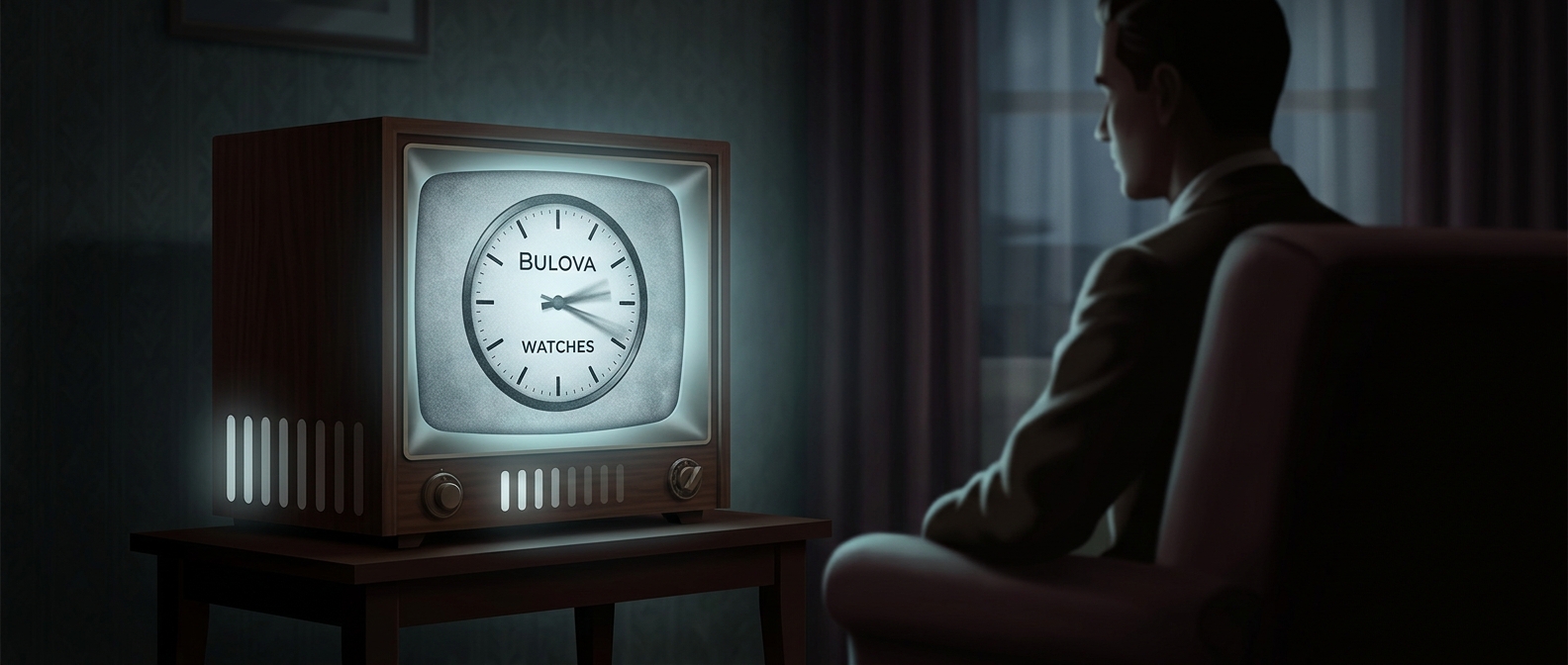
The ad’s simplicity suited an industry still finding its footing. A static picture could communicate a brand and its association with time without requiring a filmed scene or elaborate production. Viewers saw an image of a clock against a map of the United States; the brief spot made the product legible at a glance.
From sponsorship to spot advertising
Radio had already made commercial sponsorship familiar: a company could support a program and reach its audience through the broadcast. Television offered a different possibility—selling a short, discrete slot within a show. That format let a station separate the program from the advertiser’s message, then repeat the arrangement with other sponsors.
The distinction helped establish the commercial break as a basic part of television. What began as a still card during a baseball game pointed toward a system in which programs drew viewers and brief ads competed for their attention. The first spot did not need motion to change the medium; it only needed a place in the schedule.