Why a small sound can feel like a threat
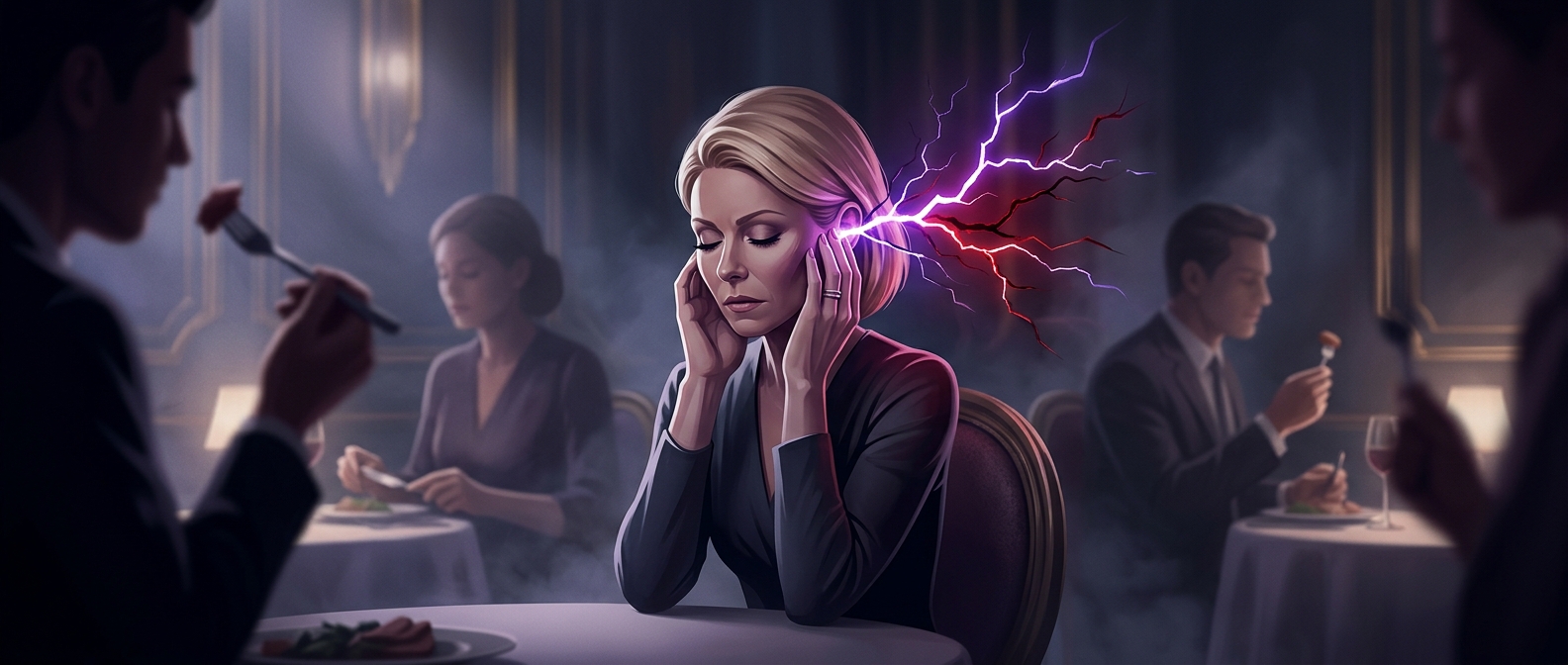
Misophonia is a strong reaction to particular sounds, often repetitive ones such as chewing, sniffing, or tapping. The reaction is not simply a judgment that the sound is unpleasant. For some people, it can arrive quickly as anger, disgust, or a surge of physical tension before they have time to reason through it.
One likely part of the experience is attention locking onto a pattern. A single click may be easy to ignore; the next one arrives, then the next, and the brain keeps checking for the sound. That monitoring makes it harder to shift attention elsewhere, so the noise can seem to grow more prominent even if its actual volume does not change. In a quiet room, there are fewer competing sounds to draw attention away.
Why the reaction depends on the situation
The trigger is often specific: one person may react intensely to chewing but barely notice a clock ticking. The same sound can also feel different depending on who is making it and whether the listener can leave or ask for it to stop. Feeling trapped, watched, or unable to control the situation can add to the distress.
That does not mean the person is choosing to be angry, or that everyone who dislikes a sound has misophonia. The precise causes are still being studied, but the experience can involve a fast emotional and bodily response—such as muscle tension or an urge to escape—alongside the sound itself. Explaining it as “just noise” misses the crucial part: the sound can capture attention and set off a response before deliberate judgment catches up. That is why moving seats or adding background sound may help in the moment, while simply being told to ignore it often does not.