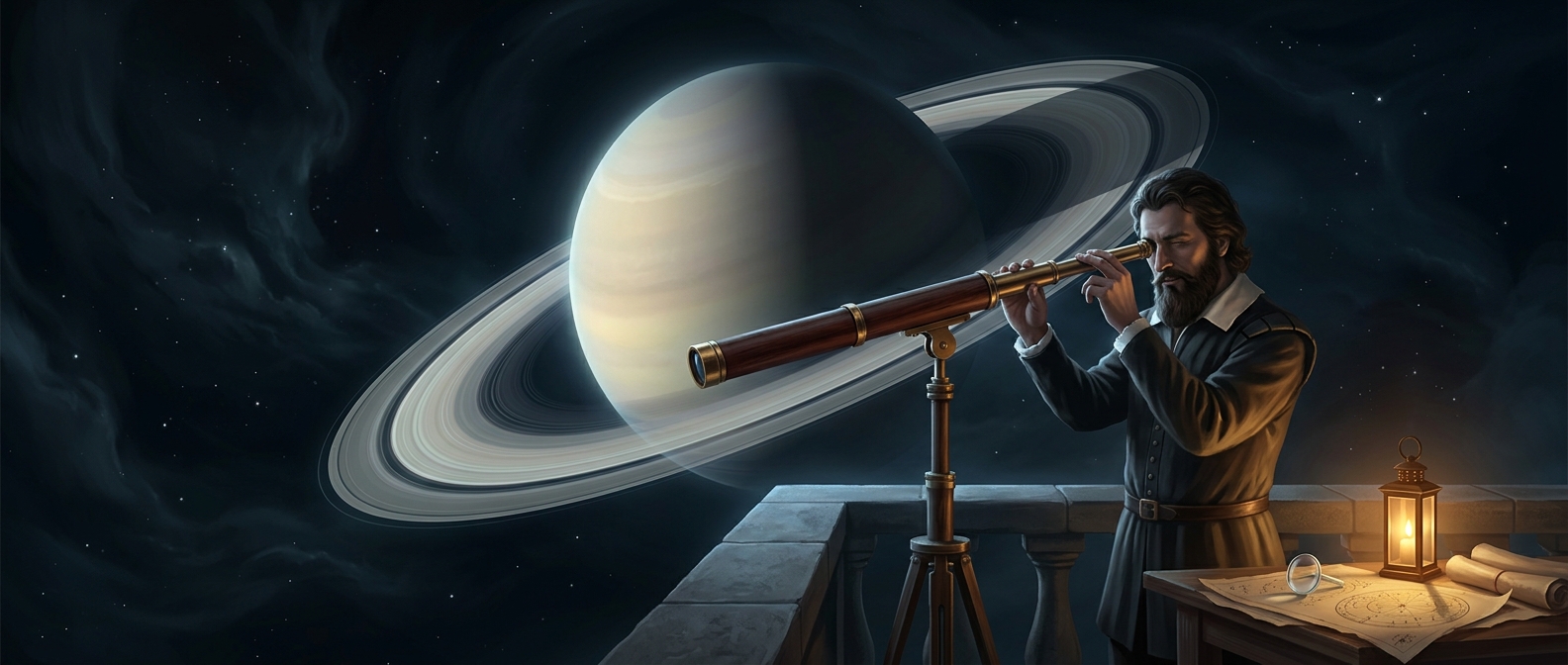
A Moving Earth Explains a Moving Sky
Each night, stars appear to rise in the east and travel west. Aryabhata, an Indian astronomer and mathematician writing in the fifth century, offered a striking explanation: the stars’ daily sweep is an appearance created by Earth’s rotation.
The mechanism is familiar from a moving boat. As the boat carries a passenger forward, the riverbank can seem to slide backward. In the same way, Earth’s rotation makes the distant sky appear to move overhead. The stars need not race around Earth once every day; the observer is turning beneath them.
Rotation Was Not the Same as a Sun-Centered System
Aryabhata’s idea changed the explanation for the sky’s daily motion, but it did not amount to the modern picture of the solar system. He still treated Earth as the center of the planetary system in his calculations. His proposal was specifically that Earth spins on its axis, accounting for the apparent daily movement of the heavens.
That distinction matters: a rotating Earth could explain the stars’ regular sweep without requiring every star to circle the planet each day. It was a powerful change in what was moving—and a reminder that the sky’s appearance does not always reveal the motion behind it.