A Revelation Built on a New Vocabulary
Oahspe is a religious text published in the 19th century and presented as a revelation about the spiritual and human worlds. Its unusual vocabulary is part of that design: unfamiliar words give names to beings, places, and ideas within the book’s elaborate cosmology. For readers, learning those terms is a way into the text’s own map of reality, not merely a hurdle posed by eccentric language.
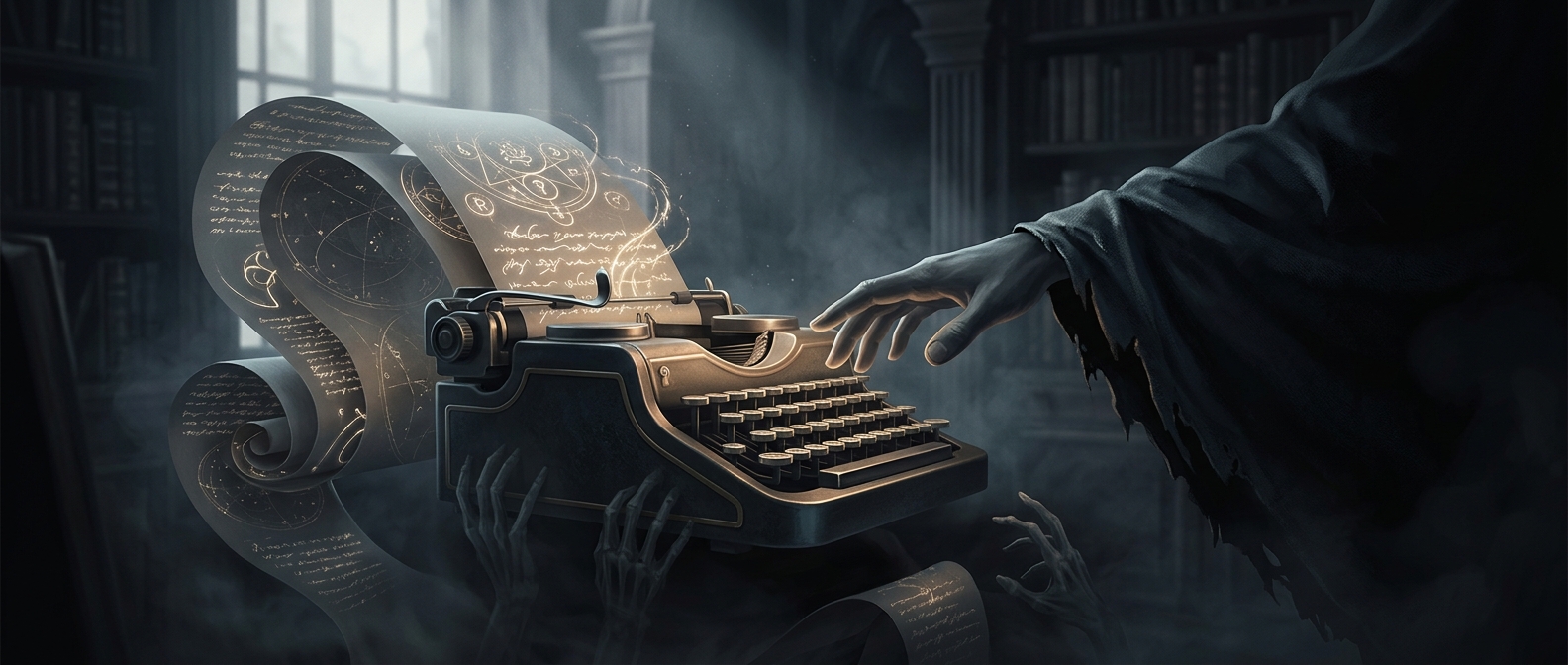
The account of its creation says that dentist John Ballou Newbrough typed the manuscript while in a trance, over about 50 weeks. The practice is often called automatic writing: a person writes while believing the words are being guided by a source beyond ordinary conscious thought. In spiritualist settings, that source was commonly understood to be spirits. The claim describes how Oahspe was produced according to its origin story; it does not, by itself, establish where the words came from.
Why the Typing Matters
Typing such a long work made the process different from jotting down occasional messages. A typewriter could turn a sustained stream of words into pages quickly, while leaving the writer with a manuscript that could be read, revised, and printed. The reported 50-week span also makes the work seem less like a single dramatic episode than a prolonged act of composition—though the account does not tell us exactly how each session unfolded.
The scale and specialized language helped give Oahspe the character of a complete revealed system. Its vocabulary asked readers to enter a world whose terms and relationships were supplied by the book itself. That is the striking consequence of the story: a claimed trance did not produce only a brief message, but a typed text whose invented language became part of its religious vision.