From a sharp crack to a protective ritual
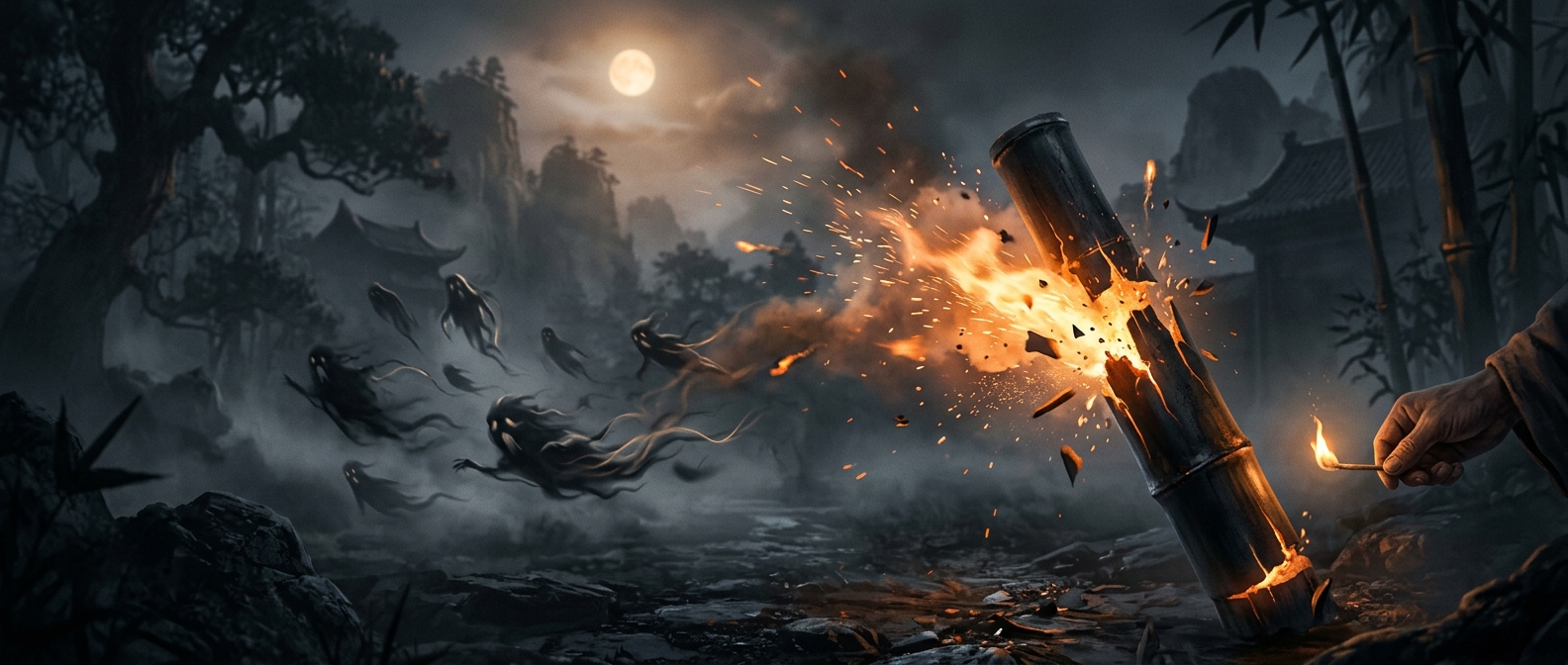
The earliest firecrackers worked by turning a small amount of burning material into a sudden burst of sound. In early versions, people heated hollow bamboo until trapped moisture and air made it split with a bang. Later, makers packed combustible powder into tubes, creating a louder, more deliberate blast. The tube contained the rapid expansion of hot gases just long enough to build pressure; when it gave way, the escaping gas produced the crack.
Why the noise mattered
In Chinese tradition, the blast was not merely entertainment. People believed its startling sound could frighten away harmful spirits, so firecrackers became part of celebrations and protective rituals. The noise made the belief tangible: a village could mark a boundary between ordinary life and danger with a sudden, communal burst.
That purpose helped shape the device. A firecracker did not need to illuminate the sky or produce an elaborate display. Its essential feature was a forceful report—something audible beyond the person who lit it. The first fireworks were as much sound-making tools as visual spectacles.
A simple idea that could grow
Once makers learned to confine burning powder in a tube, they had a basic technology that could be adapted. Bundling or arranging charges could create sequences of bangs, while adding materials that burn in different ways eventually enabled more varied effects. The original logic remained easy to recognize: contain a quick reaction, then let its noise—or, in later fireworks, its light—carry across a crowd.