A sneeze is a burst, not a single-speed spray
There isn’t one speed for every sneeze—or even for every droplet in one sneeze. Measurements of the air pushed out during a sneeze have found peak speeds around 10 meters per second, or about 22 miles per hour. That is a short-lived burst, not the speed every particle maintains as it travels across a room.
The burst begins when pressure builds in the chest and air is forced out through the nose and mouth. That moving air carries droplets of saliva and mucus with it. Their speed depends on where they are in the plume, how large they are, and how forcefully the person sneezes. A headline figure such as “100 miles per hour” can therefore give a misleading impression of a uniform stream racing at that speed.
Why the droplets behave differently
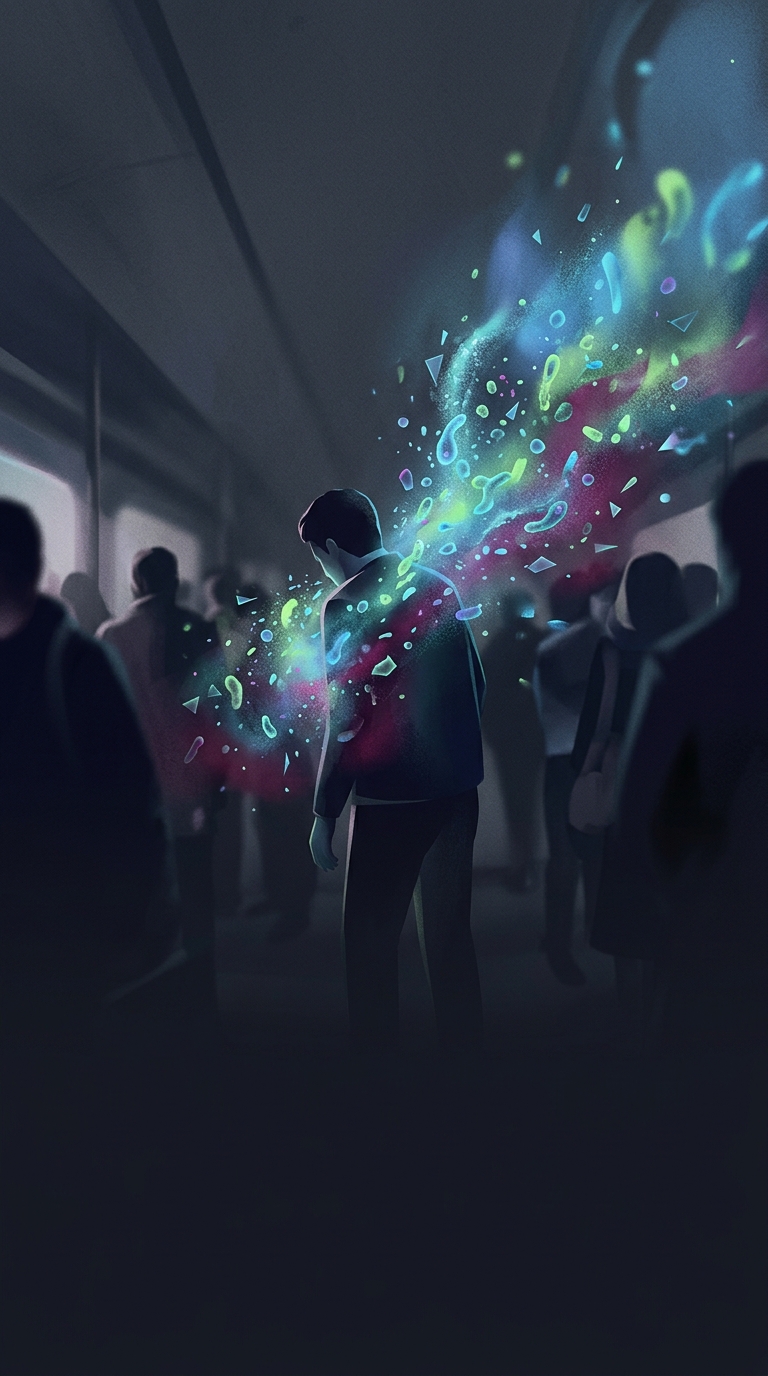
A sneeze creates a turbulent cloud: swirling air that can carry droplets along and spread them out. Larger droplets tend to lose speed quickly and fall onto nearby surfaces. The smallest droplets are more easily swept along by the air, so they can linger and travel farther than a simple straight-line spray would suggest.
That difference matters in a crowded room. The initial burst is over quickly, but droplets do not all stop when the sneeze does. The air’s motion helps determine where they go next, which is why turning away and covering a sneeze can reduce how much reaches other people and nearby surfaces.