Why Spartan Money Was Made Awkward
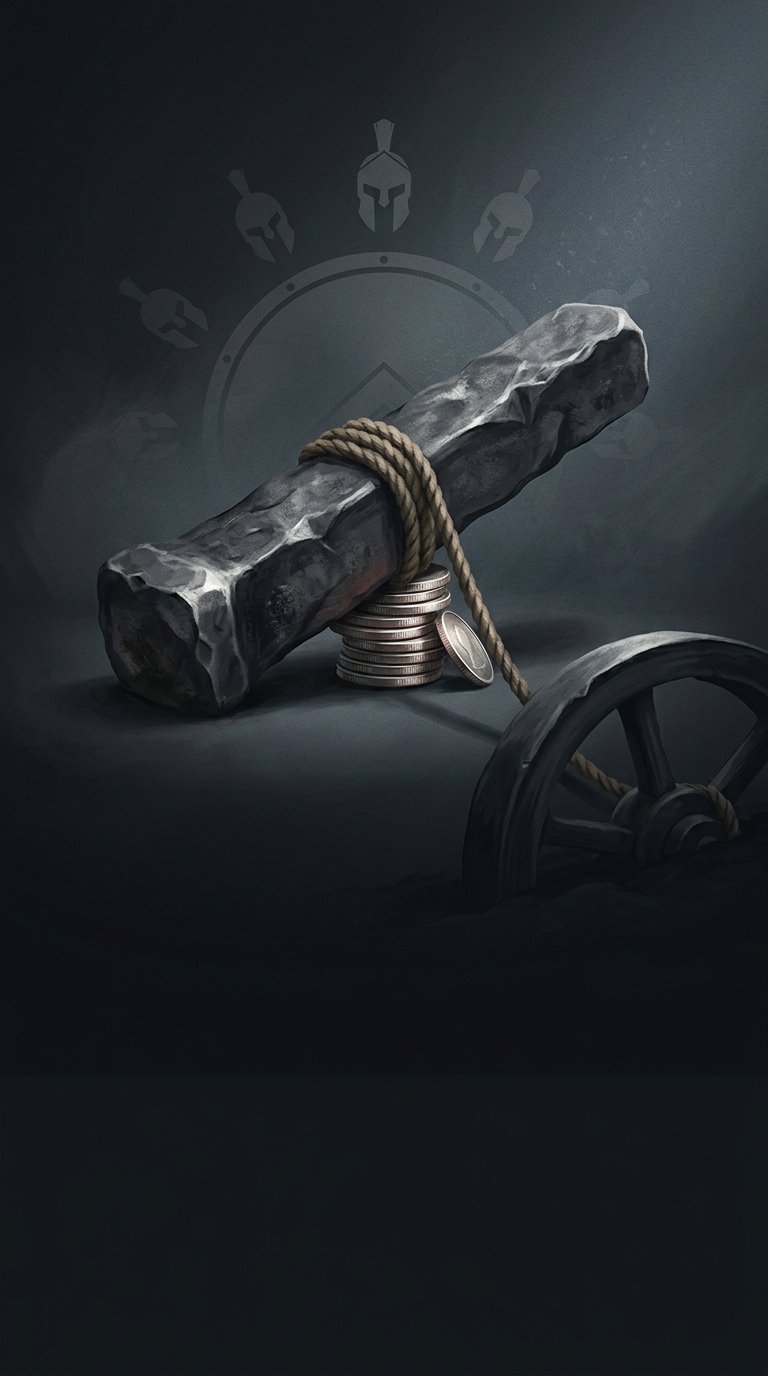
Later accounts of Spartan lawgiver Lycurgus describe a deliberate attack on the usefulness of money: precious-metal coins were replaced with iron currency, often described as heavy bars. The point was not simply to make payment cumbersome. Gold and silver could store substantial value in a small, portable form, making them useful for private fortunes, luxury purchases, and bribery. Iron made those uses harder.
A person trying to carry away significant wealth would need a conspicuous load rather than a pouch of coins. And because iron was worth far less than precious metal, a large quantity of it represented comparatively little purchasing power. The currency’s inconvenience was part of its design.
A Currency Policy Could Not End Exchange
Money works when people accept it, so Spartan iron did not make buying and selling disappear. It changed which transactions were easy. Everyday exchange within the community could continue, while accumulating portable wealth or using money for distant trade became less convenient. Precious metals also circulated elsewhere in the Greek world, so a system that discouraged their use at home could make dealings beyond Sparta more difficult.
That tradeoff suited an ideal that treated luxury and private display as threats to civic discipline. But a rule about money could not by itself eliminate differences in wealth or the practical need for goods. It could instead make some forms of wealth less visible and less convenient to use.
The Cost of Making Wealth Clumsy
The iron bars were therefore more than an odd substitute for coins: they were a way to build a political preference into everyday exchange. A policy could discourage hoarding without requiring every citizen to carry gold. Its price was friction—more effort to move value, make larger payments, or trade beyond the local system.
That is the memorable tradeoff in Sparta’s monetary experiment: to make wealth harder to accumulate, the state also made money harder to use.