The chat window turns watching into participation
A live chat overlay puts viewers’ messages beside the streamer’s face and gameplay. Unlike a television audience, viewers can type in real time—and sometimes watch the streamer notice a message, answer it, or change course because of it. That visible back-and-forth makes the broadcast feel less like a finished show and more like a room the audience is sharing.
Attention becomes a loop
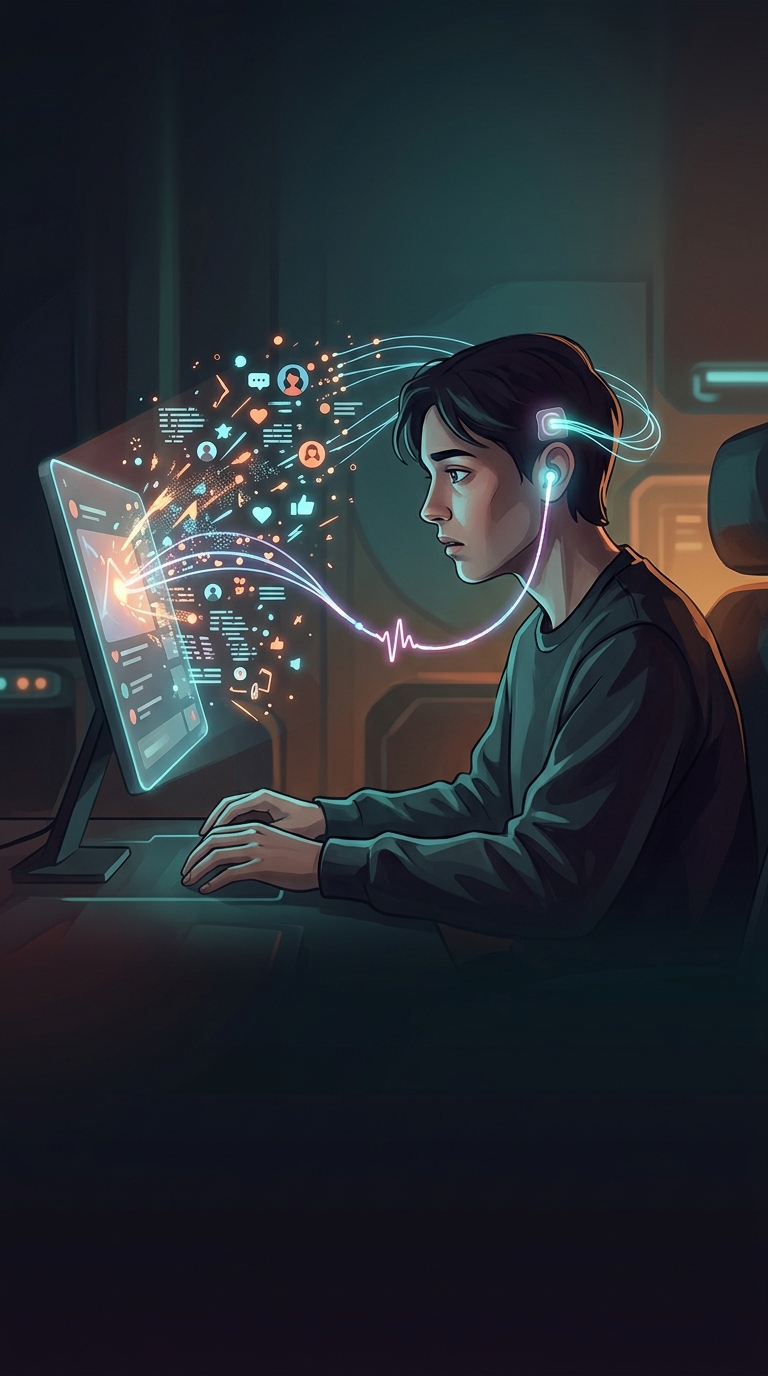
The draw is not just that a streamer can respond. Viewers can also see other people reacting as events unfold: jokes, predictions, celebrations, and bursts of messages when something surprising happens. A message might get a reply, disappear into the stream of conversation, or prompt a reaction from the crowd. That uncertainty gives viewers a reason to keep watching and checking in.
This is a feedback loop: the streamer’s actions produce chat reactions, and the chat can shape what the streamer does next. Even when a viewer’s own message goes unanswered, the fast-moving conversation can create a sense of being present with other people rather than watching alone.
A different kind of star-audience relationship
Television performers generally address an audience as a whole; a streamer can seem to address individual people inside it. The chat overlay makes that possibility visible, turning attention into something that might be returned. It is one reason a quiet stretch on a livestream can still hold interest: viewers are watching not only the show, but also for the next moment when the room responds.