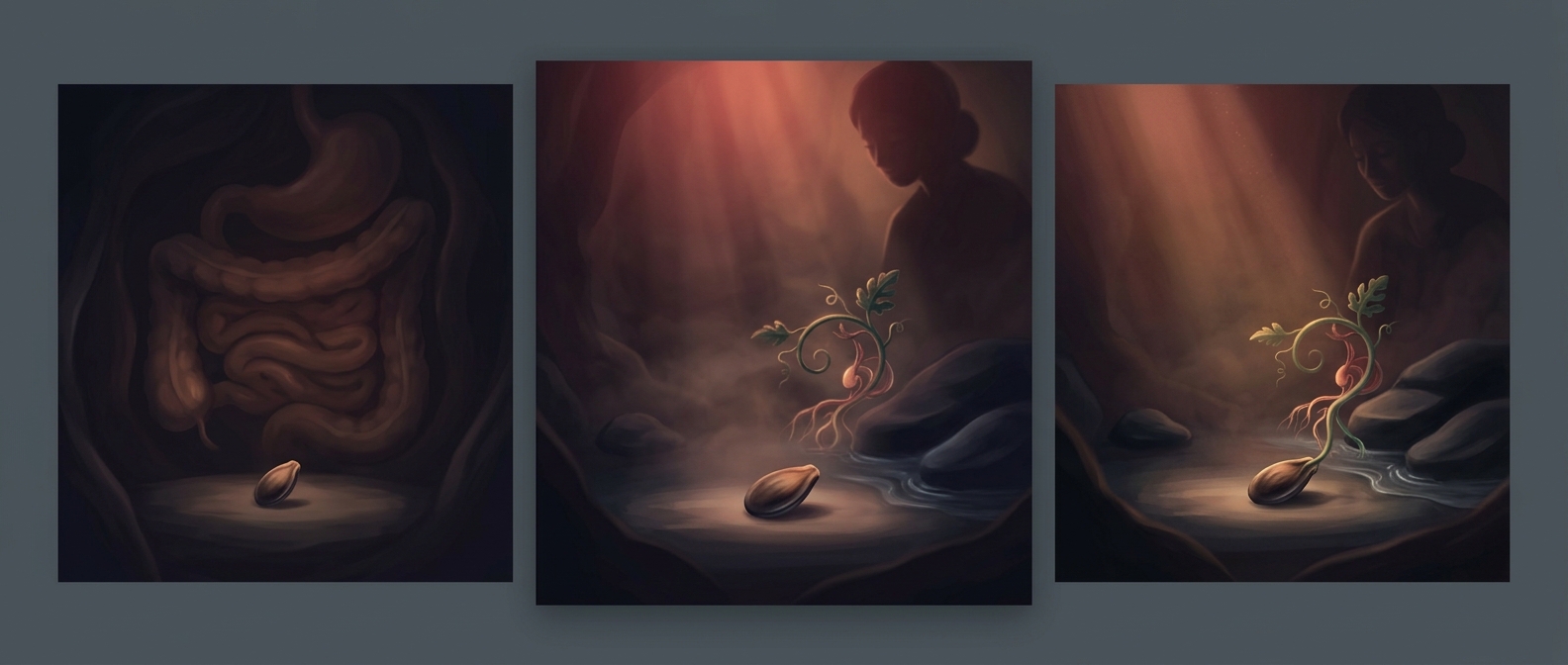
How Digestion Can Produce Flammable Gas
Some gut microbes get energy by fermenting food that the body has not fully digested. Fermentation is the process of breaking down material without oxygen. Depending on the microbes and the food available, this can produce hydrogen, methane, or other gases alongside compounds the body can absorb or pass along.
Hydrogen and methane can burn, but their presence alone does not make intestinal gas ignite. A flame needs fuel mixed with enough oxygen, in the right proportions, plus an ignition source. Gas released from the body may not have that combustible balance; it also disperses quickly in open air. The digestive tract itself contains little free oxygen, so it is not a place where a flame can sustain itself.
Why the Gas Mixture Varies
People do not all produce the same gases. Their gut microbial communities differ, and the foods reaching the large intestine differ too. Some microbes consume hydrogen made by other microbes, turning it into methane or other products. As a result, the amount of hydrogen or methane in intestinal gas can vary considerably from person to person and over time.
This is why the chemistry is a curiosity, not a reliable way to predict whether gas will catch fire. Flammability depends on the whole mixture and its surroundings, not simply on whether a flammable gas is present. In ordinary digestion, the gas usually disperses without ever encountering the combination of concentration, oxygen, and ignition needed for combustion.