What a Medieval Spirit-Summoning Ritual Was For
In medieval magical manuals, a conjuration was less a battlefield spell than a tightly scripted attempt to obtain useful knowledge. Practitioners might seek answers to questions, help finding hidden valuables, or instruction in a subject. “Necromancy” did not always mean raising the dead: in many learned texts, it referred to calling up spirits, often understood as demons.
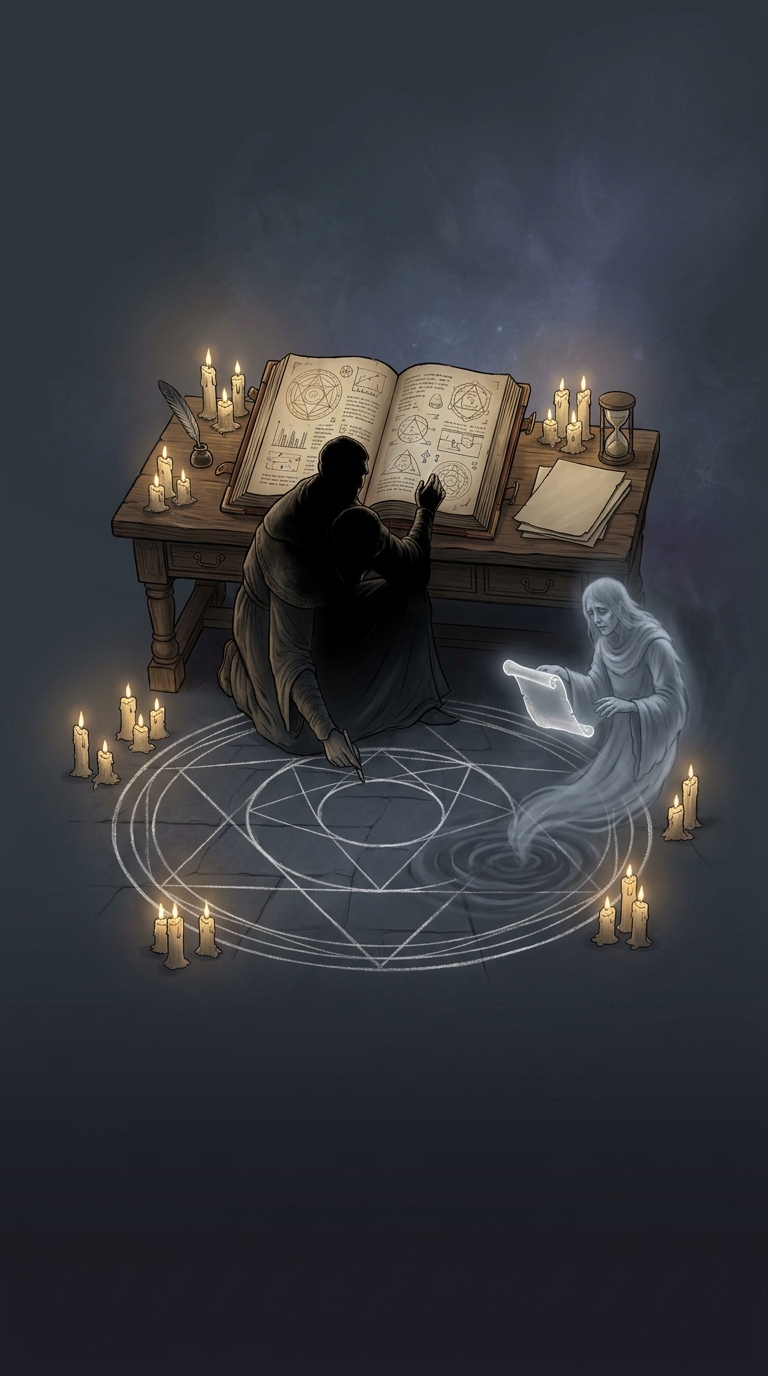
The ritual’s elaborate preparations were part of its claimed method. A practitioner might be told to purify or fast, mark out a protected space, and recite prescribed prayers and names. These steps were meant to establish authority, ward off danger, and make the spirit respond. Latin mattered because these manuals belonged to a learned tradition that treated exact wording as consequential—not because speaking Latin guaranteed success.
A Script, Not a Reliable Service
The manuals laid out procedures and promised results, but a written recipe could not ensure that anything would happen. A ritual might be interrupted, performed incorrectly, or simply fail to produce the answer its practitioner wanted. Even within the manuals’ own logic, preparation and precision were safeguards against an uncertain encounter, not proof of control.
That gap between ambitious promises and painstaking instructions is the revealing detail: the imagined payoff could be a hidden location or a lesson, while the proposed route involved hours of disciplined ceremony and no dependable guarantee of an answer.