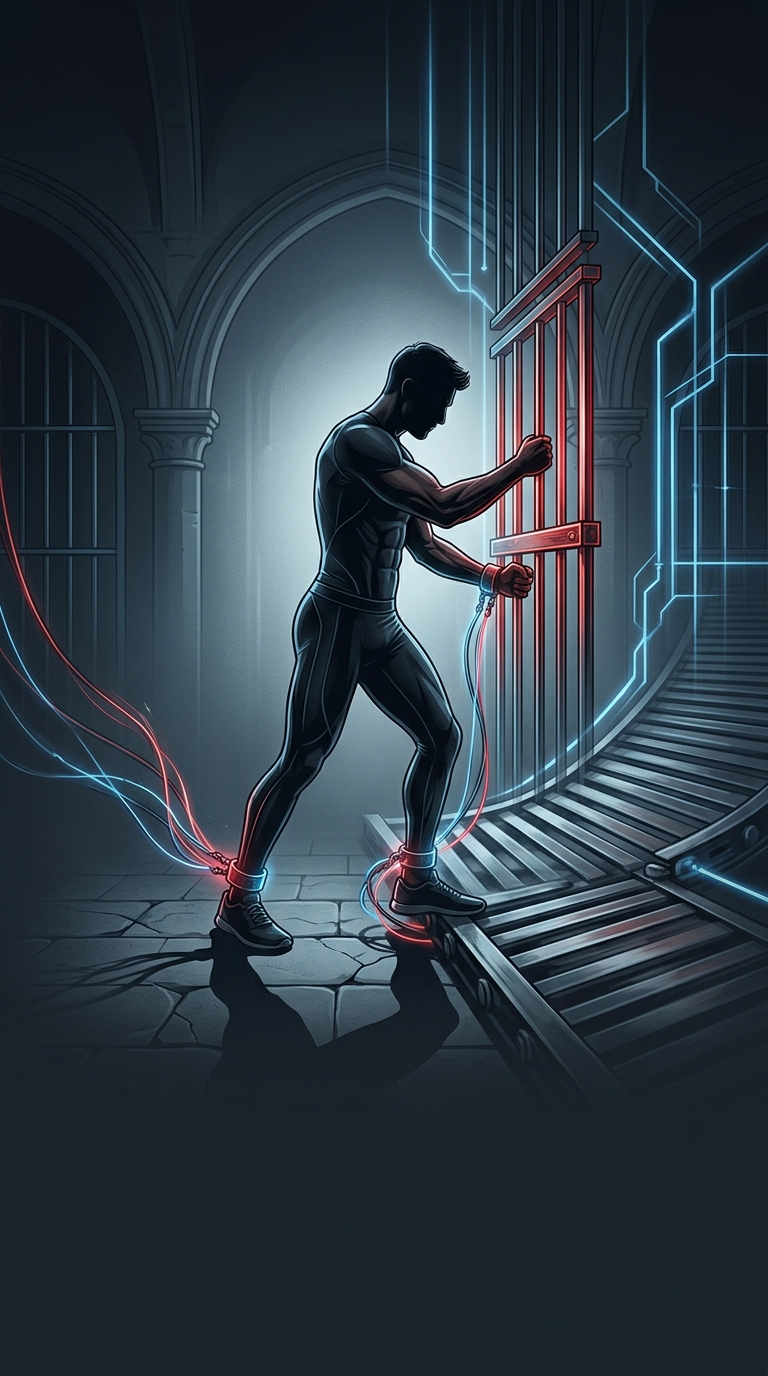
The treadmill began as forced prison labor
In 1818, English engineer William Cubitt designed a prison treadwheel: a large wheel fitted with steps that prisoners had to climb. Their weight turned the wheel, which could power tasks such as grinding grain or pumping water. The motion looked like walking, but prisoners stayed in place, stepping continuously to keep the mechanism moving.
Work and punishment were built into the same machine
Prison authorities treated the treadwheel as a way to impose exhausting labor and strict discipline. Some wheels did useful work; others offered little practical output, making the prisoners’ exertion itself the point. The effort could be punishing, especially when people were required to keep stepping for long stretches under supervision.
The machine also reflected a broader belief in prisons of the period: that hard labor would reform inmates while deterring others. In practice, the wheel made punishment visible and measurable—prisoners had to keep moving, even though they went nowhere.
From penal labor to exercise
The prison treadwheel was a predecessor of the modern treadmill, but the purposes were opposite. Today’s machine lets a person choose a pace and stop; the prison wheel compelled movement as a sentence. Its most memorable design feature survived that transformation: a person can walk or run continuously while remaining in one place.