A last-minute change of pitch
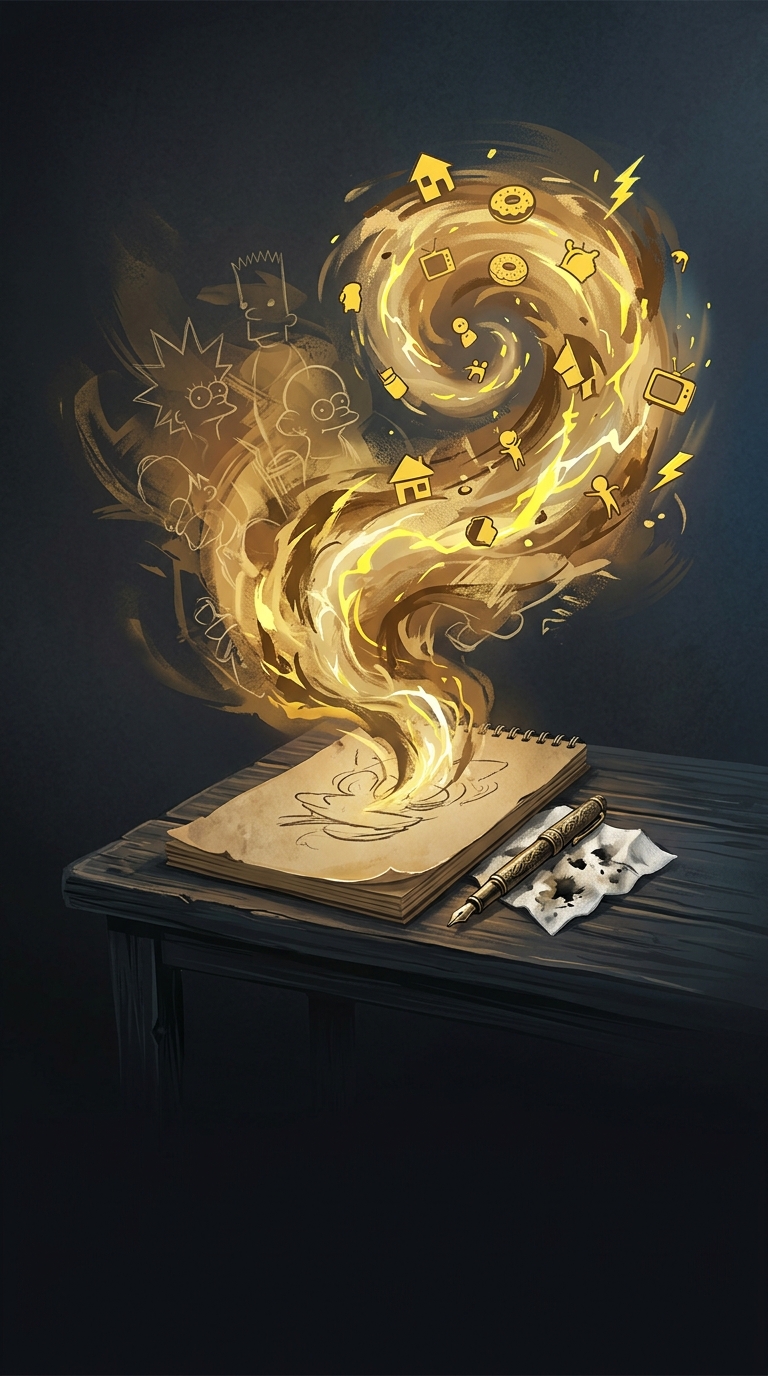
Matt Groening arrived to discuss adapting Life in Hell, his comic strip about disaffected rabbits and other characters. But an adaptation deal could have put the strip’s rights at risk. Rather than hand over characters he wanted to keep, he came up with a different idea while waiting to meet producer James L. Brooks: a cartoon family whose members could anchor an entirely new series.
The quick sketch was a practical solution to a creative and business problem. Groening could pitch a fresh property instead of negotiating over the comic he already owned. That shift also gave the producers a premise with room to expand: family members could drive stories about home life, school, work and the wider community.
Family names, new characters
Groening named Homer, Marge, Lisa and Maggie after members of his own family. Bart, the mischievous son, was the exception; his name is an anagram of “brat.” The drawings began as a rough outline of the household, not a fully developed world. The characters and their setting took shape further as the idea moved toward television.
That distinction matters: the lobby sketch supplied the core cast and a way forward, but it was only the starting point. The Simpsons first appeared as short animated segments on The Tracey Ullman Show before becoming a standalone series. Turning a hurried concept into a durable show required later work on character, stories and style.
Why the family could keep generating stories
A family sitcom offers a flexible engine for episodes. The same characters can clash over ordinary chores one week and become involved in much larger comic situations the next, while their relationships remain the thread connecting each story. Groening’s quick replacement pitch therefore did more than protect Life in Hell: it proposed a cast that could support many kinds of plots without requiring the original comic’s characters.
The memorable twist is that a decision made to avoid giving up one set of characters created another set capable of carrying a long-running television world.