How a doctor’s note opened a legal door
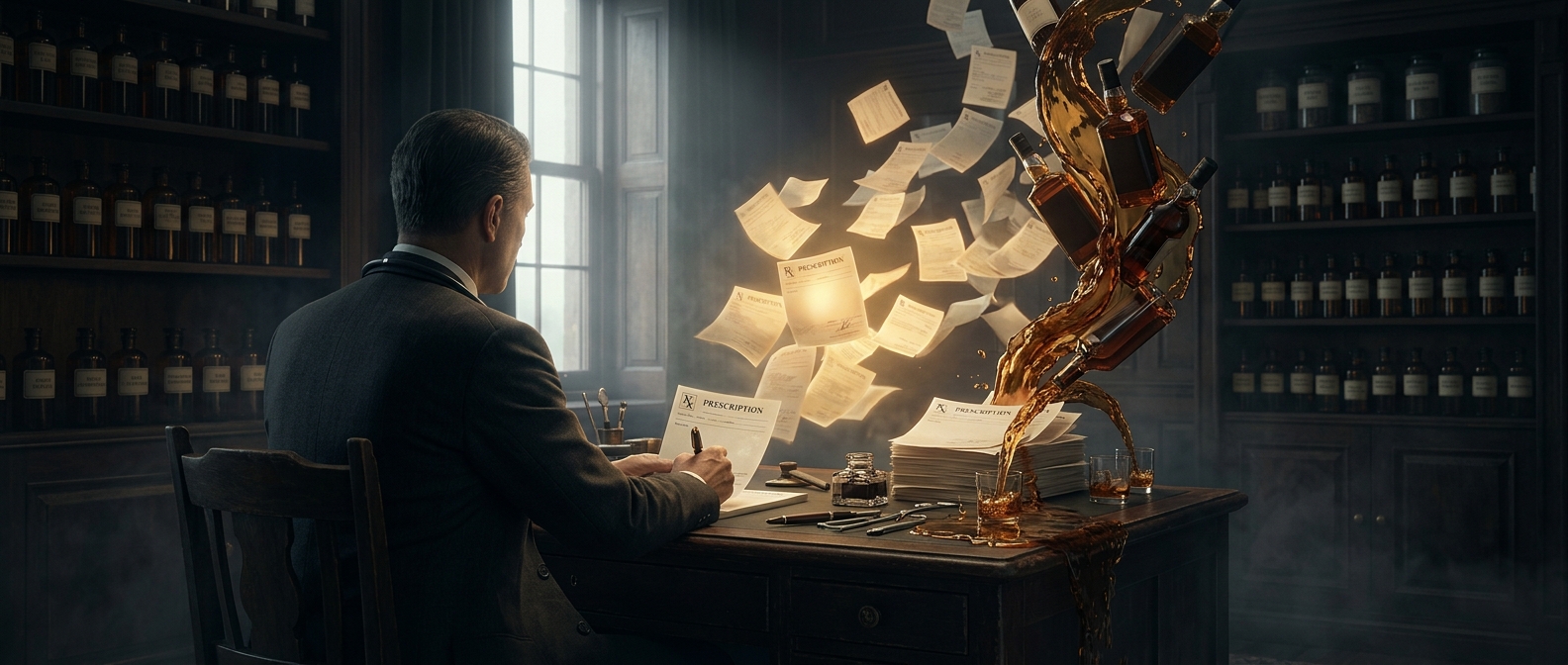
Prohibition barred the ordinary sale of alcoholic drinks, but it did not eliminate every lawful use of alcohol. Medical use remained an exception. That distinction mattered: a physician’s authorization could turn a drink that was otherwise illegal to obtain into alcohol supplied under a recognized medical purpose.
For a visitor from abroad, the exception offered a practical route through a ban aimed at the public market. The crucial step was not a special status for Churchill, but a doctor willing to write the prescription.
Why the wording mattered
Dr. Otto Pickhardt’s note specified at least 250 cubic centimeters, with most of it to be taken at mealtimes. “At least” set a floor, not a ceiling. The prescription therefore authorized a minimum amount while leaving the total unspecified—a small choice of wording with a large practical effect.
That open-ended phrasing made the order more than a fixed medical allowance. It gave Churchill’s access room to expand without naming a maximum, while keeping the request inside the language of a doctor’s prescription.
A loophole made legible
The episode shows how a prohibition can depend on paperwork as well as policing. The law’s medical exception created a narrow channel; a sympathetic physician’s note made that channel usable. The same substance could be forbidden as an ordinary drink yet permitted when framed as treatment.
Churchill’s prescription is memorable because its apparent precision—a measured quantity—sat beside a striking omission: no upper limit. In that gap, a legal exception became an unusually flexible order.