From scattered seeds to an edible crop
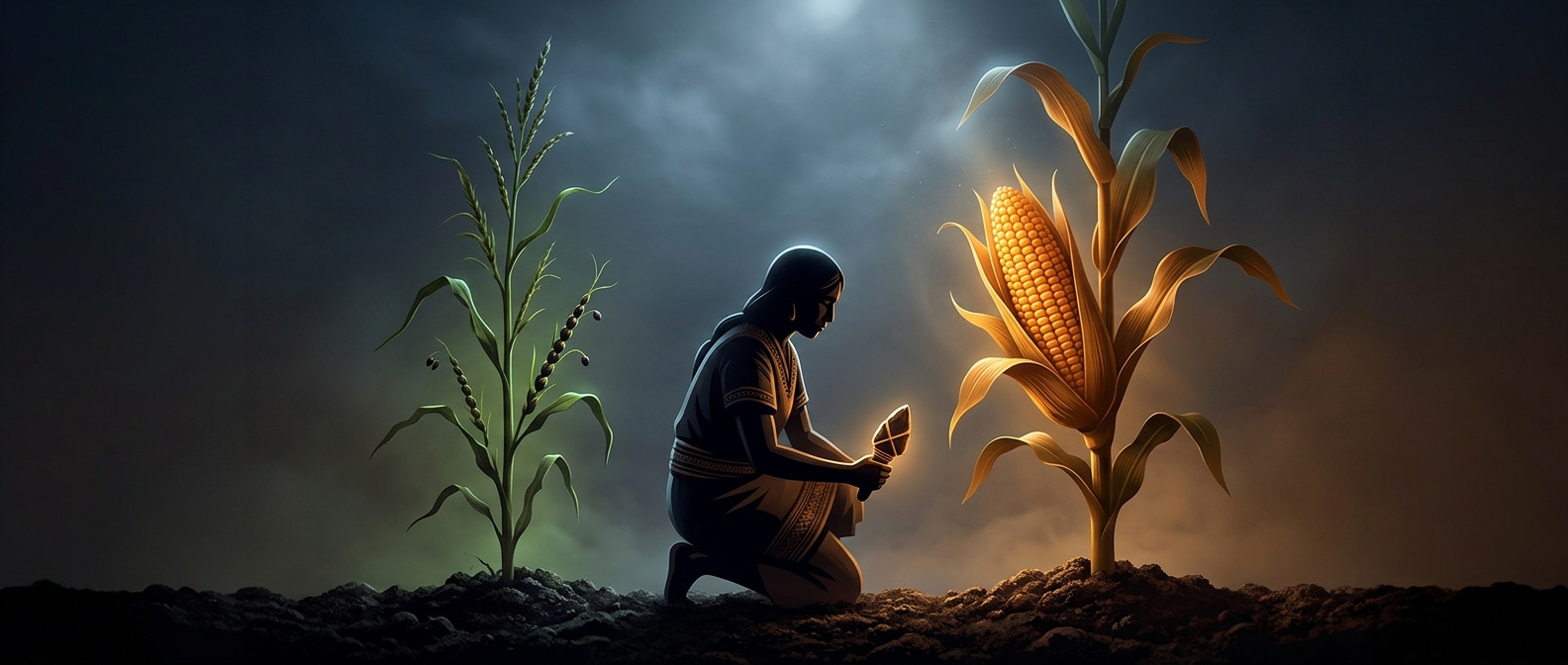
Wild teosinte, the grass ancestral to corn, looked little like a modern ear. Its small kernels grew in a branching cluster, each enclosed in a tough casing. A person gathering it would get little food for the effort.
The transformation began when people in what is now Mexico saved and replanted seeds from plants with useful differences. Some had kernels that were larger or easier to separate; others had ears that held their seeds more conveniently. Because those plants supplied the next generation’s seed, their traits became more common over many generations. This is domestication: evolution shaped by people repeatedly choosing which plants reproduce.
Why corn can become popcorn
The result was not a single leap from grass to today’s corn. Plants accumulated changes in kernel size, arrangement, and other traits, eventually producing a crop that people could harvest and prepare far more readily than its wild ancestor. Different kinds of corn were later selected for different uses, including popping.
A popcorn kernel works because its hard outer shell holds moisture inside. When heated, that water turns to steam and pressure builds until the shell splits; the hot starch inside expands and sets into the familiar white puff. The snack depends on both an ancient human choice—saving useful seeds—and a kernel structure suited to trapping steam.