How a Developing Skeleton Draws on Calcium
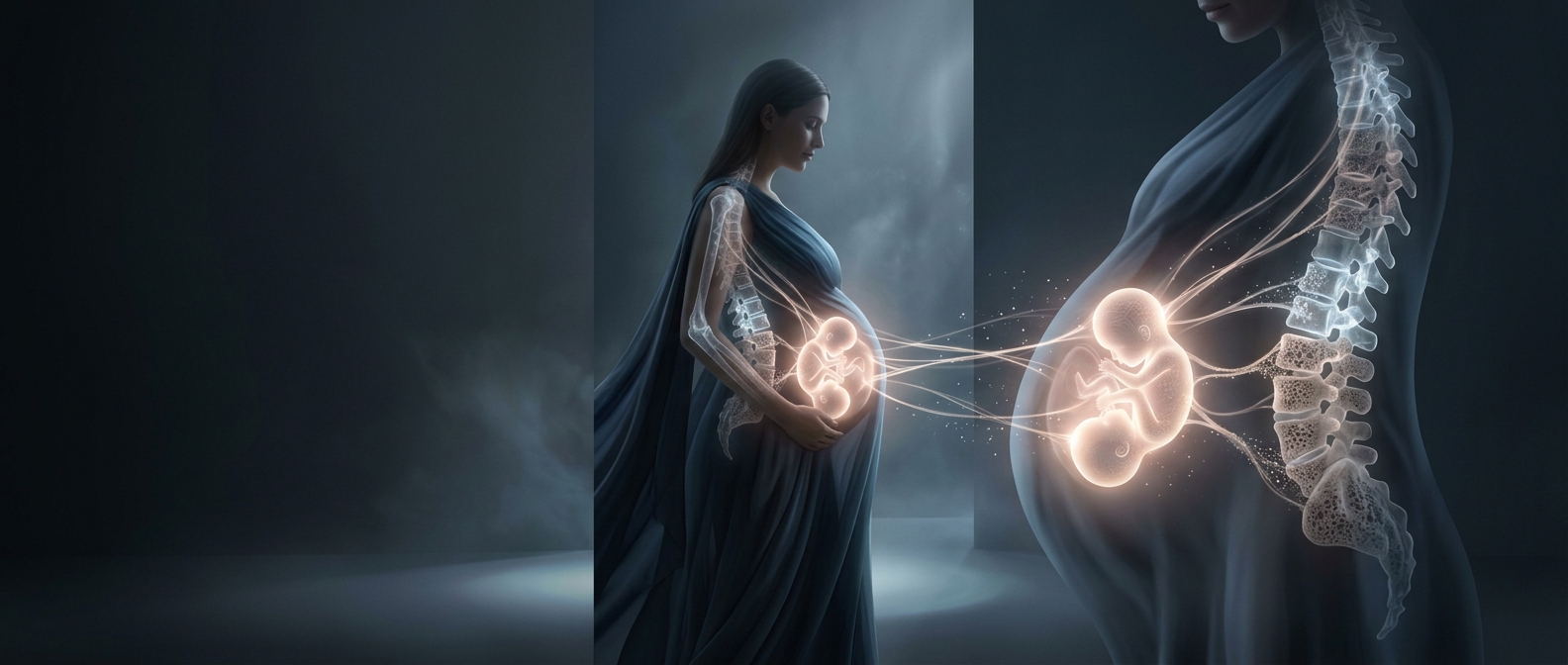
A fetus needs calcium to build bones and teeth. The mother supplies it through her blood, and the placenta—the organ that exchanges nutrients between mother and fetus—moves calcium to the developing baby. As pregnancy progresses, this transfer increases, especially in the later months when fetal bones grow rapidly.
The mother’s body can meet that demand partly by absorbing more calcium from food. If intake and absorption do not cover what is needed, calcium can also be released from her bones into the bloodstream. Bone is living tissue, continually broken down and rebuilt; calcium stored in it is a reserve the body can access, not a sealed supply that pregnancy simply empties.
Why Carrying Multiples Raises the Demand
With twins, two skeletons are developing at once, so the total calcium transferred to the babies can be greater than in a pregnancy with one fetus. That does not mean every twin pregnancy causes lasting bone loss. The body adjusts calcium handling during pregnancy, and the effect on a mother’s bones depends on factors such as nutrition and her individual physiology.
After birth, breastfeeding also transfers calcium into milk. During this period, hormonal changes can temporarily increase bone breakdown, but bone density commonly recovers after weaning. The practical point is that pregnancy and lactation place changing demands on calcium balance—not that a mother’s bones inevitably become permanently depleted. Eating enough calcium supports the supply side of that balance, while the body’s ability to adapt helps explain why temporary changes in bone stores are not automatically evidence of lasting damage.