How a worm turns leftovers into plant food
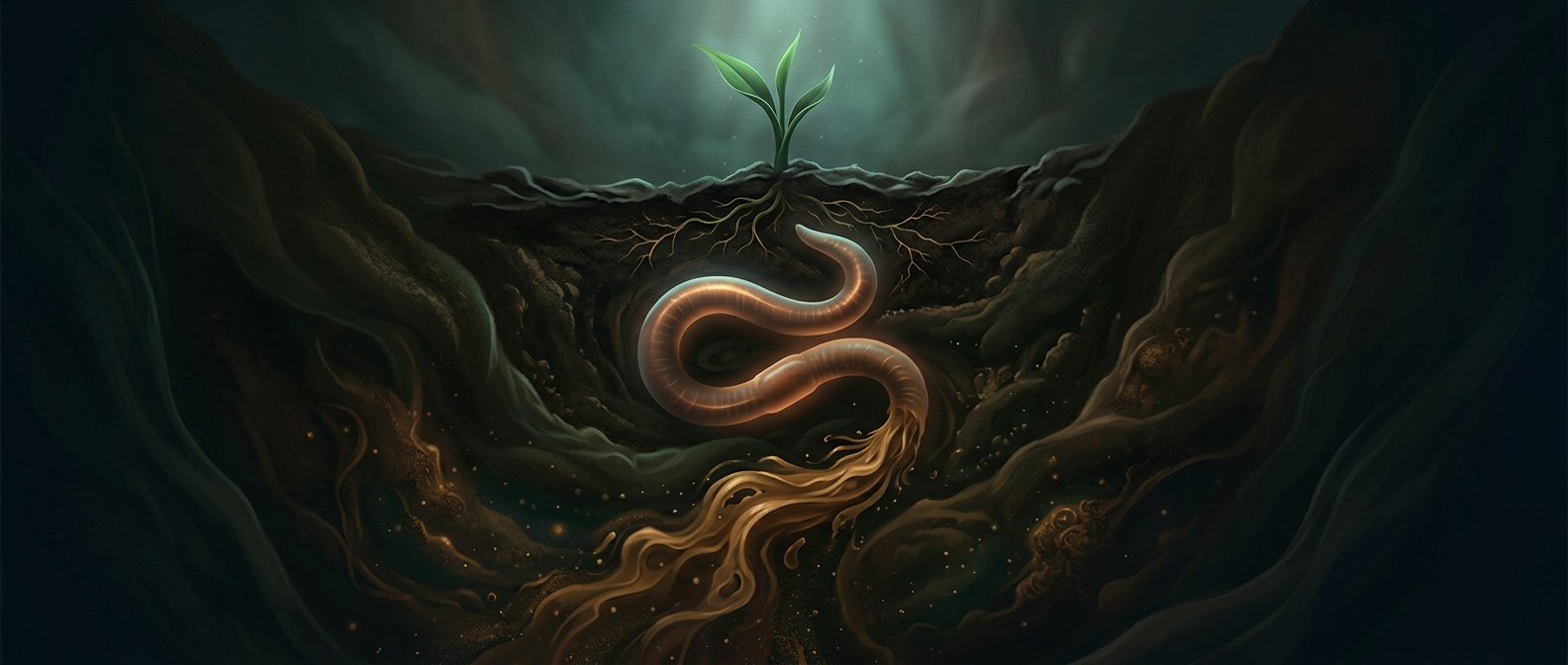
A worm’s casting is more than digested soil. As the worm eats decomposing leaves and other organic matter, that material passes through its gut, where it is broken down and mixed with microbes and minerals. The waste that comes out is a fine, crumbly material containing nutrients in forms roots can take up.
That makes worms part of the soil’s recycling system: nutrients locked in dead plant matter are gradually returned to the living garden. The castings are not a complete fertilizer, but they can enrich the soil around them.
Why castings change the soil’s texture
Castings help form small, stable clumps of soil, a structure called aggregation. Spaces between those clumps let water move into the ground while helping the soil retain moisture. The same loose structure leaves room for air and growing roots, unlike compacted soil, which can resist root growth and drain poorly.
Worms also contribute by burrowing. Their tunnels create channels through which water and air can travel, while moving organic material into the soil. The benefits depend on the soil and the kinds and numbers of worms present; a garden is not improved simply by adding more worms.
A small-scale recycling loop
The process links what falls onto the garden to what grows there next. Leaves become food for soil organisms, worms turn some of that material into castings, and plants draw on the released nutrients as they build new growth. A worm’s most lasting contribution is not just what it eats, but the nutrient-rich, well-structured soil it leaves behind.