A drink that has to survive the retake
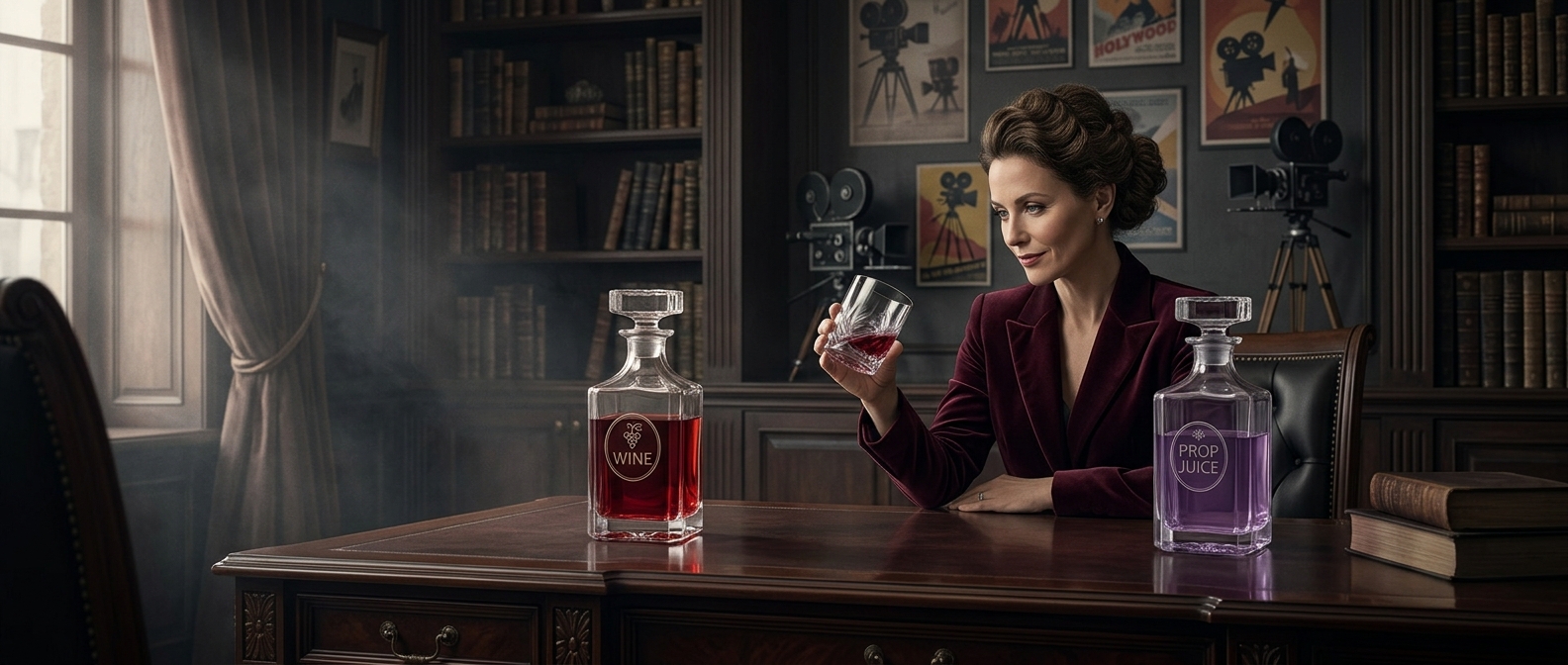
A film scene may be shot from several angles, with pauses for lighting, focus, and continuity checks. The actors might repeat the same toast or sip again and again. Real wine would make each take harder to perform consistently—and alcohol can impair judgment and coordination—so productions generally use a nonalcoholic stand-in.
Why grape juice works on camera
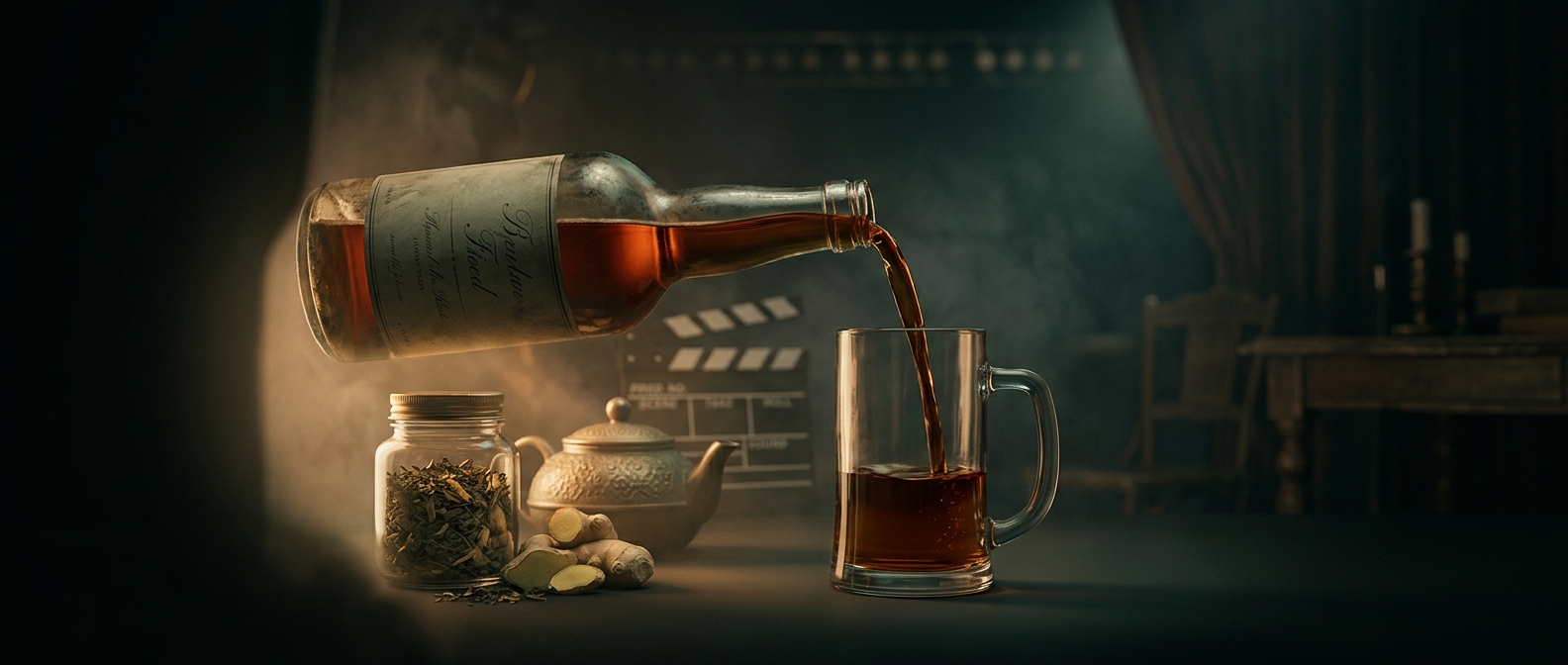
Dark grape juice supplies the wine-like color, while water thins it so it moves and coats the inside of a glass more like a drink than syrup would. Under set lighting, the liquid’s color and reflections help sell the image. The aim is not to reproduce wine’s taste; it is to look convincing in the shot.
Continuity matters as much as appearance
A prop team has to keep the glass looking roughly the same from take to take. A drink that is too thick, too opaque, or too different in color can stand out when the camera cuts between angles. Using a repeatable, alcohol-free mixture makes it easier to reset the glass and shoot the scene again without asking an actor to consume real alcohol.
That is why a close-up can show a convincing glass of red wine even when the liquid inside is ordinary grape juice thinned for the camera.