Why a Stand-In Can Look More Convincing on Camera
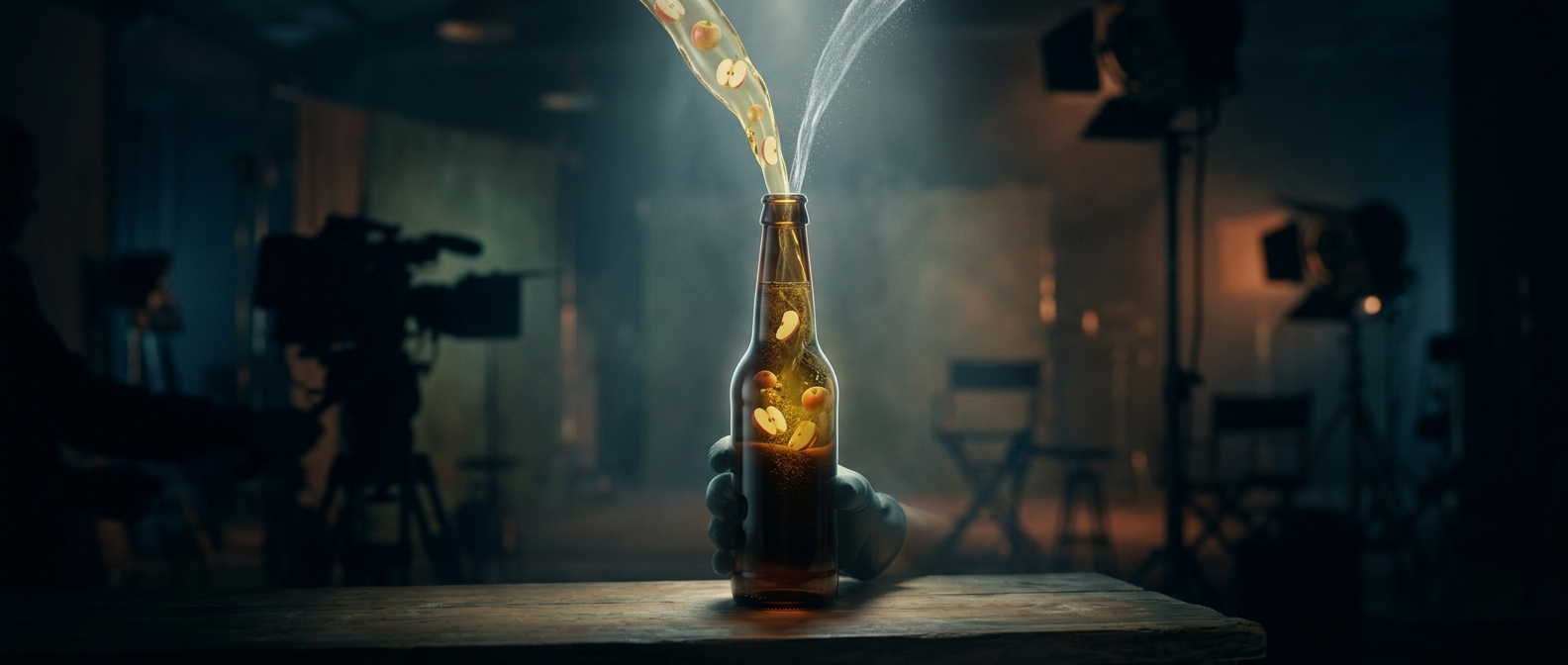
A glass of “beer” in a movie does not have to behave like beer in real life. In some productions, flat apple juice diluted with water provides the amber color, while chemically induced foam supplies the pale head on top. Under set lighting and in a framed shot, those visual cues can matter more than the drink’s taste or carbonation.
Keeping the liquid flat also makes it easier to control. Carbonated drinks continually release bubbles, which can change a glass’s appearance between takes. A still mixture gives the crew a steadier base; the foam can be added when the shot needs it.
The Glass Is Part of the Performance
Screen drinks have to work across repeated takes. An actor may lift a glass, set it down, or pretend to sip while cameras and lights are reset. A substitute lets the production shape the drink for the scene rather than rely on the changing behavior of a freshly poured pint. The foam can help sell the impression of draft beer in close-up, even if the liquid underneath is only a practical visual stand-in.
The trick is a reminder that movie realism is often assembled in layers: color, foam, glassware, lighting, and performance all contribute. What looks like a straightforward beer on screen may be a carefully controlled prop designed to look right for exactly as long as the camera is rolling.