Escape depended on keeping the group together
An escape from slavery was not a simple journey from one place to another. Travelers had to avoid capture while moving through unfamiliar territory, often at night and with limited food or rest. If someone turned back, they might reveal where the others were headed or who had helped them. That could put the entire party—and people sheltering it—at risk.
A weapon served as both defense and warning
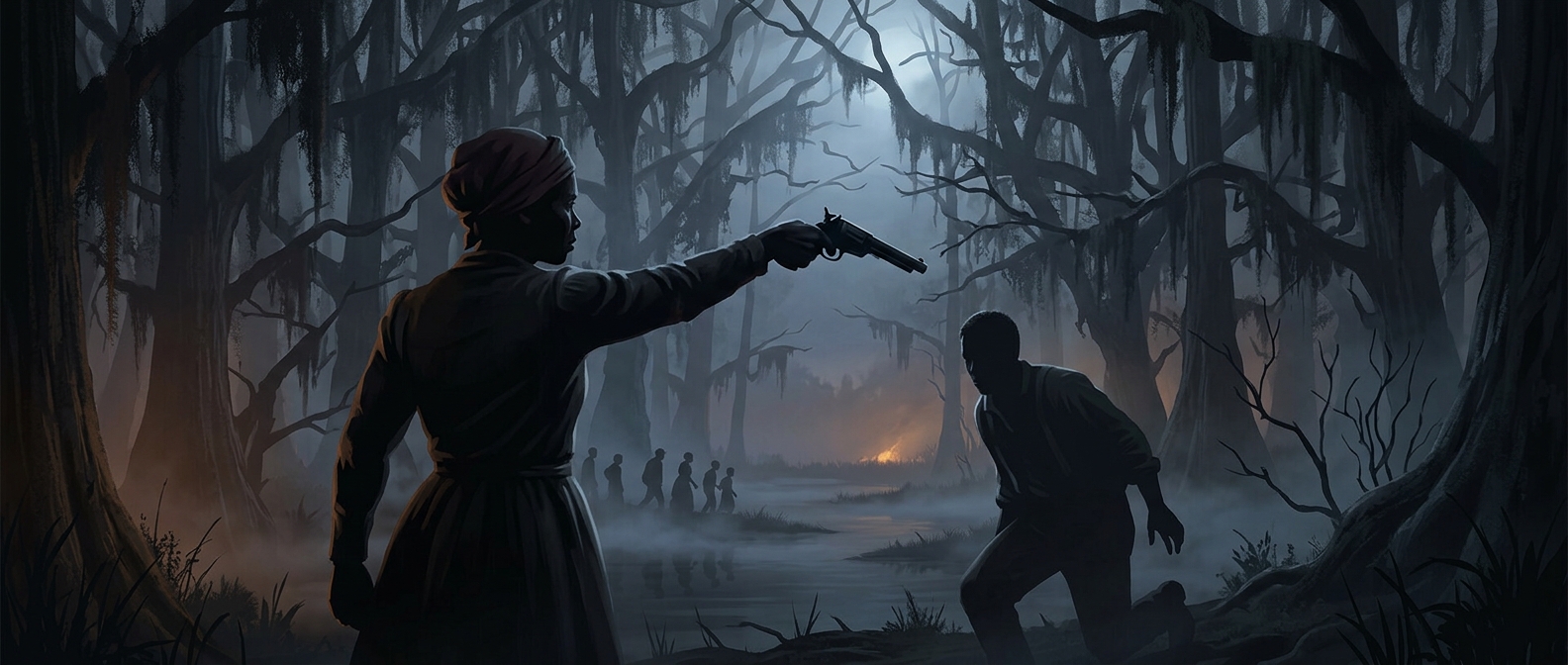
Tubman’s pistol gave her a means to defend herself and the people traveling with her. Accounts also describe her using the threat of force to stop a frightened traveler from abandoning the group. The weapon’s purpose, in that moment, was not only to confront outside danger; it could also enforce a decision on which everyone’s safety depended.
That choice reveals the harsh limits of leadership on the Underground Railroad. Tubman could encourage people, plan carefully, and guide them through danger, but she could not make the journey safe or guarantee that fear would not take hold. A person who reversed course might endanger companions who had no way to protect their identities once exposed.
The cost of a collective escape
The pistol stands for a grim reality: under slavery, even a journey toward freedom could leave little room for individual retreat. Tubman’s authority helped keep a group moving, but it rested on the knowledge that one person’s decision could carry consequences for many others.