The light on the battlefield
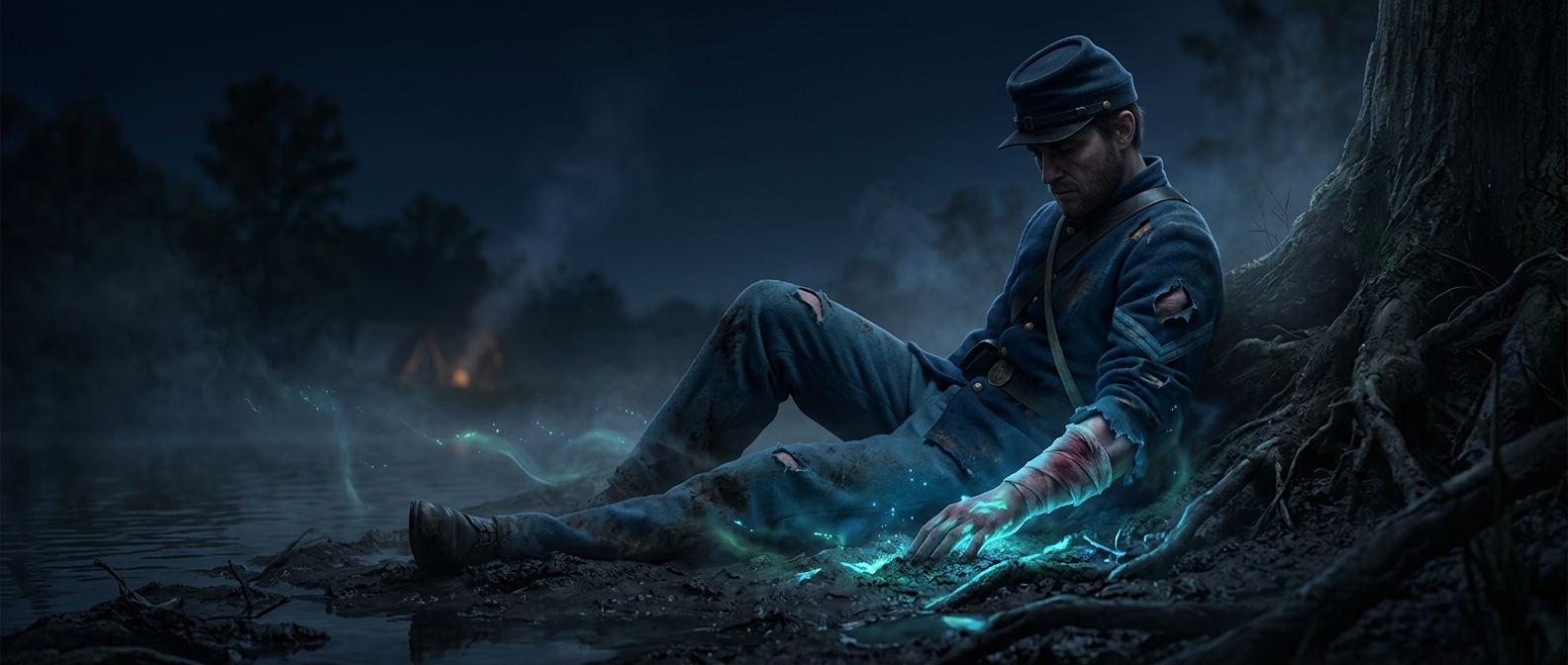
After the 1862 Battle of Shiloh, stories circulated that some wounded soldiers’ injuries glowed faintly at night. The light earned the name “angel’s glow,” and later accounts linked it with an unexpected pattern: some of the men whose wounds glimmered seemed more likely to survive. The observation was intriguing, but it left two questions open: what made the light, and could it have affected the wounds?
A bacterium with two useful traits
One proposed answer is Photorhabdus luminescens, a bacterium that produces light. It normally lives alongside tiny parasitic worms called nematodes, which carry it into insect larvae. There, the bacteria help kill the insect and release substances that inhibit competing microbes.
That second trait offers a possible explanation for the survival story. In a wounded person, microbes that slow the growth of other bacteria might reduce the chance of a dangerous infection. But the bacterium is not known as a usual cause of human wound infections, and its ability to inhibit microbes does not prove it protected soldiers.
From eerie tale to testable hypothesis
The proposed reconstruction also has to account for whether the bacterium could have lived in a wound. P. luminescens does not grow well at normal human body temperature. The hypothesis is that wounded men exposed to cold conditions might temporarily have had cooler tissue, allowing the bacterium to grow and glow; as the men warmed, it would no longer thrive.
That makes the story biologically plausible, not historically confirmed. No surviving observation identifies the light’s source, and the reported connection between glowing wounds and survival cannot establish cause and effect. Still, the hypothesis gives an old battlefield account a concrete mechanism to investigate: a faint glow might have marked the presence of microbes whose chemistry could also alter the wound’s microbial competition.