A striped marker turns a stop into a check
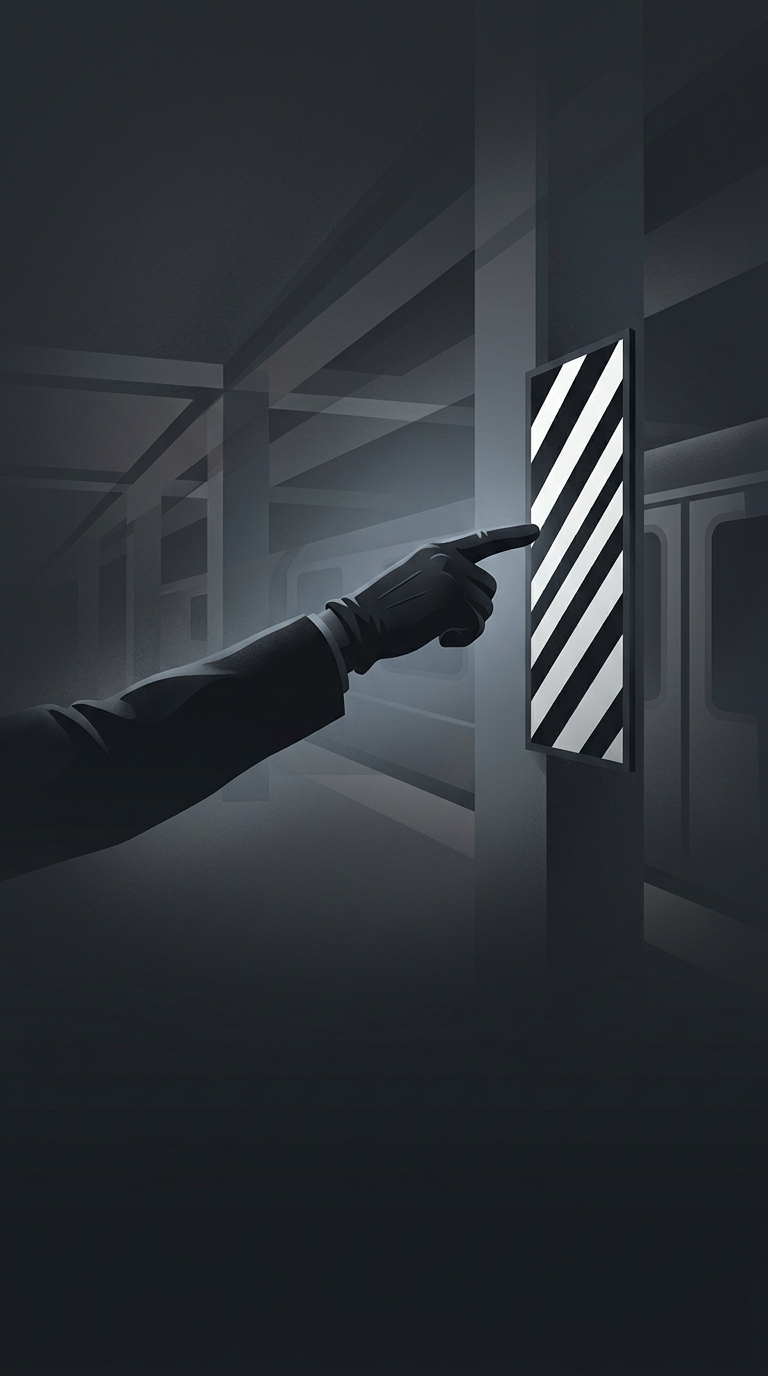
A subway train does not stop at a platform with a physical bumper telling the crew it has reached the right spot. The operator brings the train to a halt, while the conductor—positioned farther back along the train—needs a clear way to judge where the train has stopped. The zebra-striped board provides that fixed visual reference.
Its value is not that stripes can measure distance. It is that the conductor can compare the train’s position with a recognizable target mounted on the station wall, rather than relying on a vague impression of being close enough.
Why the point matters before the doors open
Pointing makes the check more deliberate. Instead of merely glancing toward the marker while carrying out a routine task, the conductor directs attention to it and confirms the train’s position. This is a simple form of error-proofing: a small, repeatable action designed to make a missed check less likely.
That matters because opening doors is not just a matter of stopping somewhere beside a platform. The train must be positioned so passengers can enter and leave safely. A conspicuous landmark gives the conductor a common reference for that decision, even amid the noise and movement of a station.
A low-tech safeguard in a fast-moving system
The board does not stop the train or correct a poor stop; the crew still has to interpret what they see and follow operating rules. Its usefulness comes from making the intended stopping position easy to recognize. In a system where trains make repeated stops throughout the day, a fixed marker and a practiced gesture turn a fleeting judgment into a visible, repeatable part of the routine.