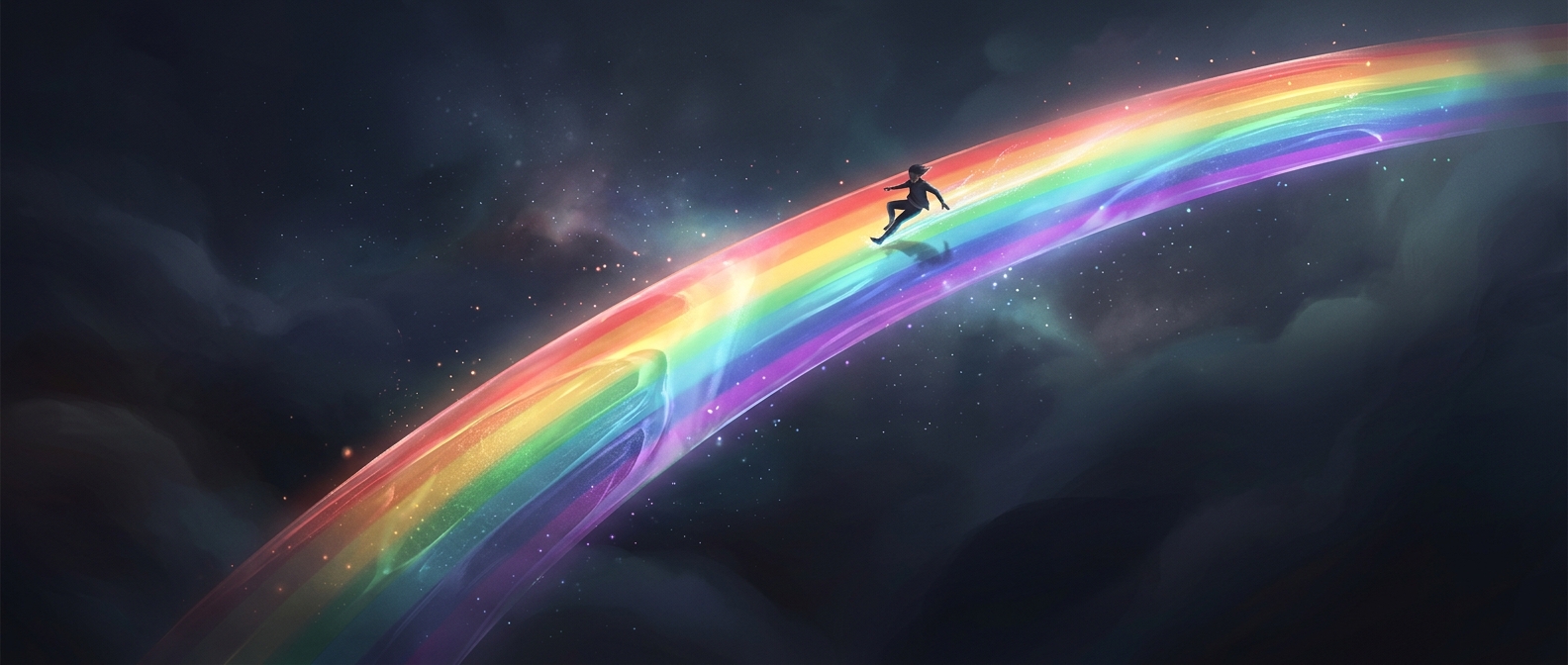
What Makes a Rainbow Slide Move
Once magic gives the rainbow a solid surface, the ride follows ordinary mechanics. Gravity pulls a rider downward, while the slide’s surface redirects that fall along its curve. On a downward section, part of gravity acts along the track and speeds the rider up; friction between rider and surface resists that motion.
The colors may look weightless, but the slide cannot be. It must support the rider and provide enough grip to keep them following the arc instead of flying off it. The rainbow supplies the route; gravity supplies the ride.
The Curve Is the Engineering Challenge
A steep drop makes speed build quickly. A gentler curve spreads the descent over more distance, while a sharp bend demands a stronger change in the rider’s direction. That change presses the rider against the slide—a sensation that can feel like being pushed into the surface. If the curve is too abrupt, the ride becomes uncomfortable; if the track is too slick, controlling speed becomes harder.
So the magical transformation solves only the first problem: making a rainbow solid. The designer still has to shape a track that supports riders, manages their speed, and brings them to a stop. The colors are decoration, but the curve decides whether the spectacle is a slide or a launch.