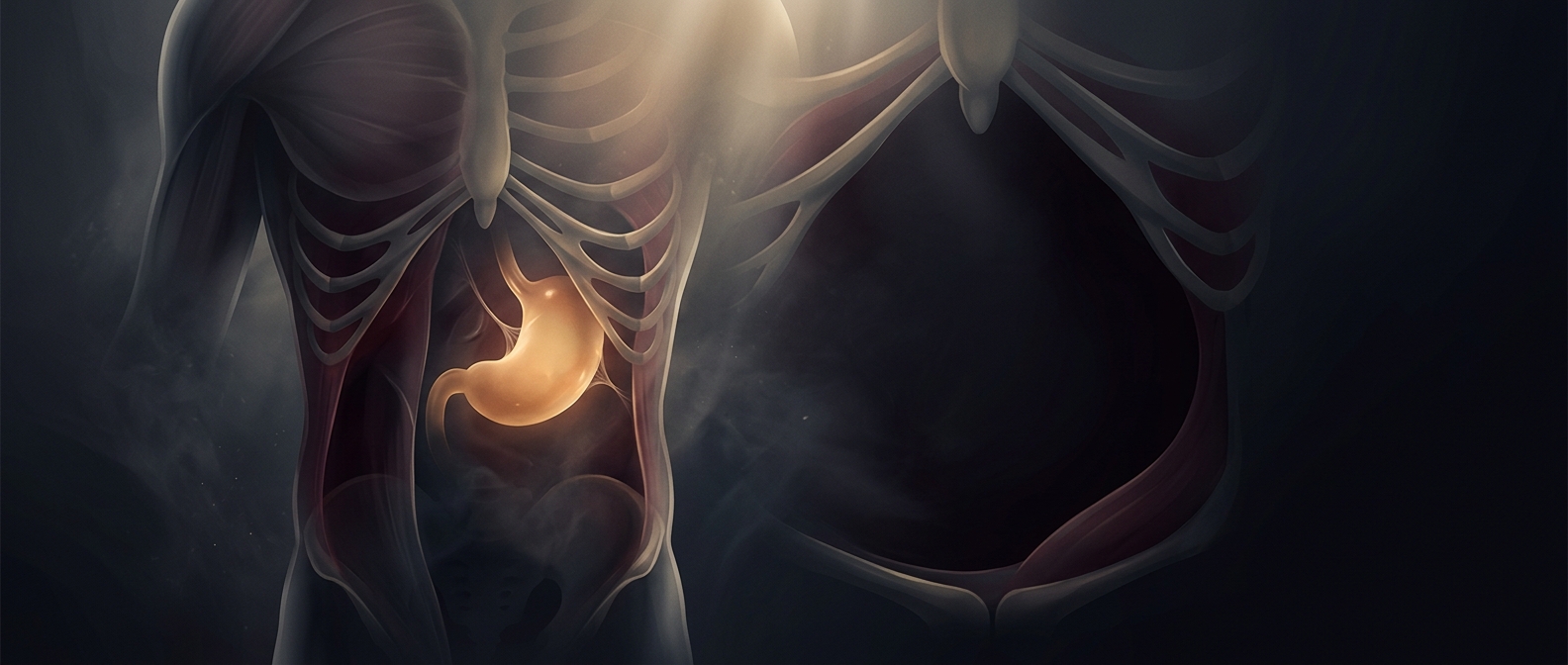
Why the Colon Takes an S-Shaped Turn
The sigmoid colon is the last part of the large intestine before the rectum. Its name refers to its resemblance to the Greek letter sigma, often written as an S. The bend is part of the intestine’s ordinary route through the lower abdomen and pelvis, not a special structure with a separate job.
A Flexible Passage, Not a Straight Pipe
By the time waste reaches the sigmoid colon, most water and salts have already been absorbed farther upstream, and the contents are becoming stool. The colon’s muscular wall squeezes in coordinated waves, moving stool along and helping hold it until the rectum fills and signals the need to go. The sigmoid’s curves are part of this winding passage; they do not work like a valve or actively steer stool around a sharp corner.
The large intestine is supported and arranged within the abdomen rather than fixed as a rigid tube. Its position and exact shape vary among people, and the sigmoid can form loops. What looks like a distinctive S in an anatomical drawing is therefore a useful description of a common shape, not a precise outline shared by every body.
The Last Stretch Before the Rectum
As stool moves through the sigmoid colon, contractions carry it toward the rectum, where it can be temporarily stored before a bowel movement. That final curved stretch matters because it is the route the contents must travel—but its familiar shape is simply one feature of the intestine’s flexible layout.