Why the road itself became the obstacle
In 1903, a car could travel farther than the roads were prepared to let it. Outside major towns, many routes were dirt or rough tracks used by horses and wagons. They were not smooth, continuously maintained lanes: ruts, loose ground, and mud could turn a passable stretch into a trap for a motorcar.
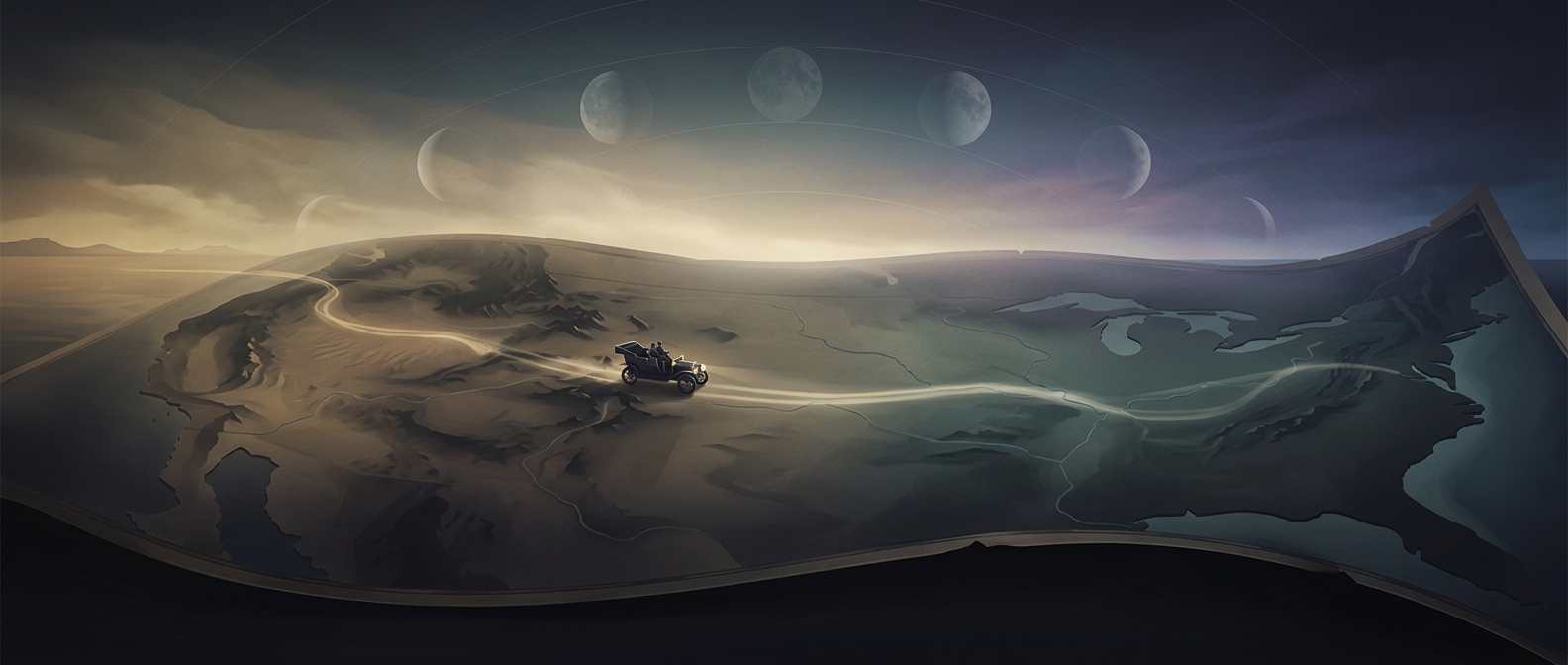
That changed the meaning of distance. A map might show a route across the country, but it could not guarantee that the car could keep moving along it. When wheels sank into soft ground, the travelers had to stop and physically free the vehicle, turning forward progress into work measured in hours rather than miles.
A journey that depended on people, not just machinery
The automobile was only one part of the undertaking. The travelers also needed practical help along the way: directions from people who knew local roads, assistance when the car became stuck, and repairs when rough conditions strained the vehicle. A modern driver can expect roads, fuel, and repair services to form a connected system. In 1903, that network was far less dependable, so each new stretch brought fresh uncertainty.
The contrast explains why the trip took so long. The challenge was not simply that early cars were slow; the country had no reliable road system built for them to cross. Jackson’s drive made the automobile’s potential visible, but it also exposed the infrastructure that had to catch up. Before a cross-country drive could become an ordinary trip, the route itself had to become something more than a line on a map.