A railway built for speed, not mixed traffic
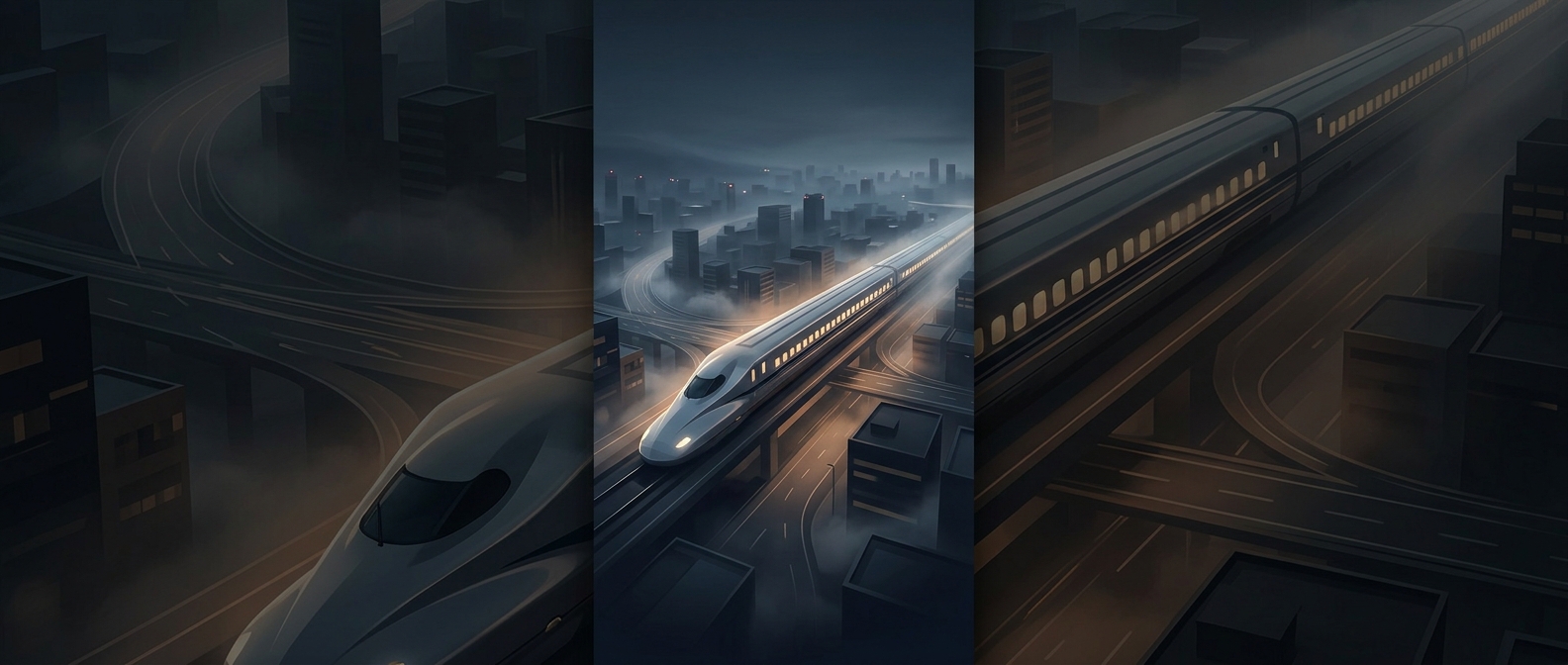
When Japan planned its first bullet-train line, the key decision was to separate it from the existing railway network. Conventional tracks carried trains with different speeds and stopping patterns; a fast train sharing those rails would repeatedly have to slow for traffic ahead. The Shinkansen instead got its own tracks, stations, and operating system, so its schedule could be designed around rapid, frequent service.
That separation also let engineers choose a route for speed rather than simply follow the older railway’s path. Japan’s mountains made the route a major construction challenge. Tunnels could cut through ridges, while bridges and viaducts carried the line across valleys. These structures cost more to build, but they avoided the tight bends and steep detours that would force trains to slow down.
From a new line to a new travel pattern
The first Shinkansen route opened between Tokyo and Osaka in 1964. It linked Japan’s two largest urban centers with a journey short enough to make travel between them practical for business and personal trips that once demanded much more time. The effect was not just a faster train: cities along the corridor became easier to reach from one another, and long-distance rail travel could fit more readily into an ordinary day.
The network’s lasting lesson is that high speed depends on more than a powerful train. It comes from designing the whole railway—tracks, route, and traffic—for speed. In mountainous Japan, that meant building a separate corridor through the landscape rather than asking a fast train to share the compromises of an older one.