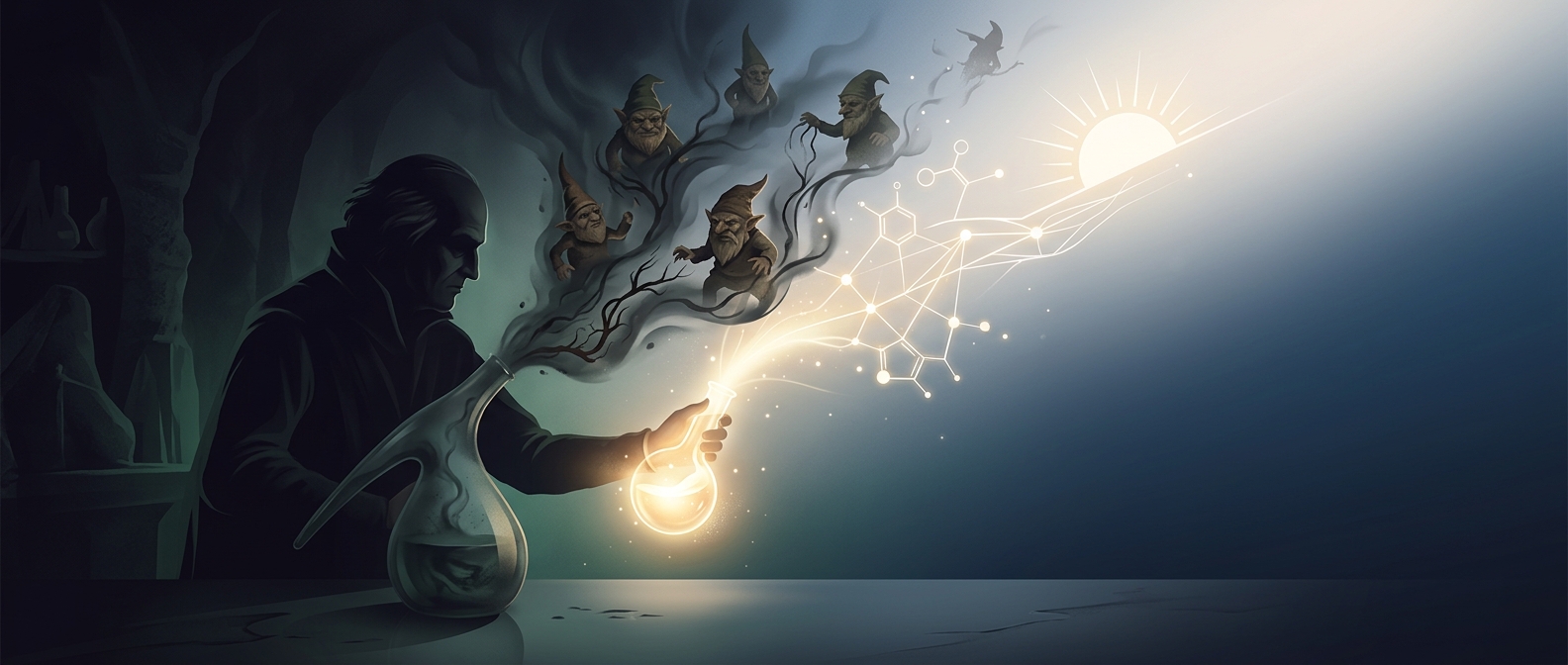
A bonfire aimed at medical authority
When Philippus Paracelsus burned works by Galen and Avicenna in Basel, the fire was more than a rejection of two books. Those ancient physicians had shaped European medicine for centuries, and their writings were treated as foundations for learning. A physician who challenged them was challenging the way medical knowledge itself was passed on.
The brass pan and sulfur made the disagreement a public spectacle. Paracelsus’s boast that even his shoelaces knew more than the authorities sharpened the message: a famous name, he argued, should not settle whether a treatment worked.
From inherited texts to substances
Paracelsus wanted medicine to attend to what substances did in the body, not merely to repeat what earlier writers had said. His alchemical approach treated materials as capable of producing specific effects through preparation and use. Alchemy at the time was not only the pursuit of turning base metals into gold; it also offered ways to investigate and transform natural substances.
That emphasis helped make chemical remedies part of his medical vision. It did not mean that every remedy was safe or effective by modern standards. The important shift was in the question: instead of asking only which authority endorsed a treatment, practitioners could ask what the substance did and how it should be prepared.
Why the gesture mattered
Burning the books made that challenge impossible to mistake—and impossible to keep within a lecture room. Paracelsus turned a dispute over medical method into a visible confrontation between inherited authority and hands-on inquiry. The striking implication was that medical knowledge, in his view, had to be tested in the world, not simply preserved on the page.